Fragrance Notes Are Layers Of Scent That Are Layered To Form The Final Fragrance. Fragrance Notes Are Categorised Into Three Main Elements Based On How Long They Take To Evaporate, And How Long They Typically Last Following Application: Top Notes, Heart Notes And Base Notes.
Lemon Zest
Lemon Zest in perfumery captures the bright, intensely sharp, and slightly bitter aroma of the fruit's outer peel. It is highly volatile, offering an immediate burst of fresh, sparkling, and effervescent citrus. It provides lift, radiance, and a clean, invigorating opening impression, often used to introduce freshness to a composition.

Origin & Extraction Of Lemon Zest
Lemon Zest, which specifically refers to the intensely aromatic essential oil found in the outer peel of the lemon, gained prominence in perfumery alongside the broader use of citrus notes. While basic lemon oil has been a foundation of fragrances since the creation of the original Eau de Cologne in the early 18th century, the 'zest' as a distinct, highly concentrated ingredient came to be prized for its sharp, luminous quality. Perfumers utilize the zest to deliver a more immediate, effervescent, and less watery burst of freshness compared to the fruit pulp or juice, making it crucial for defining the modern citrus opening.
In contemporary perfumery, Lemon Zest is pivotal in creating clean, sparkling, and vibrant openings that are often necessary to cut through heavier base notes in fresh, aquatic, and gourmand compositions. Its ability to provide an unmistakable, sharp lift has cemented its role in iconic modern fragrances, particularly those aiming for an invigorating or Mediterranean-inspired crispness. By focusing on the volatile oils of the rind, Lemon Zest offers a sophisticated, energetic signature that appeals broadly across gender classifications.
Extraction Methods of Lemon Zest
The extraction of lemon zest essence is primarily a process of capturing the aromatic oils found in the fruit's outer rind (flavedo). Historically, this was achieved through labor-intensive manual techniques such as the sponge method, where the rinds were pressed by hand against sponges to collect the oil, or the ecuelle a piquer method, which involved rolling the fruit in a bowl lined with sharp needles to puncture the oil glands. In culinary and artisanal contexts, traditional extraction also involves maceration, where fresh zest is steeped in high-proof alcohol like vodka or rum for several weeks to create a concentrated extract.
Modern commercial production has transitioned toward more efficient mechanical and technological processes. Cold expression remains a standard, utilizing high-speed mechanical peelers and centrifugal separators to isolate the oil from the peel at low temperatures, preserving its fresh profile. The latest advancements include supercritical CO2 extraction and microwave-assisted extraction, which allow for the precise isolation of volatile compounds without the use of harsh solvents or high heat. Additionally, modern techniques like molecular distillation and pulsed electric fields are employed to enhance the purity and stability of the resulting essence for use in high-end perfumery and food science.
Lemon Zest is a potent, uplifting top note, providing an immediate burst of freshness and clean energy that is highly valued in both classic and contemporary perfumery. While many modern fresh scents incorporate a zesty lemon accord, one fragrance that prominently features a sparkling, sharp lemon opening is the iconic **Acqua di Parma Colonia**, which relies on bright Italian citrus notes, including lemon zest, to achieve its timeless, effervescent, and refined structure. This sharp zest gives the composition its signature invigorating character.
- *
In modern niche perfumery, Lemon Zest is often utilized to add a high-definition, photorealistic quality to compositions. For example, in **Light Blue Pour Homme** by Dolce &Gabbana, the lemon zest note is crucial in establishing the fragrance's famous crisp, coastal Mediterranean feel. The sharp, vibrant quality of the zest is deliberately contrasted with aquatic and spicy notes to create an airy, clean, and dynamic top accord that captures the scent of fresh fruit peel.
- *
Another popular use of the Lemon Zest note can be found in scents like **Versace Pour Homme**, where the note is employed not only for freshness but also to provide a luminous contrast to aromatic and floral heart notes. Here, the intensely sharp, slightly bitter quality of the zest acts as a clean, bright layer that cuts through heavier elements, ensuring the opening remains crystalline and stimulating throughout the wear, lending the composition its signature vitality and sparkling appeal.
Sustainability Of Lemon Zest
Sustainability of Lemon Zest
- Promoting a circular economy by upcycling lemon peel waste into high-value functional ingredients, natural preservatives, and bioactive compounds like pectin and essential oils
- Reducing environmental impact and greenhouse gas emissions by diverting citrus by-products from landfills, where they otherwise contribute to degradation
- Adopting water-efficient irrigation and responsible resource management in major growing regions to minimize the ecological footprint of production
- Supporting carbon sequestration through the maintenance of large-scale lemon groves that act as significant carbon sinks
- Implementing integrated pest management and organic farming practices to reduce reliance on synthetic pesticides and fungicides
- Providing socio-economic stability by adhering to fair trade practices and generating thousands of jobs within the citrus industry
Trivia
Lemon zest is the source of the classic "Hesperidic" fragrance classification, a term derived from the Hesperides of Greek mythology who were the three daughters of Atlas tasked with guarding a sacred garden of golden apples—widely believed by historians to actually be lemons.
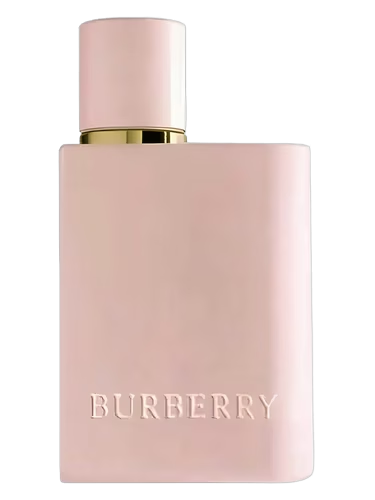
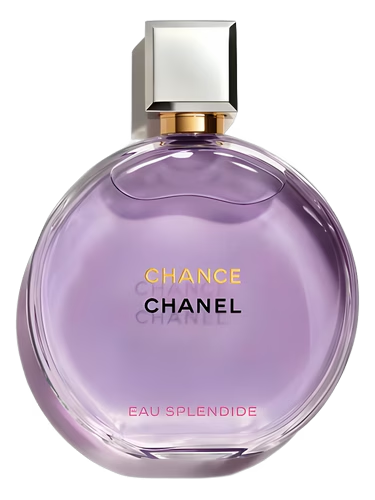
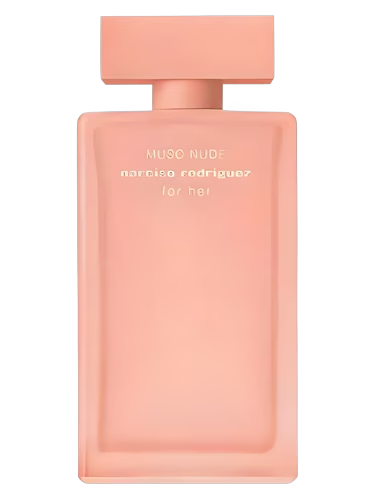
Most Popular Scents Using Lemon Zest
What is lemon zest in perfumery?
Lemon zest refers to the intensely aromatic essential oil found in the outer peel (flavedo) of the lemon, prized for a sharper, more effervescent quality than the fruit's juice or pulp.
How is lemon zest essence extracted?
The essence is primarily obtained through cold expression, where the fruit's rind is mechanically pressed or rasped at low temperatures to release volatile oils without using heat.
What does lemon zest smell like?
It captures a bright, intensely sharp, and slightly bitter citrus aroma that is highly volatile, providing an immediate burst of fresh, sparkling, and clean energy.
What are some top perfumes featuring lemon zest?
Notable fragrances highlighting this note include Dolce & Gabbana Light Blue Italian Zest, Acqua di Parma Colonia, Versace Pour Homme, and L'Occitane Verbena.
When is lemon zest in season?
While lemon trees can fruit year-round, the most aromatic zest is typically harvested from late fall through early spring when oil concentration in the rind is at its peak.