Fragrance Notes Are Layers Of Scent That Are Layered To Form The Final Fragrance. Fragrance Notes Are Categorised Into Three Main Elements Based On How Long They Take To Evaporate, And How Long They Typically Last Following Application: Top Notes, Heart Notes And Base Notes.
Lemon Myrtle
Lemon Myrtle offers a bright, intensely citrusy, and refreshing aroma that surpasses the common lemon note in its potency and depth. It presents a crisp, slightly herbal, and uplifting scent profile with green nuances. It is often described as cleaner, zestier, and more refined than traditional citrus oils, lending a radiant top note.

Origin & Extraction Of Lemon Myrtle
Lemon Myrtle (Backhousia citriodora) is native to the rainforest regions of Queensland, Australia. While indigenous Australians have utilized its leaves for centuries in food, medicine, and traditional ceremonies, its use in Western perfumery is a relatively recent development. The essential oil gained wider recognition in the late 20th and early 21st centuries, specifically for its exceptionally high citral content—often significantly higher than lemon—which gives it its intense, clean, and refreshing scent. This potency and natural brilliance made it an appealing alternative to traditional citrus oils like Lemon and Bergamot, which can be highly volatile and fade quickly. Its rise coincides with the modern trend in perfumery for more exotic, natural, and long-lasting fresh notes.
In perfumery, Lemon Myrtle is valued for its capacity to deliver a vibrant and uplifting top-note burst that maintains its zesty character over time, providing structural integrity to fresh compositions. It quickly became a signature note for niche and Australian-based fragrance houses seeking to offer distinctive, globally-inspired aromas and emphasize natural ingredients. Its complex profile, which includes subtle green and slightly herbaceous nuances alongside the intense citrus, allows it to bridge classic Eau de Cologne structures with modern green, aquatic, and aromatic heart notes. This versatility has cemented Lemon Myrtle's position as a contemporary powerhouse in the citrus-fresh category, used to inject sophistication, cleanliness, and radiant energy into perfumes designed for warm weather and daily wear.
Extraction Methods of Lemon Myrtle
The primary commercial method for extracting lemon myrtle essential oil is steam distillation of the leaves and green stems. In this process, pressurized steam passes through the botanical material in a vessel, causing the volatile aromatic compounds—primarily citral—to evaporate and then condense into a liquid form for separation. Historically, lemon myrtle was first distilled in the late 1800s, though traditional indigenous uses involved simpler methods like direct application of crushed leaves or using them in smoking and infusion for "bush medicine." Traditional home extraction often involves maceration, where fresh leaves are crushed and marinated in a carrier oil for several weeks to release their essence.
Modern extraction has expanded to include advanced techniques that prioritize the retention of delicate phytochemicals. These include microwave-assisted extraction, which is noted for its time and energy efficiency on an industrial scale, and innovative cellular extraction. Cellular extraction utilizes high-pressure technology to capture water-soluble phyto-compounds and aromatic molecules without the high heat associated with traditional distillation. Additionally, industrial processing often involves specialized drying stages—such as hot air, vacuum, or freeze-drying—to stabilize the leaves before further extraction or use in tea and culinary products.
Lemon Myrtle (Backhousia citriodora), while not a classic note of historic French perfumery, has found its niche in modern and niche compositions, particularly those emphasizing clean, invigorating, and natural Australian scents. Its intensely bright, slightly herbaceous aroma makes it a potent and long-lasting alternative to traditional lemon, offering a refined twist on the typical citrus top note. It adds a sophisticated, zesty, and highly diffusive opening, popular in contemporary fresh and aromatic categories.
One notable example where Lemon Myrtle is featured for its vibrant, crisp character is **Wattle & Banksia** by Goldfield & Banks, an Australian house renowned for utilizing native ingredients. It is often paired with other Australasian botanicals to create a unique, sun-drenched freshness that is both clean and exotic. This note serves to cut through richer accords, providing an enduring lift.
- The prominent use of Lemon Myrtle in fragrances like **L'Eau d'Issey Pour Homme Fraiche** by Issey Miyake demonstrates its suitability in aquatic and transparent compositions, where it enhances the sense of airiness and sharp freshness.
- It appears in several of the more modern, clean-focused fragrances from Le Labo, such as the limited-edition **City Exclusive** scents, lending a distinctive, bracing herbaceous quality.
Furthermore, Lemon Myrtle is increasingly used in artisan and independent perfumery to achieve a natural, clean, and highly energetic opening that resists quick evaporation. Its high citral content ensures that the initial burst of zest is both powerful and long-lasting, a key feature valued in today's performance-focused fresh fragrances. This adaptability allows it to blend seamlessly with green notes, white florals, and light woody bases.
Sustainability Of Lemon Myrtle
Sustainability of Lemon Myrtle
- Adopting regenerative agricultural principles to enhance soil fertility naturally and improve water retention
- Promoting a circular economy through closed-loop mulch production and composting unused plant material to recycle nutrients back into the landscape
- Supporting biodiversity by creating wildlife shelterbelts and habitats that allow native flora and fauna to flourish
- Utilizing organic farming methods and the plant's natural pest resistance to eliminate the need for synthetic chemical pesticides and fertilizers
- Implementing water-wise conservation methods and leveraging the species' natural drought resilience to reduce irrigation requirements
- Empowering local and Indigenous communities by sourcing from Indigenous-led enterprises and smallholder growers on the Bundjalung nation
Trivia
Lemon Myrtle boasts the world's highest natural concentration of citral, with levels reaching up to 98%, making its aroma more intensely "lemony" than lemons themselves.
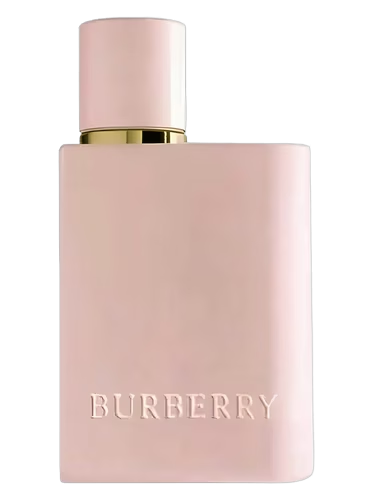
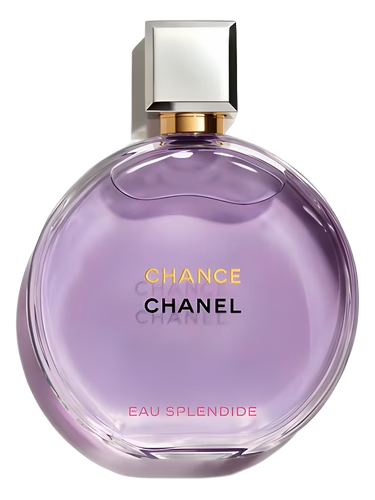
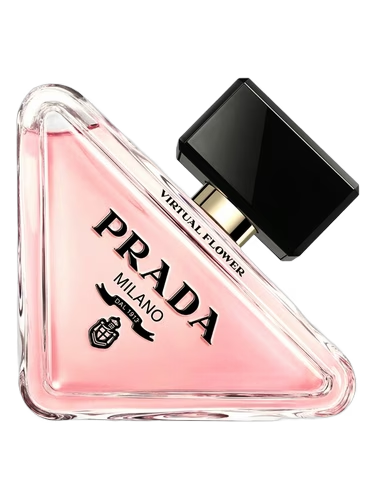
Most Popular Scents Using Lemon Myrtle
What is lemon myrtle?
Lemon myrtle is an aromatic evergreen tree native to the subtropical rainforests of Australia, prized for its leaves which contain the highest natural concentration of citral of any known plant.
What does lemon myrtle smell like?
It offers an intensely bright, clean, and refreshing citrus aroma that is often described as more potent and "lemony" than actual lemons, featuring crisp herbal and green nuances.
How is lemon myrtle essence extracted?
The essential oil is primarily obtained through steam distillation of the plant's leaves and green stems, though modern methods like cellular extraction are also used to preserve delicate compounds.
Is lemon myrtle a sustainable fragrance ingredient?
Yes, harvesting is considered sustainable as leaves can be collected year-round without destroying the tree, and many growers employ regenerative agricultural and organic farming practices.
What are some top perfumes featuring lemon myrtle?
Notable fragrances include Goldfield & Banks Wattle & Banksia, Issey Miyake L'Eau d'Issey Pour Homme Fraiche, and various niche scents like Tiger Rouge and Neroli Forte.