Fragrance Notes Are Layers Of Scent That Are Layered To Form The Final Fragrance. Fragrance Notes Are Categorised Into Three Main Elements Based On How Long They Take To Evaporate, And How Long They Typically Last Following Application: Top Notes, Heart Notes And Base Notes.
Lemon Balm
Lemon Balm, also known as Melissa, offers a bright and refreshing aromatic profile commonly utilized in perfumery. It presents a characteristic sweet, green, and fresh lemon-like scent, often with a delicate minty and lightly spicy undertone. It serves as a unique alternative to traditional lemon notes, contributing an uplifting and herbaceous facet to fragrance compositions.

Origin & Extraction Of Lemon Balm
Lemon Balm (Melissa) has a long history outside of modern perfumery, primarily valued for its medicinal and culinary uses in Europe, dating back to ancient Greece and Rome. Its use in historical fragrant preparations was mainly therapeutic, employed in soothing balms, teas, and distilled waters, especially in monasteries during the Middle Ages. Its gentle, lemon-like scent, combined with its calming properties, made it a key ingredient in "Eau de Mélisse des Carmes," a famous French tonic water created by Carmelite nuns in the 17th century, establishing its reputation for clean, natural freshness and well-being.
In fine perfumery, Lemon Balm remains a niche note, typically utilized to lend a subtle, sophisticated freshness that goes beyond standard lemon oils. Its delicate green, herbaceous, and slightly minty profile is valued for providing a naturalistic complexity, often appearing in modern Eau de Colognes and aromatic compositions. Rather than serving as a volatile citrus burst, Lemon Balm is strategically used to sustain a clean, green energy in the heart of a fragrance, connecting sharp top notes to deeper floral or herbal accords, and appealing to consumers seeking subtle elegance and a natural, soothing quality.
Extraction Methods of Lemon Balm
Historically, lemon balm has been processed through simple infusion and maceration techniques to capture its volatile oils and medicinal properties. Traditional "folk methods" involve steeping fresh or dried leaves in solvents like alcohol (tinctures), vegetable glycerin (glycerites), or carrier oils for four to six weeks. For more concentrated essences, water-steam distillation has long been used, though the plant's essential oil yield is notably low, typically ranging from 0.02% to 0.3%. Early medicinal preparations also included aqueous extractions, where leaves were simmered in water at high temperatures to recover phenolic acids like rosmarinic acid.
Modern extraction has evolved toward "green" and high-efficiency technologies to improve yield and purity while reducing processing time. Subcritical water extraction (SWE) is a leading contemporary method, using water at temperatures between 100°C and 374°C under high pressure to extract antioxidants without toxic organic solvents. Other advanced techniques include supercritical carbon dioxide extraction, microwave-assisted extraction, and ultrasonic extraction, which use mechanical or thermal energy to disrupt cell walls more effectively than traditional soaking. Recent developments also explore microencapsulation, using spray-drying or freeze-drying with maltodextrin to stabilize the resulting extracts for use in food and cosmetics.
Lemon Balm (Melissa) is highly valued in classic and traditional fragrance compositions for its bright, herbaceous lift. While it may not be the star of modern mainstream releases, its historical use is significant, particularly in revitalizing Eaux de Cologne. For example, **Guerlain Eau de Cologne Impériale** historically featured a blend of citrus notes, where Melissa would provide an underlying herbaceous complexity and freshness, distinguishing it from simpler lemon-based colognes.
In contemporary niche perfumery, Lemon Balm is employed to add a naturalistic, slightly minty green dimension to aromatic compositions, moving beyond standard citrus. While hard to pinpoint a single defining modern scent, perfumers often include it in herbal or green tea accords. A classic example where the fresh, aromatic herb shines is in compositions that echo the work of **Diptyque's L'Eau de L'Eau**, where spices and green aromatics create a bright, uplifting feel, though Lemon Balm provides a specific, refined green lift often sought in these kinds of scents.
The complexity of Lemon Balm, with its combination of sweet lemon, green, and minty facets, makes it a perfect bridge between top notes and herbal/floral hearts. It appears in several modern artisanal fragrances focused on natural botanicals. One notable fragrance incorporating a distinct herbal citrus character is the original iteration of **Acqua di Parma Colonia**, which relies heavily on aromatic Mediterranean herbs alongside bright citrus, where the Melissa note quietly enhances the overall invigorating and natural impression.
Sustainability Of Lemon Balm
Sustainability of Lemon Balm
- Integrated and sustainable cultivation practices are promoted to conserve and enhance biodiversity within agroecosystems and to help restore degraded land
- Utilization of organic livestock manures, such as sheep, poultry, and cattle manure, serves as a viable and eco-friendly nutrient source that improves soil productivity and essential oil quality without negative environmental impacts
- Implementation of sustainable weed management strategies, including the use of mulch and high-density planting, reduces the need for synthetic herbicides and supports ecological health
- The International Union for Conservation of Nature (IUCN) monitors the sustainability status of the species, which is generally classified as low risk, ensuring long-term availability for pharmaceutical and cosmetic use
- Practicing environmentally sound horticulture, such as responsible water management through drip irrigation and mulching, helps conserve resources and maintain plant health
Trivia
The name of the plant, Melissa, is derived from the Greek word for honeybee because its flowers are so rich in nectar that they have been used for over 2,000 years to attract and keep bees in their hives.
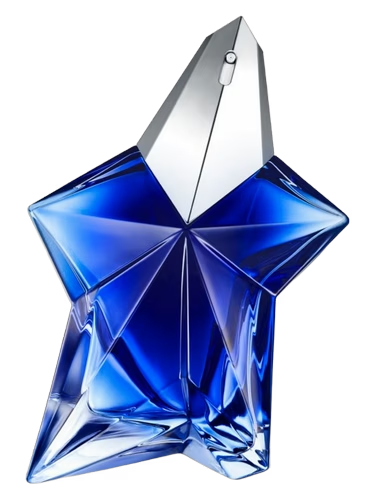
Most Popular Scents Using Lemon Balm


What is lemon balm?
Lemon balm, also known as Melissa, is an aromatic perennial herb in the mint family prized for its refreshing lemon-scented leaves and various medicinal properties.
How is lemon balm oil extracted?
The essential oil is primarily obtained through steam distillation, though it is often processed via infusion or maceration because the plant yields a very low amount of essential oil.
What does lemon balm smell like?
It offers a bright, sweet, and green citrus aroma characterized by fresh lemon notes with delicate minty and lightly spicy undertones.
What are some top perfumes featuring lemon balm?
Notable fragrances containing lemon balm include 4711 Acqua Colonia Melissa & Verbena, Guerlain Eau de Cologne Impériale, and Angela Flanders Melissa.
When is lemon balm in season?
Lemon balm grows from spring through autumn, but it is best harvested in late spring or early summer just before it blooms to capture the highest concentration of essential oils.