Fragrance Notes Are Layers Of Scent That Are Layered To Form The Final Fragrance. Fragrance Notes Are Categorised Into Three Main Elements Based On How Long They Take To Evaporate, And How Long They Typically Last Following Application: Top Notes, Heart Notes And Base Notes.
Ledum
Ledum offers a uniquely herbaceous and aromatic profile, often described as green, slightly bitter, and medicinal, with rich, dry, and clean underlying woody characteristics. It lends a sharp, naturalistic, and complex depth to compositions, bridging aromatic top notes and dry wood bases.

Origin & Extraction Of Ledum
Ledum, derived from the plant *Ledum palustre* (also known as Wild Rosemary or Greenland Moss), does not have a long, documented history in classical Western perfumery, unlike foundational notes such as Bergamot or Rose. Historically, the plant has been utilized primarily in traditional medicine across Northern Europe, Asia, and North America for its aromatic and believed therapeutic properties, often serving as an herbal remedy or an insect repellent. Its use in fine fragrance is a relatively modern phenomenon, gaining traction as perfumers began seeking raw, naturalistic, and unconventional aromatic profiles to differentiate their creations in niche and contemporary design.
The relevance of Ledum in modern perfumery stems from its unique olfactive profile: a distinctive blend of sharp, camphoraceous green notes, slight bitterness, and dry, resinous wood. This complexity makes it valuable for creating naturalistic forest or aromatic accords, particularly in Fougère and abstract compositions. It is frequently employed to introduce a cold, bracing, and slightly medicinal edge, providing sophisticated depth and contrast to warmer, more conventional heart and base notes, positioning it as an ingredient for avant-garde or nature-inspired scents rather than traditional formulas.
Extraction Methods of Ledum
The primary method for extracting ledum essential oil is steam distillation of the plant's leaves or flowering tops. This process involves passing pressurized steam through the plant material to vaporize the volatile aromatic compounds, which are then condensed and separated from the hydrosol. Historically, ledum was most commonly utilized through simple infusion and maceration techniques to create herbal teas (Labrador tea) or medicinal tinctures, a practice deeply rooted in North American indigenous traditions for centuries.
Recent advancements in extraction technology have introduced more efficient methods to improve yield and bioactivity. Modern techniques include ionic liquid-assisted hydrodistillation, which utilizes specialized green solvents like 1-butyl-3-methylimidazolium tetrafluoroborate to enhance the breakdown of plant tissues. Other contemporary approaches include microwave-assisted hydrodistillation (MAHD) and the use of natural deep eutectic solvents (NADESs) for pretreatment, which significantly increase the extraction efficiency of bioactive terpenoids compared to traditional water-based distillation.
Ledum, also known as Greenland Moss or Wild Rosemary, is an unconventional note in mainstream perfumery, primarily lending its sharp, herbaceous, and medicinal green character to niche and avant-garde compositions. Its use often indicates a desire for a raw, naturalistic, or even slightly camphorous effect that cuts through heavier accords. One notable fragrance that showcases this note is **Boreal** by Fougère Fragrances, where Ledum complements a dense forest accord, giving the scent a distinctive cold, damp, and aromatic realism.
- **Black Forest** by Woods & Spices utilizes Ledum to enhance its smoky, woody core, contributing a dry, bitter-green facet that provides lift and contrast to notes like birch tar and cedar.
- The note also appears in certain modern masculine fragrances, such as **Arctic Wind**, adding a clean, bracing medicinal sharpness to its otherwise conventional fresh profile.
In more complex, abstract creations, Ledum serves as a sophisticated bridging element. Its dry, woody undertones allow it to seamlessly transition between vibrant aromatic top notes and deep, earthy bases. For instance, **Herbal Apothecary**, an exclusive release by a high-end French house, highlights Ledum alongside mugwort and angelica root, resulting in an olfactory portrait of an ancient herbal garden, steeped in history and mystery.
Sustainability Of Ledum
Sustainability of Ledum
- Conservation of biodiversity by monitoring and protecting wild populations in regions where the species is considered threatened, endangered, or extremely rare
- Promoting sustainable harvesting practices of wild-grown Labrador tea to ensure long-term population viability and maintain the integrity of sensitive bog and tundra ecosystems
- Advocating for responsible forest management and logging methods that preserve soil health and protect the natural habitats of evergreen shrubs
- Adoption of organic cultivation and natural pest management, leveraging the plant's inherent insect-repellent properties to reduce reliance on synthetic agrochemicals
- Supporting circular economy principles through the research and development of functional fractions from extraction residues for pharmaceutical and industrial use
Trivia
Ledum, also known as Marsh Labrador Tea, was traditionally used by indigenous peoples in North America and Eurasia to brew a herbal tea long before its pungent, mossy, and slightly camphoraceous aroma was adopted into niche perfumery.
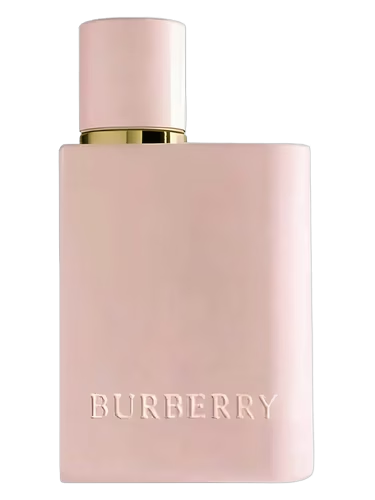
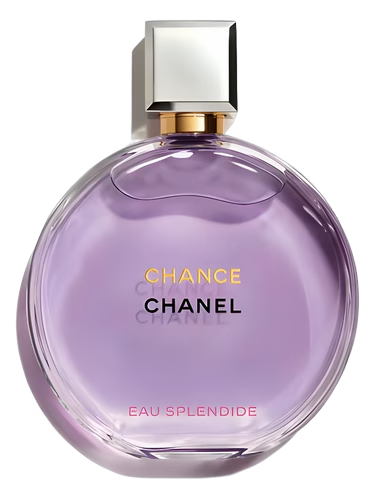
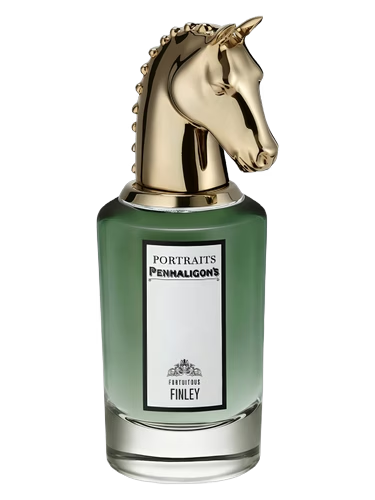
Most Popular Scents Using Ledum
What is Ledum?
Ledum, also known as Wild Rosemary or Greenland Moss, is a fragrant evergreen shrub native to the northern regions of North America, Europe, and Asia, used in niche perfumery for its unique aromatic profile.What does Ledum smell like?
It offers a sharp, herbaceous, and medicinal green aroma with camphoraceous notes, a slight bitterness, and a clean, resinous woody undertone.How is Ledum essence extracted?
The essential oil is primarily obtained through steam distillation of the plant's leaves and flowering tops, which vaporizes and captures its volatile aromatic compounds.What are some top perfumes featuring Ledum?
Notable fragrances that showcase this note include Boreal by Fougère Fragrances, Black Forest by Woods & Spices, Arctic Wind, and Herbal Apothecary.When is Ledum in season?
The plant is most active from late spring through early autumn, with flowering typically occurring in June and July, though its evergreen leaves can be harvested for aromatic use year-round.