Fragrance Notes Are Layers Of Scent That Are Layered To Form The Final Fragrance. Fragrance Notes Are Categorised Into Three Main Elements Based On How Long They Take To Evaporate, And How Long They Typically Last Following Application: Top Notes, Heart Notes And Base Notes.
Leatherwood
Leatherwood is a sultry, complex note evoking adventure. It features a botanical blend of smoky tobacco, rich leather, and woody undertones, balanced by aromatic spices like clove and basil. It offers a dark, sensual profile with a hint of red wine and white floral sweetness from tuberose.

Origin & Extraction Of Leatherwood
Leatherwood, while a distinct botanical reference, represents a complex and modern aromatic concept in perfumery, embodying a sophisticated blend of smoky tobacco, rich leather, and woody elements. Unlike foundational notes such as Bergamot or Lemon, which are historically tied to the 18th-century origin of Eau de Cologne, Leatherwood does not have a long traditional history in classic fragrance structures. Its rise is aligned with contemporary niche perfumery, which seeks out highly textured, evocative, and dark profiles for adventurous and non-traditional scents.
The note is valued for its ability to bridge scent categories, anchoring dark floral compositions or providing a robust, smoky backbone to oriental and leather-focused creations. Its development reflects a trend towards high-impact, luxurious leather accords, akin to the effects found in scents like Tuscan Leather, providing depth and a sensual, powerful presence in the dry-down. This complexity, balanced by subtle floral and spice undertones, ensures its place as a distinctive and memorable ingredient in modern fine fragrance.
The primary method for extracting leatherwood essence, specifically in the form of its world-renowned honey, utilizes traditional mechanical techniques designed to preserve its natural enzymes and delicate aromatic profile. This process begins with the careful removal of frames from hives located deep within remote Tasmanian rainforests. The honeycomb cells are then uncapped, and centrifuges are employed to spin out the honey, ensuring the complex nectar of the Eucryphia lucida remains pure and minimally processed without damaging the comb structure.
In addition to traditional honey harvesting, modern scientific extraction methods are used for research and authentication. These include liquid-liquid ethyl acetate extraction and repeated ethanol extractions to isolate volatile and non-volatile phenolic compounds. Advanced techniques such as High-Performance Liquid Chromatography with Diode-Array Detection (HPLC-DAD) and Gas Chromatography-Mass Spectrometry (GC-MS) are then applied to identify unique chemical markers, ensuring the purity and botanical origin of the essence.
Leatherwood, a complex and sultry note blending leather, tobacco, and woody undertones, is gaining traction in niche and contemporary perfumery for its dark and sensual profile. It is often employed to create deeply textured, evocative, and luxurious fragrances. These scents typically lean into sophisticated, often smoky, compositions, appealing to those seeking an adventurous and non-traditional aroma.
- A prime example where a note similar to Leatherwood defines the character is **Fougère Royale** (2010), where its rich wood and spice facets complement the classic fougère structure, providing a modern depth.
- The note’s smoky tobacco and woody elements make it an excellent partner for rich oriental and leather-focused creations, contributing to longevity and a mysterious dry-down.
Modern perfumers appreciate Leatherwood for its versatility in bridging different scent families—it can anchor a dark floral arrangement or provide a smoky backdrop to an otherwise bright spice blend. The inclusion of subtle red wine and white floral undertones mentioned in its profile allows it to maintain a certain elegance despite its dominant leather and tobacco characteristics. This complexity ensures that fragrances featuring Leatherwood are memorable and distinctive.
While Leatherwood itself is a highly specific, often botanical, creation, its effect is comparable to the luxurious feel of high-end leather accords. For instance, the richness found in fragrances like **Tuscan Leather** or the deep woody-leather blend in **Amouage Interlude Man** share a similar dark, adventurous spirit that Leatherwood aims to capture, making it a note synonymous with depth, sophistication, and powerful presence in fine fragrance.
Sustainability Of Leatherwood
Sustainability of Leatherwood
- Preserving old-growth temperate rainforests in Tasmania where leatherwood trees are endemic and can live for over 300 years
- Adopting ethical wild-harvesting practices for blossoms and bark to ensure the long-term health of slow-growing ecosystems
- Promoting the production of monofloral leatherwood honey as a sustainable, non-timber forest product that supports local beekeeping communities
- Utilizing upcycled wood by-products, such as chips and sawdust from the timber industry, to extract aromatic compounds and reduce waste
- Implementing small-batch, hand-crafted production methods that prioritize all-natural, responsibly sourced ingredients and plastic-free, recyclable packaging
Trivia
Leatherwood is a major source of nectar for bees in Tasmania, and the resulting leatherwood honey is so fragrant that it is often used as a direct reference for the note’s unique floral and spicy scent profile.
Most Popular Scents Using Leatherwood
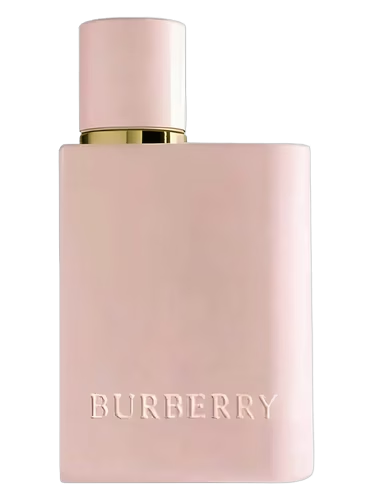
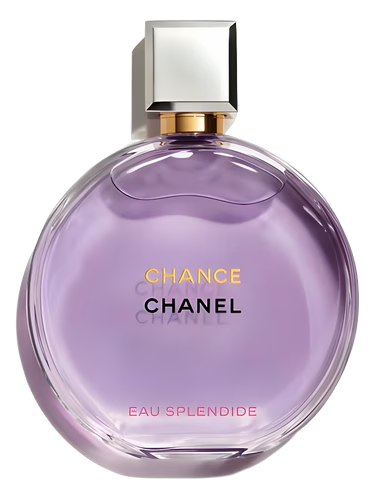
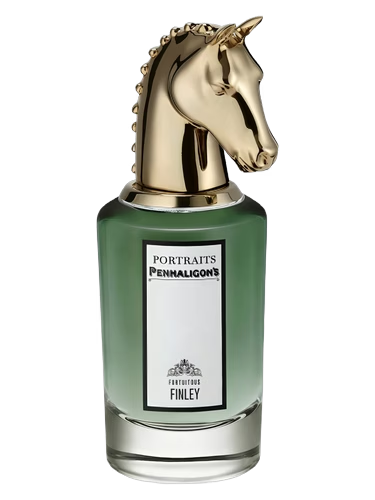
What is Leatherwood?
Leatherwood is a complex botanical note used in contemporary niche perfumery to embody a sophisticated blend of smoky tobacco, rich leather, and woody elements.What does Leatherwood smell like?
It offers a dark, sultry profile featuring smoky tobacco and leather balanced by aromatic spices like clove, with subtle undertones of red wine and tuberose sweetness.How is Leatherwood essence extracted?
The essence is primarily cold-extracted, often by processing the highly fragrant honey produced by bees from leatherwood nectar or using scientific liquid-liquid extraction methods.What are some top perfumes featuring Leatherwood?
Popular fragrances featuring this note include Persephenie Studio Leatherwood, Scents of Wood Leather in Armagnac, and Indigo Lush Leatherwood.When is Leatherwood in season?
It is an early-flowering plant that typically blooms from March to April, while its berry-like fruits ripen during the early summer months between May and July.