Fragrance Notes Are Layers Of Scent That Are Layered To Form The Final Fragrance. Fragrance Notes Are Categorised Into Three Main Elements Based On How Long They Take To Evaporate, And How Long They Typically Last Following Application: Top Notes, Heart Notes And Base Notes.
Laurel Blossom
Laurel Blossom offers a unique, complex aroma, often described as a blend of powdery florals (vague pink flowers), strong but fading incense, and a pronounced humid, aquatic note. It presents a cool, clean, and slightly mature character, sometimes likened to wet, clean dog or pink florals mixed with water.

Origin & Extraction Of Laurel Blossom
Laurel Blossom, derived from the bay laurel tree, does not possess the long historical use in classical perfumery found in notes like rose or jasmine. While the leaves of the laurel tree have been utilized since ancient times for medicinal, ceremonial, and culinary purposes—particularly in Mediterranean cultures, where it symbolized victory and honor—the use of its blossoms specifically for fragrance is a more modern practice. Early perfumery focused on readily available and easily extracted materials, often overlooking complex or subtle notes like the laurel flower.
The note's relevance to fine perfumery grew in the late 20th and early 21st centuries, coinciding with the rise of niche and artisanal fragrance houses that sought unique, complex, and atmospheric floral notes. Perfumers now utilize Laurel Blossom to introduce a distinctive profile—a blend of powdery, humid, aquatic, and slightly bitter green nuances. Its contemporary application is often seen in sophisticated compositions, where it provides a clean, elegant structure and helps bridge traditional florals with modern, green or aquatic accords.
Extraction Methods of Laurel Blossom
The primary method for extracting laurel flower essence is solvent extraction, which produces a yellow to greenish liquid extract that captures the fresh, spicy, and herbal aromatic profile of the flowers. Historically, laurel components have been obtained through conventional techniques such as maceration, infusion, and heat-reflux extraction. These traditional "folk methods" often involved soaking plant material in solvents like ethanol or water for extended periods to isolate bioactive compounds, though these processes were frequently time- and energy-consuming.
Modern commercial and laboratory production has shifted toward more efficient and sustainable "green" extraction technologies. Steam distillation is widely used to extract essential oils from various parts of the Laurus nobilis plant, including the flowers and buds, by passing pressurized steam through the material to vaporize volatile compounds. Furthermore, advanced methods such as supercritical fluid extraction (SFE) using CO2, pressurized liquid extraction (PLE), and pulsed electric field (PEF) technology are now employed to enhance yield and preserve delicate aromatic molecules without the high heat or long processing times required by historical methods.
The Laurel Blossom note, known for its complex profile that blends powdery florals, subtle incense, and a clean, humid aquatic quality, is often found in sophisticated modern and niche compositions. Its unique character allows it to offer a subtle, clean freshness that avoids the sharpness of traditional citruses, making it a distinctive floral choice. While not a historical cornerstone like Rose or Jasmine, it is increasingly prized for lending an elegant, mature nuance to fragrances.
- A notable modern interpretation featuring this unique note is Dans Paris by Celine. Launched in 2019, this fragrance utilizes Laurel Blossom to contribute to a luminous, slightly powdery, and gender-neutral composition. The note’s cool, clean essence helps anchor the scent, moving it beyond a simple floral into a more complex, atmospheric territory that reflects the brand's sophisticated aesthetic.
In the world of niche perfumery, where unique and evocative notes are paramount, Laurel Blossom has been used to create highly specific olfactory landscapes. Perfumers leverage its green, slightly bitter, and clean aspects to enhance aquatic or green structures. Examples include compositions like When The Stocks Go Green by Neferlogne, where the blossom likely reinforces a fresh, vegetal atmosphere, giving depth to a green scent profile that remains highly refined.
- Another emerging example comes from artisanal houses, such as Chouette Vierge No. by Chouette Vierge Parfumée, which incorporates the Laurel Blossom. These contemporary uses often highlight the note's ability to combine floral tenderness with a surprising clean, humid freshness, resulting in scents that feel both ancient and entirely new, appealing to consumers seeking subtle complexity over overt sweetness.
Overall, Laurel Blossom is not defined by a single, iconic mass-market perfume, but rather by its sophisticated presence in exclusive and modern releases. It serves as a testament to the ongoing evolution of floral accords, providing a nuanced, subtly bitter, and persistently clean aroma that elevates fresh and woody-floral blends, establishing it as a compelling ingredient for perfumers seeking originality and ethereal delicacy.
Sustainability Of Laurel Blossom
Sustainability of Laurel Blossom
- Promoting "Buzz and Bloom" initiatives to protect pollinators like bees and butterflies, which are essential for sustaining healthy ecosystems and the local food supply
- Implementing "No Mow April" programs to allow early-blooming lawn flowers to thrive, providing vital food sources for native bees emerging from hibernation
- Encouraging "Leave the Leaves" practices to provide natural winter shelter for beneficial insects and improve soil health through natural decomposition
- Adopting water-efficient landscaping and rain barrel initiatives to conserve local water resources and enhance drought resilience
- Reducing environmental pollution and greenhouse gas emissions by advocating for the use of electric lawn equipment and reducing waste through composting programs
Trivia
The word baccalaureate is derived from the Latin bacca lauri, meaning laurel berry, a nod to the ancient tradition of crowning scholars and victors with wreaths of bay laurel.
Most Popular Scents Using Laurel Blossom


What is Laurel Blossom?
Laurel Blossom is a fragrance note derived from the flowers of the bay laurel tree, known for its unique blend of powdery, humid, and aquatic characteristics.What does Laurel Blossom smell like?
It offers a complex aroma of powdery florals and subtle incense mixed with a pronounced clean, humid, and aquatic character.How is Laurel Blossom essence extracted?
The essence is primarily obtained through solvent extraction, though modern methods like steam distillation and CO2 extraction are also utilized to capture its spicy and herbal profile.What are some top perfumes featuring Laurel Blossom?
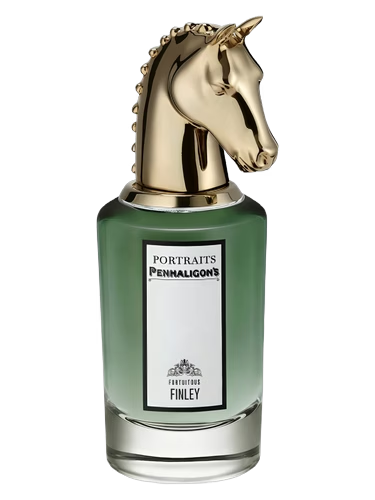
Notable fragrances include Celine Dans Paris, Demeter Mountain Laurel, and Neferlogne When The Stocks Go Green.When is Laurel Blossom in season?
The primary blooming period occurs in late spring and early summer, typically peaking between May and June.