Fragrance Notes Are Layers Of Scent That Are Layered To Form The Final Fragrance. Fragrance Notes Are Categorised Into Three Main Elements Based On How Long They Take To Evaporate, And How Long They Typically Last Following Application: Top Notes, Heart Notes And Base Notes.
Lantana
Lantana leaf offers a delicate, refreshing, and clean aromatic profile often likened to Lemon Verbena. It presents a prominent citrus-herbaceous character with bright, uplifting, and slightly green facets. Its scent is commonly used to add a shimmering, nuanced lift in compositions, blending well with notes like bergamot and clary sage for a sophisticated, fresh opening.

Origin & Extraction Of Lantana
Lantana, while offering a refreshing and clean citrus-herbaceous profile often compared to Lemon Verbena, is a note predominantly found in contemporary and niche perfumery, lacking the long, foundational history of classic notes like Bergamot or Lemon.
Its adoption reflects a modern trend among perfumers to explore unique floral-citrus and green extracts, moving beyond traditional ingredients. Lantana is valued for its ability to add a shimmering, nuanced lift and sophisticated realism to compositions, ensuring its growing use in artisanal collections that seek distinctive and complex fresh accords.
Extraction Methods of Lantana
The primary method for extracting essential oil from Lantana (Lantana camara) is steam distillation or hydrodistillation of the leaves and flowers. This process involves placing dried or fresh plant material into a distillation apparatus, such as a Clevenger-type system, where pressurized steam or boiling water breaks down the volatile oil glands to release the aromatic compounds. The resulting vapor is then cooled and condensed, allowing the essential oil to be separated from the water (hydrosol) based on its specific gravity.
Historically, Lantana has been processed through simple traditional methods such as maceration and infusion. Ancient folk practices involved soaking the leaves in water or alcohol for extended periods to capture their medicinal and aromatic properties for use in topical poultices or therapeutic rinses. More labor-intensive manual methods, like simple boiling and filtration, were common in regions where the plant grows as an invasive weed.
Modern extraction techniques have expanded to include more efficient and specialized processes. The Soxhlet extraction method is frequently used in research and industrial settings to obtain bioactive compounds using various solvents like methanol, ethanol, or ethyl acetate. Furthermore, latest developments include the use of microwave-assisted extraction (MAE) and supercritical CO2 extraction, which offer faster extraction times and higher purity by capturing delicate molecules without the risk of thermal degradation associated with traditional boiling.
Lantana, with its delicate, refreshing, and clean citrus-herbaceous profile often likened to Lemon Verbena, is a note predominantly embraced by contemporary and niche perfumery rather than classic mainstream houses. Its bright, uplifting facets make it a sophisticated choice for houses seeking to create photorealistic green or unique floral-citrus accords that stand apart from traditional bergamot or lemon openings. It serves to add a shimmering, nuanced lift to compositions, particularly blending well with other aromatic elements like clary sage.
- Parfum d'Empire's Lantana Camara is one of the most prominent examples where this note is showcased front and center.
In Lantana Camara, the note is utilized to capture the complexity of the vivid flower itself, offering a green, fruity, sparkling, and tart character. The perfumer, Marc-Antoine Corticchiato, combined the surprising scent of Lantana with other bright citruses like orange, lime, and grapefruit, alongside resins, to create an energetic and complex composition. This illustrates Lantana's ability to act as a bridge, maintaining the invigorating freshness of a top note while integrating deeper aromatic nuances.
- The use of Lantana in modern perfumery is still growing, often appearing in artisanal collections where perfumers explore less common floral and herbaceous extracts.
While definitive global bestsellers featuring Lantana as a primary note are rare compared to classics using Bergamot or Rose, its increasing presence reflects a trend toward sophisticated realism in fragrance. The note offers perfumers an excellent tool to introduce a fresh, slightly bitter, and green aromatic structure that provides both complexity and lasting vitality, ensuring its continued adoption in the niche segment for unique, contemporary fresh compositions.
Sustainability Of Lantana
Sustainability of Lantana Leaf
- Utilizing an invasive species as a raw material source, which helps control its spread and protects native biodiversity in tropical and subtropical ecosystems
- Promoting zero-waste initiatives by harvesting abundant wild-growing biomass that requires no intensive agricultural inputs like synthetic fertilizers or irrigation
- Adopting steam distillation as a clean extraction method to produce essential oils from leaves that are otherwise considered problematic weeds
- Supporting local economies in producing regions like India by providing income opportunities through the collection and processing of wild-harvested lantana
- Implementing responsible sourcing practices to ensure that the removal of this invasive plant contributes to the restoration of degraded landscapes and natural habitats
Trivia
Lantana is often described as a "don't touch me" plant because its crushed leaves release a polarizing, pungent aroma that can smell like cat urine or gasoline to some, while others find it pleasantly spicy and citrusy.
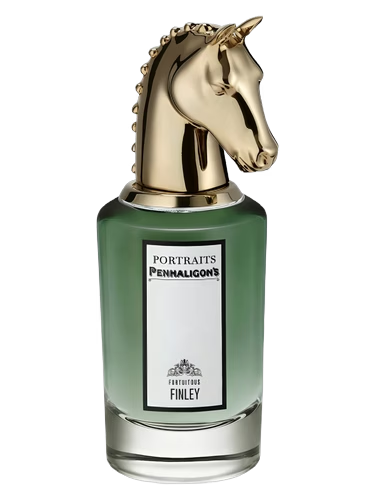
Most Popular Scents Using Lantana


What is Lantana?
Lantana is a vibrant flowering plant native to the tropical Americas, valued in perfumery for its delicate, refreshing, and clean citrus-herbaceous profile often compared to Lemon Verbena.What does Lantana smell like?
It offers a bright, uplifting, and slightly green aromatic character with a shimmering, nuanced lift that can feature surprising fruity, sparkling, and peppery undertones.How is Lantana essence extracted?
The primary method for obtaining its essential oil is through steam distillation or hydrodistillation of the plant's leaves and flowers.What are some top perfumes featuring Lantana?
Notable fragrances include Parfum d'Empire's Lantana Camara, Bond No 9 Queen Elizabeth II, and House of Matriarch Forbidden.Is Lantana a common note in classic perfumery?
No, Lantana is predominantly a modern and niche fragrance note, used by contemporary perfumers to create unique floral-citrus or photorealistic green accords.