Fragrance Notes Are Layers Of Scent That Are Layered To Form The Final Fragrance. Fragrance Notes Are Categorised Into Three Main Elements Based On How Long They Take To Evaporate, And How Long They Typically Last Following Application: Top Notes, Heart Notes And Base Notes.
Lamduan Flower
Lamduan Flower offers a rich, sweet white floral aroma, often likened to a complex blend of gardenia, jasmine, and ylang-ylang. It possesses a luminous, creamy sweetness with subtle tropical fruit and green undertones. This exotic note imparts a sophisticated, heady, and warm floral depth to fragrances.

Origin & Extraction Of Lamduan Flower
The Lamduan Flower (or Melodorum fruticosum) note is a precious, exotic white floral essence, primarily valued in niche and artisanal perfumery for its creamy, luminous sweetness and tropical undertones, often compared to a blend of gardenia and ylang-ylang. Due to its origin and rarity, it is not as pervasive in mainstream designer fragrances as jasmine or tuberose, but it is sought after by perfumers looking to evoke Southeast Asian landscapes or create a sophisticated, heady floral heart. Its unique complexity adds a layer of warm depth, ensuring the scent is both uplifting and richly textured.
In modern perfumery, the inclusion of the Lamduan Flower note signals a move toward using less conventional, highly photorealistic floral ingredients. It is frequently paired with richer, creamier base notes like sandalwood or vanilla, which complement its inherent warmth. Houses like Pranali Perfumes and Dusita Paris have utilized this note to lend an authentic and sophisticated touch, placing the flower at the center of their compositions to capture the ethereal scent of the blossom.
Historically, the aromatic essence of the Lamduan flower (Melodorum fruticosum) has been captured through traditional Thai methods of enfleurage and scenting, particularly used in the culinary arts to perfume desserts. A notable traditional technique involves the use of a "tian op" (Thai scented candle), where flowers and sweets are placed in a closed container with a burning candle made of beeswax, frankincense, and aromatic herbs to infuse the material with a delicate, smoky floral aroma. In herbal medicine, simple aqueous decoctions or macerations in neutral oils or spirits were commonly used to extract the flower's therapeutic properties.
Modern extraction techniques have transitioned toward preserving the flower's complex volatile profile and bioactive compounds through more precise scientific methods. Direct solvent extraction (DSE) using organic solvents like ethanol or petroleum ether is frequently employed to produce floral concretes and absolutes, which are highly valued in fine perfumery for their authentic scent. Additionally, advanced methods such as steam distillation, hydrodistillation, and headspace technology are utilized to isolate specific volatile compounds like linalool and caryophyllene. Recent innovations also include ultrasound-assisted extraction (UAE) and supercritical CO2 extraction, which enhance the yield of delicate aromatic molecules and phytochemicals without the use of high heat, ensuring a purer and more stable aromatic profile.
The Lamduan Flower (or Melodorum fruticosum) note is a precious, exotic white floral essence, primarily valued in niche and artisanal perfumery for its creamy, luminous sweetness and tropical undertones, often compared to a blend of gardenia and ylang-ylang. Due to its origin and rarity, it is not as pervasive in mainstream designer fragrances as jasmine or tuberose, but it is sought after by perfumers looking to evoke Southeast Asian landscapes or create a sophisticated, heady floral heart. Its unique complexity adds a layer of warm depth, ensuring the scent is both uplifting and richly textured.
- A notable example featuring the Lamduan note is the Thai-inspired fragrance Lamduan by **Pranali Perfumes**, which places the flower at the center of the composition, blending its creamy facets with soft spices and woods to capture the authentic, ethereal scent of the blossom.
- Another house that has showcased this exotic floral is **Dusita Paris**, whose exploration of Thai heritage sometimes incorporates unique regional florals to lend an authentic and sophisticated touch to their opulent French-style compositions.
While often used as a supporting note to enhance white floral accords, Lamduan Flower’s profile is potent enough to anchor a fragrance. It is frequently paired with richer, creamier base notes like sandalwood or vanilla, which complement its inherent warmth and prevent the floral heart from becoming too fleeting. In modern perfumery, its inclusion signals a move toward using less conventional, highly photorealistic floral ingredients to stand out in the crowded market.
Sustainability Of Lamduan Flower
Sustainability of Lamduan Flower
- Promoting the use of Lamduan fruit as a sustainable, locally abundant natural alternative to synthetic carotenoids in commercial aquaculture feed
- Utilizing the plant's diverse bioactive compounds, such as phenolics and flavonoids, to reduce waste from annually discarded surplus fruits
- Supporting the conservation of cultural heritage and local biodiversity through traditional festivals and the preservation of ethnic botanical knowledge
- Enhancing regional economic resilience by integrating traditional Thai flora into sustainable tourism and soft power initiatives
- Implementing organic farming practices to maintain soil health and prevent environmental contamination in native growing regions
Trivia
The Lamduan flower is the national flower of Cambodia and serves as a symbolic flower for the elderly in Thailand because its long-lived, evergreen nature represents the resilience and role-modeling of older generations.
Most Popular Scents Using Lamduan Flower
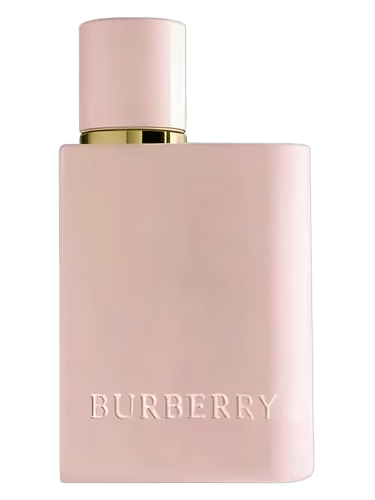
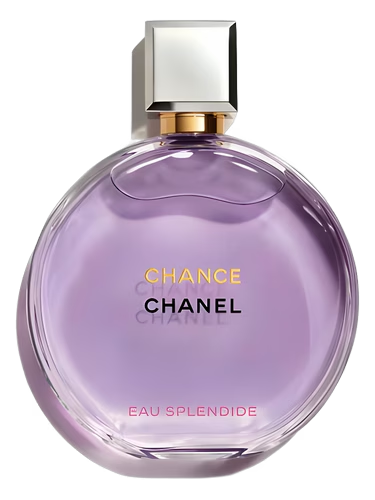
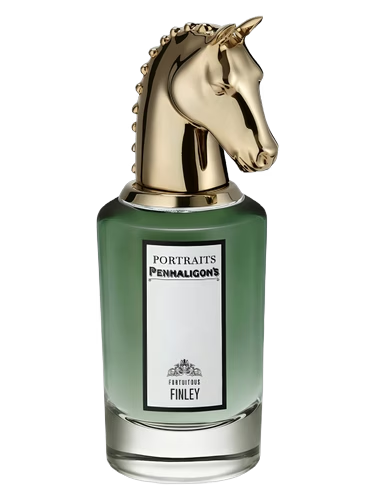
What is Lamduan Flower?
The Lamduan flower, or Melodorum fruticosum, is an exotic white blossom native to Southeast Asia, cherished in perfumery for its rich, creamy, and luminous sweetness.What does Lamduan Flower smell like?
It offers a heady, sweet aroma often compared to a complex blend of gardenia, jasmine, and ylang-ylang, featuring tropical fruit nuances and warm, green undertones.How is Lamduan Flower essence extracted?
In modern perfumery, the essence is typically obtained through solvent extraction to create concretes and absolutes, or through steam distillation and advanced supercritical CO2 extraction.What are some perfumes featuring the Lamduan Flower note?
Notable fragrances include Lamduan by Pranali Perfumes, which centers on the blossom, and various opulent compositions from the house of Dusita Paris.What is the cultural significance of the Lamduan Flower?
It is the national flower of Cambodia and symbolizes the elderly in Thailand, representing resilience and role-modeling due to the tree's long-lived, evergreen nature.