Fragrance Notes Are Layers Of Scent That Are Layered To Form The Final Fragrance. Fragrance Notes Are Categorised Into Three Main Elements Based On How Long They Take To Evaporate, And How Long They Typically Last Following Application: Top Notes, Heart Notes And Base Notes.
Lady Slipper Orchid
Lady Slipper Orchid (Cypripedium) is characterized by a delicate, slightly sweet, and powdery floral scent, often with green, creamy vanilla, and subtle spicy facets. It is an exotic, airy note used to convey elegance and a unique, soft sensuality in floral and oriental compositions, adding a luminous, refined texture.

Origin & Extraction Of Lady Slipper Orchid
The Lady Slipper Orchid (Cypripedium) does not have a long, documented history in classic perfumery, unlike foundational ingredients such as rose or jasmine. Orchids, in general, are challenging to extract natural oils from, meaning the scent is typically recreated using headspace technology or synthetic aroma molecules. Its use gained relevance in the late 20th and 21st centuries as perfumers, particularly those in niche houses, began searching for unique, exotic, and elusive floral notes that could convey sophistication and mystery. Early instances of its use often highlighted its subtle, green, and slightly vanilla-powdery facets in experimental floral-oriental compositions.
Because the note is usually reconstructed, its significance in modern perfumery lies in its ability to offer an airy, refined texture that bridges delicate florals and creamy, warm bases. It represents a contemporary trend of using rare and photorealistic floral notes that evoke luxurious, natural environments, such as tropical rainforests. The resulting synthetic or blended note provides stability and longevity for the delicate creamy vanilla and green facets that characterize the Lady Slipper Orchid scent profile.
Extraction Methods of Lady Slipper Orchid
Historically, lady slipper orchid extract was primarily obtained from the roots and rhizomes, which were collected in the fall or early spring, dried, and then processed into powders or tinctures. Because the active medicinal principles are not water-soluble, traditional methods favored alcohol-based maceration over aqueous preparations to create "nerve powders" or sedatives used by indigenous and immigrant populations.
Modern extraction and propagation focus on sustainable micropropagation and in vitro techniques to protect rare wild species. Latest methods involve asymbiotic germination where seeds are "flasked" in sterile, nutrient-rich agar media, sometimes following ultrasonic pretreatment or chemical scarification with sodium hypochlorite to remove germination inhibitors. Advanced cellular and molecular techniques, such as the use of plant growth regulators like 2,4-D and kinetin, are now employed to produce callus and high-quality phytochemicals without depleting wild populations.
The Lady Slipper Orchid (Cypripedium) note, known for its delicate, powdery, and slightly vanilla-spicy facets, is a specialized ingredient often favored by niche and artisanal perfume houses seeking to convey unique sophistication. While not as universally recognized as notes like Rose or Jasmine, its inclusion immediately suggests an exotic, refined touch. It adds an ethereal elegance and soft sensuality, enhancing floral-oriental structures with a luminous texture that is simultaneously green and creamy.
- * * *
One notable example of the Lady Slipper Orchid's use is in fragrances that highlight complex, rainforest-inspired florals. The note’s powdery quality pairs beautifully with white flowers, preventing them from becoming heavy, while its green nuances reinforce the natural, exotic origins of the orchid. This subtle complexity allows the note to bridge the gap between traditional floral hearts and warmer, oriental bases, providing a soft lift throughout the scent's progression.
- * * *
In modern perfumery, the Lady Slipper Orchid often appears in conjunction with synthetic aroma molecules designed to replicate its specific profile, given the orchid family's difficulty in yielding natural essential oils. This use ensures stability and longevity for the delicate, creamy vanilla and green facets. Fragrances like those from certain niche brands aim to capture the elusive scent of the rare bloom, often using the Lady Slipper Orchid note to evoke a luxurious, mysterious atmosphere.
Sustainability Of Lady Slipper Orchid
Sustainability of Lady Slipper Orchid
- Discouraging wild harvesting and illegal collection for horticulture and the wildflower trade as seed-bearing harvest of the root is not considered sustainable
- Promoting ex situ conservation and restoration through laboratory seed propagation and greenhouse cultivation to reintroduce healthy populations into native habitats
- Protecting critical ecosystems, specifically alkaline fens and acidic hardwood forests, to maintain the symbiotic relationship with Rhizoctonia fungi necessary for orchid germination
- Developing advanced propagation techniques, such as harvesting immature seeds and using nutrient-rich sterile mediums, to overcome the plant's complex reproductive biology
- Collaborating with botanical gardens, wildlife trusts, and government agencies to manage species recovery programs and establish protected habitats for self-sustaining populations
Trivia
The name lady's slipper comes from the Greek words cypris, referring to Aphrodite, and pedilon, meaning sandal, and an old Ojibwe legend says these flowers first grew where a brave young woman's moccasins left prints in the snow as she traveled through a winter plague to find medicine for her village.
Most Popular Scents Using Lady Slipper Orchid
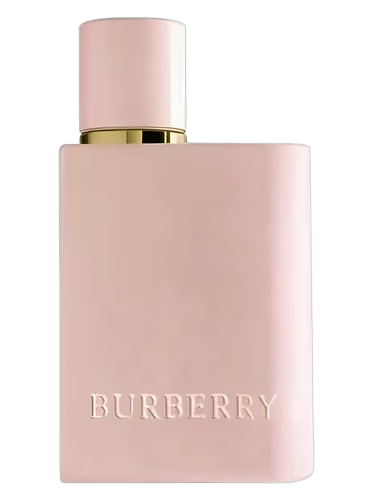
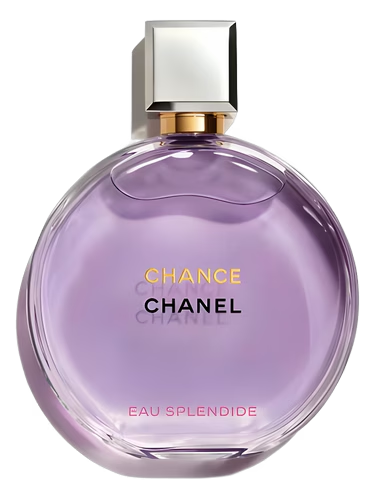
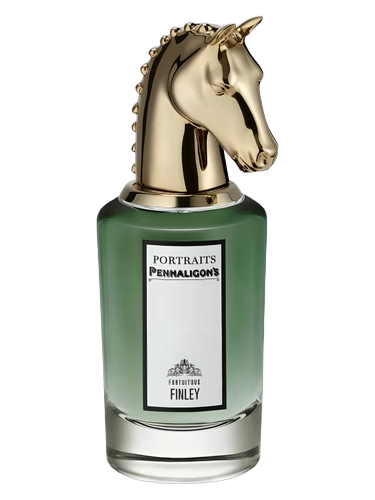
What is Lady Slipper Orchid?
Lady Slipper Orchid refers to orchids of the Cypripedium genus, known for their unique slipper-shaped pouch and used in modern perfumery as an exotic, refined floral note.What does Lady Slipper Orchid smell like?
It features a delicate, slightly sweet, and powdery floral aroma with green, creamy vanilla, and subtle spicy facets, providing an airy and luminous texture.How is Lady Slipper Orchid essence extracted?
Because the flowers are difficult to extract naturally, the scent is typically recreated using headspace technology or synthetic molecules; historically, roots were used for medicinal tinctures.What are some top perfumes featuring Lady Slipper Orchid?
Notable fragrances include Demeter Aphrodite's Slipper Orchid, Charenton Macerations Lady Slipper, Cereus No. 6, and Soulvent Sherpa Smoke.When is Lady Slipper Orchid in season?
These orchids follow a seasonal cycle in the Northern Hemisphere, typically blooming between May and June, with individual blossoms lasting one to three weeks.