Fragrance Notes Are Layers Of Scent That Are Layered To Form The Final Fragrance. Fragrance Notes Are Categorised Into Three Main Elements Based On How Long They Take To Evaporate, And How Long They Typically Last Following Application: Top Notes, Heart Notes And Base Notes.
Lady of the Night Flower
Lady of the Night Flower (Brunfelsia/Cestrum nocturnum) releases a heady, intoxicating perfume at night. It is complex, blending sweet, narcotic floral notes, often likened to honeysuckle nectar and heliotrope, with musky, spicy, green-minty, and bright lemony facets, offering a captivating, slightly powdery, and exotic aura.

Origin & Extraction Of Lady of the Night Flower
The Lady of the Night Flower, or Cestrum nocturnum, has a history in scent appreciation that is far older than its use in modern perfumery, owing to its intensely fragrant nocturnal bloom. Historically, the flower, native to the West Indies and Central/South America, was prized in gardens across warmer climates for the intoxicating, heady aroma it releases after sunset. Its relevance to fine perfumery, however, is relatively contemporary. Unlike classic European notes like rose or jasmine which have centuries of documented use in essential oils, the Lady of the Night Flower presented a challenge due to the difficulty and low yield of extracting its natural essence.
Its application in fragrance compositions became more feasible with the advent of modern extraction and synthesis techniques, particularly headspace technology in the late 20th century. This allowed perfumers to accurately capture its complex profile, which includes narcotic white floral sweetness, green, musky, and spicy facets. Consequently, the note is primarily featured in modern niche and oriental-floral fragrances where it is used to evoke mystery, seduction, and exotic nighttime settings, differentiating it from traditional white florals and lending a dark, carnal depth to intense evening scents.
Extraction Methods of Lady of the Night Flower
The extraction of Epiphyllum oxypetalum, or Lady of the Night, traditionally relies on maceration, a process where harvested flowers, stems, or leaves are dried and then steeped in solvents such as ethanol, methanol, or acetone. Historically, folk methods in regions like Taiwan and Vietnam involved harvesting the flowers at night to be dried for medicinal use in soups or teas, utilizing simple water-based infusions to capture the plant's therapeutic resins and tannins. These traditional techniques focused on preservation for treating respiratory and cardiac ailments rather than isolating specific aromatic compounds.
Modern scientific approaches have advanced toward identifying the molecular basis of the flower's fleeting scent through volatilomics and transcriptomics. Recent research has identified geraniol as the dominant aromatic component, discovering that the plant utilizes a unique cytosolic terpene synthase pathway for rapid scent accumulation during its short blooming window. For commercial and analytical purposes, latest methods utilize Gas Chromatography-Mass Spectrometry (GC-MS) and Thin Layer Chromatography (TLC) to verify and purify phytocompounds, while experimental studies explore concentrated ethanol extracts to isolate phenolic and antioxidant compounds for pharmaceutical applications.
The Lady of the Night Flower (Cestrum nocturnum), famed for its heady, nocturnal fragrance, is a prized yet challenging note in perfumery. Because its oil is difficult to extract, it is often replicated via headspace technology and synthetic accords, allowing perfumers to capture its complex bouquet—a blend of sweet, narcotic white florals with musky and slightly green nuances. When utilized, it is almost always meant to evoke an aura of mystery, seduction, and exotic nighttime blooming.
- One notable fragrance that features the intoxicating night-blooming quality is **Frangipani Lady of the Night** by various niche houses, though its presence is often most celebrated in more abstract compositions.
- The note also appears in certain modern interpretations of classic white florals, lending a dark, carnal depth that distinguishes it from notes like jasmine or tuberose.
- Due to its strong, penetrating aroma, the Lady of the Night Flower note is primarily reserved for intense, long-lasting evening and oriental-floral perfumes.
In contemporary fragrance, the note often finds a home in niche and artisanal lines looking to capture rare botanicals and unique sensory experiences. Fragrances like **Night-Blooming Jasmine** from select perfumers draw heavily on this profile, as the flower shares many volatile compounds with nocturnal jasmine varieties. The complexity of the scent—including its musky, spicy, and even lemony facets—means it harmonizes well with rich bases of vanilla, amber, and patchouli, creating a lasting, enveloping trail.
- Blooming typically occurs during the late spring and summer months, often triggered by the onset of warmer temperatures
- The plant is famous for its nocturnal blooming pattern, where flowers open only once a year after sunset and wilt by dawn
- Active growth and development take place throughout the spring and summer growing seasons, requiring regular moisture and warmth
- A period of dormancy occurs during the winter months when growth slows significantly and the plant requires less frequent watering
- In indoor environments, the plant may occasionally bloom sporadically outside its primary summer window if provided with stable tropical conditions
Sustainability Of Lady of the Night Flower
Sustainability of Lady of the Night Flower
- Supporting biodiversity by providing a vital nectar source for nocturnal pollinators such as bats and moths
- Promoting organic cultivation through the use of natural pest management solutions like neem oil and insecticidal soaps
- Encouraging water conservation by utilizing drought-tolerant species and well-draining soil mixes that prevent water waste
- Reducing the environmental footprint of fragrance production by researching biosynthetic routes for key aromatic compounds like geraniol
- Mitigating invasive spread in sensitive ecosystems through responsible site selection and diligent pruning to manage seed dispersal
Trivia
The Queen of the Night flower blooms for only a single night each year, and its intense, vanilla-like fragrance is specifically designed to attract nocturnal pollinators like bats and moths before the blossom wilts forever at dawn.
Most Popular Scents Using Lady of the Night Flower
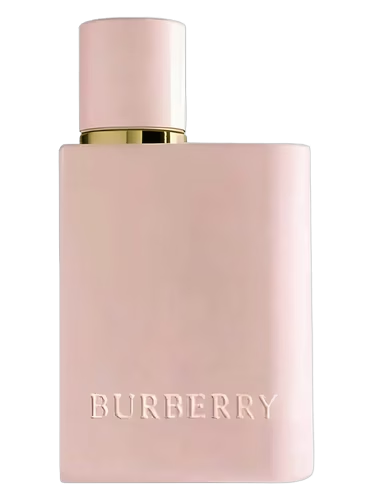
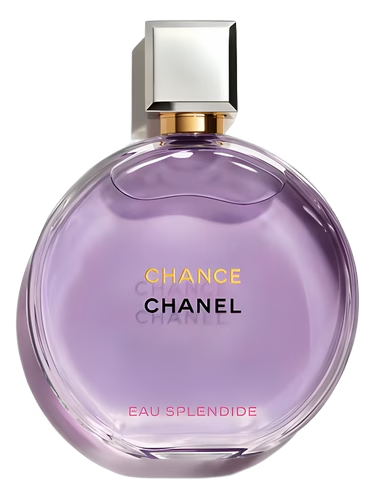
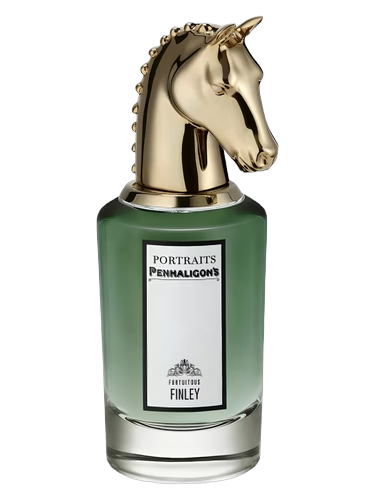
What is Lady of the Night Flower?
The Lady of the Night Flower refers to several species, most notably Cestrum nocturnum and Epiphyllum oxypetalum, known for releasing an intense, intoxicating fragrance exclusively after sunset to attract nocturnal pollinators.What does Lady of the Night Flower smell like?
It possesses a heady, narcotic white floral aroma often compared to a blend of jasmine and honeysuckle, featuring complex facets of musk, spice, green mint, and bright lemon.How is the essence of Lady of the Night Flower extracted?
Due to the delicate nature of the blooms, the scent is often captured using headspace technology or cryoextraction, though traditional methods include maceration in solvents to isolate its aromatic compounds.What are some top perfumes featuring Lady of the Night Flower?
Notable fragrances include Zoologist Perfumes Orchid Mantis, The Harmonist Moon Glory, Heretic Queen of the Night, Tory Burch Divine Moon, and Dior Addict.When is the Lady of the Night Flower in season?
Blooming typically occurs during the late spring and summer months, with flowers famously opening for only a single night or during nocturnal hours when temperatures are warm.