Fragrance Notes Are Layers Of Scent That Are Layered To Form The Final Fragrance. Fragrance Notes Are Categorised Into Three Main Elements Based On How Long They Take To Evaporate, And How Long They Typically Last Following Application: Top Notes, Heart Notes And Base Notes.
Kumquat
Kumquat offers a bright, intensely zesty citrus scent, a blend of tart lemon and sweet orange but with a distinctive bitter, slightly resinous nuance from its edible rind. It is sparkling, fresh, and uplifting, lending a unique, complex brightness to compositions, often used in top notes for an immediate, mouth-watering effect.

Origin & Extraction Of Kumquat
Kumquat, native to East Asia, is a relatively modern addition to the perfumer's palette compared to classic Mediterranean citruses like Bergamot and Lemon. Historically, traditional fine perfumery largely relied on these volatile, zesty notes for the initial opening of fragrances, particularly within the foundational Eau de Cologne structure. The use of Kumquat began to rise in popularity in contemporary perfumery as houses sought unique, complex, and sophisticated citrus profiles that could move beyond the conventional. Its distinctive composition—a blend of sweet orange, tart lemon, and the unique aromatic bitterness of its edible peel—offered perfumers a way to inject a fresh yet multifaceted lift.
In modern perfumery, Kumquat is cherished for its versatility, allowing it to seamlessly transition between the vibrant top notes and the warmer, fruitier heart notes of a composition. It is often employed in high-end colognes and light fragrances designed to convey a cheerful, exotic, and sunlit brightness. The note helps provide a sophisticated aromatic complexity and a slightly sweet-bitter freshness, ensuring a sparkling and enduring presence that appeals to contemporary consumers looking for fresh, uplifting scents that are both clean and nuanced.
Extraction Methods of Kumquat
Historically, the essential oil of kumquat (Citrus japonica) was obtained through simple manual methods such as the sponge or "ecuelle a piquer" techniques. These involved mechanically pressing or puncturing the fruit's thin, oil-rich rind to release aromatic compounds. Because kumquats are small and their peel adheres tightly to the fruit, traditional extraction required meticulous hand-processing to capture the delicate, sweet-tart essence without contamination from the pulp. Other traditional methods include ethanol reflux extraction and simple maceration where the zest is steeped in high-proof spirits to create tinctures.
Modern commercial extraction primarily utilizes advanced cold-pressing machinery that rasps or squeezes the fruit to produce high-quality essential oils. Recent technological advancements have introduced highly efficient methods such as microwave-assisted distillation (MAD), which uses electromagnetic waves for rapid heat transfer, and supercritical CO2 extraction to capture volatile molecules without high heat. Additionally, industrial processes now include spray drying, where kumquat extract is atomized into a hot air stream to create stable, concentrated powders for use in the food, cosmetic, and pharmaceutical industries.
Kumquat, with its unique blend of tart lemon and sweet orange, provides a distinctive and sparkling top note, making it highly attractive for modern, luminous fragrances. One notable example is the early 2000s scent Aqua Allegoria Mandarine Basilic by Guerlain, which utilizes kumquat to amplify the bright, juicy freshness of mandarin orange, contrasting beautifully with the aromatic greenness of basil. This combination creates an immediate sensation of an invigorating summer garden, proving that kumquat excels at adding complexity and zest to classic citrus accords.
In the realm of contemporary perfumery, Kumquat often features in compositions seeking a sophisticated twist on conventional freshness. For instance, the note is prominently showcased in certain releases from the Jo Malone London brand, specifically those intended to evoke bright, exotic energy. While often used to substitute or complement standard lime or lemon, kumquat's slightly bitter and resinous rind nuance (as noted in its profile) offers a depth that extends beyond simple fruitiness, helping it transition smoothly into floral or even chypre structures.
Furthermore, Kumquat is favored in several niche and artisanal fragrances looking to evoke specific geographical locales or Mediterranean vitality. Its inclusion ensures that the opening burst is both familiar (citrusy) yet distinct, preventing the fragrance from becoming generic. Although less ubiquitous than Bergamot or Lemon, Kumquat has solidified its place as a valued modern accent, contributing a vibrant, zesty sweetness and lending a complex, uplifting energy to scents like 4711 Acqua Colonia Mandarine & Cardamom, where its bright quality is balanced by the warm spice of cardamom.
Sustainability Of Kumquat
Sustainability of Kumquat
- Promoting the cultivation of hardy, low-maintenance trees that are naturally resilient to common citrus pests, reducing the need for intensive chemical interventions
- Encouraging the use of organic farming practices and integrated pest management to mitigate the negative impacts of synthetic pesticides on local ecosystems
- Advocating for responsible water management, such as deep but infrequent watering and mulching, to prevent aquifer depletion and protect soil health
- Supporting ethical labor practices and fair wages within the kumquat industry to enhance the socio-economic resilience of farming communities
- Reducing agricultural waste by promoting the consumption of the entire fruit, including the peel, and repurposing excess harvests into preserves and artisanal products
Trivia
The kumquat's name derives from Cantonese words meaning golden orange, and it is the only citrus fruit meant to be eaten entirely whole because its thin, fragrant peel is actually the sweetest part, providing a sugary contrast to its tart interior.
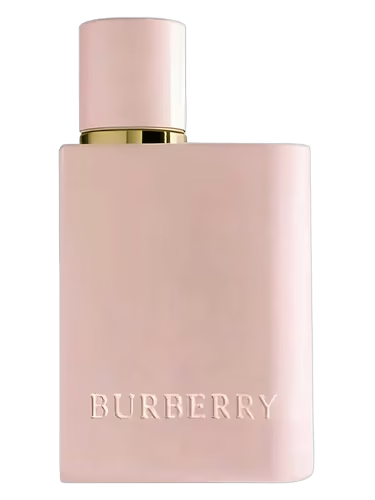
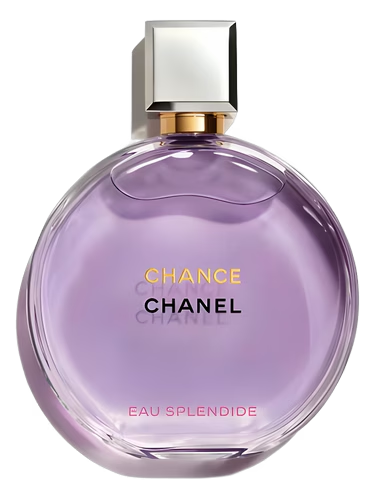
Most Popular Scents Using Kumquat

What is kumquat?
Kumquat is a small citrus fruit native to East Asia, prized in perfumery for its unique ability to provide a bright, multifaceted scent that blends tart lemon and sweet orange with a bitter, resinous rind nuance.
What does kumquat smell like?
It offers an intensely zesty and sparkling aroma that is both sweet and tart, often featuring subtle green, herbaceous, or pine-like undertones that add a sophisticated, mouth-watering complexity to fragrances.
How is kumquat oil extracted?
The essential oil is primarily obtained through cold-pressing the fruit's thin, oil-rich rind, though modern methods like supercritical CO2 extraction are also used to capture its delicate volatile compounds.
What are some top perfumes featuring kumquat?
Popular fragrances that showcase kumquat include Hermes Le Jardin de Monsieur Li, Korres Cashmere Kumquat, Marc Jacobs Daisy Eau So Fresh, and 4711 Acqua Colonia Mandarine & Cardamom.
When is kumquat in season?
Kumquat trees typically bloom in late spring or summer, with the fruit ripening and reaching its peak flavor and aromatic quality during the winter months, generally from November through March.