Fragrance Notes Are Layers Of Scent That Are Layered To Form The Final Fragrance. Fragrance Notes Are Categorised Into Three Main Elements Based On How Long They Take To Evaporate, And How Long They Typically Last Following Application: Top Notes, Heart Notes And Base Notes.
Kiwi
Kiwi presents a vibrant, tropical, and complex fruity note in perfumery, characterized by a unique balance of sweetness and tartness, reminiscent of green melon, strawberry, and subtle pineapple. It offers a juicy, invigorating, and slightly green accent, adding a sparkling, uplifting freshness to compositions, often used to enhance exotic and aquatic accords.

Origin & Extraction Of Kiwi
Kiwi, or Chinese gooseberry, is native to China but was commercialized primarily in New Zealand in the mid-20th century, which led to its popular adoption worldwide. Due to the high water content and delicate nature of the fruit, a natural essential oil is not typically extracted for perfumery. Therefore, the kiwi note is a relatively modern creation in the fragrance industry, almost exclusively synthesized as an "accord" to capture its unique scent profile—a mix of green melon, strawberry, and slight tartness.
The use of the Kiwi note gained traction in perfumery, particularly starting in the late 20th and early 21st centuries, coinciding with the rise of fruity-floral and aquatic fragrance genres. It is often employed to impart a vibrant, tropical, and modern freshness, distinguishing contemporary compositions from classic European scents. This note serves to enhance invigorating top-note accords and add a juicy, sparkling lift to exotic compositions.
Extraction Methods of Kiwi Seed Oil
Historically, kiwi seed oil was obtained through traditional mechanical methods such as hammer milling the fruit and using screens and water to separate the skin and pulp from the seeds. Manual peeling and pressing using specialized devices like the Auriol press were also common, often followed by decanting in water to isolate the seeds. These older processes were sometimes seen as unsympathetic to the physical condition of the seed, frequently resulting in a significant proportion of damaged seed coats.
Today, the primary commercial method for high-quality kiwi seed oil is cold expression (pressing), where cleaned and dried seeds are mechanically pressed at low temperatures, typically between 26-32°C (80-90°F), to preserve delicate nutrients like alpha-linolenic acid. Another advanced and increasingly popular method is supercritical CO2 extraction, which uses liquefied carbon dioxide as a solvent at controlled temperatures (30-40°C) to efficiently pull the oil from crushed seeds. This modern technique is favored for producing a pure, nutrient-dense oil without the use of chemical solvents. Emerging industrial and experimental methods also include ultrasonic-assisted extraction, three-phase partitioning (TPP) using salts and solvents, and aqueous enzymatic extraction using alkaline protease to improve oil yields.
The Kiwi note, being a modern accord, is often featured in vibrant, fruity-floral, and aquatic compositions designed to evoke tropical energy and sparkling freshness. It gained traction in the late 20th and early 21st centuries alongside the rise of the fruity fragrance family. The use of Kiwi provides a unique balance of sweetness and tartness, reminiscent of green melon and subtle strawberry, helping modern scents achieve a distinctly juicy and invigorating opening. It is a creative note, often synthesized to bypass the difficulty of natural extraction.
- A notable example of a fragrance featuring the kiwi note is Escada Sexy Graffiti (2011), where it contributes to the vibrant, summer-themed, fruity cocktail opening, blending with notes like raspberry and strawberry to create an intensely sweet and cheerful tropical vibe.
- The note also appears in Acqua di Parma Fico di Amalfi, where its subtle green and slightly tart accent supports the main fig note, adding a touch of invigorating freshness that enhances the scent’s Mediterranean feel.
Kiwi's invigorating character makes it highly suitable for contemporary fragrances, particularly those marketed for warmer weather or youthful demographics. Perfumers utilize this note not just for its immediate juiciness but also for its slightly green undertone, which helps transition the bright opening into floral or aquatic hearts. Fragrances like Avon's Hawaiian Shores illustrate how Kiwi is deployed to create a light, exotic, and uplifting accord, establishing a strong, vibrant first impression before fading into muskier or softer dry-downs.
Sustainability Of Kiwi
Sustainability of Kiwi
- Promoting a circular economy by valorizing agro-industrial waste, such as repurposing kiwi peels, leaves, and pomace into bioactive extracts for cosmetics and fragrances
- Adopting the zero waste principle by utilizing nutrient-rich by-products that were previously discarded, thereby reducing the environmental footprint of fruit processing
- Implementing industry-wide assurance programs and quality protocols to ensure fruit is grown using the best available sustainable methods
- Supporting the transition to organic kiwifruit farming to eliminate the use of synthetic chemicals and nitrogen, protecting local soil fertility and waterways
- Integrating green chemistry and clean science in the development of fragrance solutions to prioritize renewable ingredients and reduce ecological impact
Trivia
Originally grown in China and known as the "Chinese gooseberry," the kiwi was renamed in New Zealand during the 1950s for its resemblance to the brown, fuzzy kiwi bird to increase its commercial appeal.
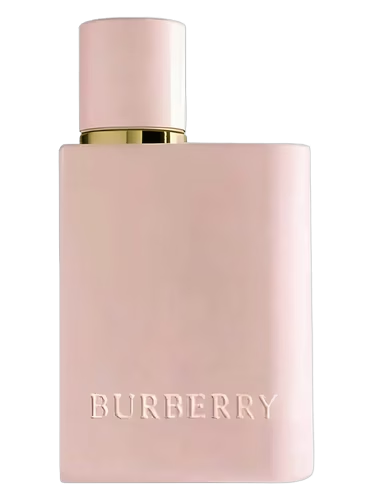
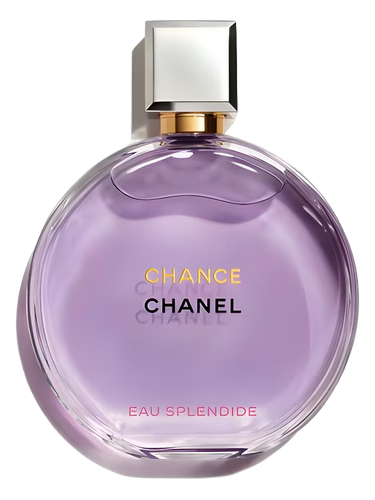
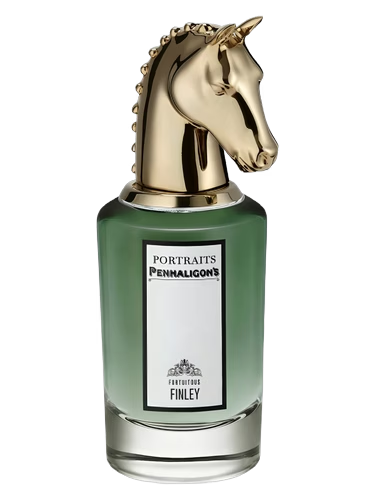
Most Popular Scents Using Kiwi
What is the Kiwi note in perfumery?
The Kiwi note is a modern, synthetic fragrance accord used to recreate the tropical, sweet, and tart aroma of the fruit, as natural essential oils cannot be traditionally extracted from it.What does Kiwi smell like?
It features a vibrant, juicy profile characterized by a balance of refreshing tartness and sweetness, often described as a blend of green melon, strawberry, and subtle pineapple with a clean, watery edge.How is the Kiwi note created?
Since the fruit has high water content and lacks natural oils for extraction, perfumers synthesize the note using a combination of aromatic molecules like esters and green notes to mimic its unique scent profile.What are some popular perfumes with Kiwi?
Iconic fragrances featuring this note include Britney Spears Fantasy, Dolce&Gabbana L'Imperatrice 3, Valentino Donna Born In Roma Coral Fantasy, and Coach Green.When is Kiwi in season for perfumery?
While the note is available year-round as a synthetic accord, the fruit itself has staggered harvest cycles globally, with Northern Hemisphere crops peaking from October to May and Southern Hemisphere crops from March to May.