Fragrance Notes Are Layers Of Scent That Are Layered To Form The Final Fragrance. Fragrance Notes Are Categorised Into Three Main Elements Based On How Long They Take To Evaporate, And How Long They Typically Last Following Application: Top Notes, Heart Notes And Base Notes.
Kadam
Perfumery, rooted in the classic Eau de Cologne structure, is characterized by a bright, vibrant, and highly refreshing profile. It is typically defined by sparkling, zesty citruses (like Bergamot, Lemon, and Orange) which provide an immediate, uplifting, and clean burst, often layered over subtle floral (Neroli) and green, woody (Petitgrain) undertones for refined freshness and elegance.

Origin & Extraction Of Kadam
The Kadam or Kadamba flower note, derived from the Neolamarckia cadamba tree native to South Asia, does not have the deep historical roots in classical Western perfumery enjoyed by notes like Rose or Bergamot. Historically, its fragrance was primarily valued in traditional Indian perfumery (attars) and religious rituals, where its intensely sweet, intoxicating aroma symbolized romance and divine presence. Its powerful and unique scent profile, which is richly floral and indolic, meant it remained largely a localized, artisanal ingredient until modern perfumery began exploring unique global floral palettes in the late 20th and 21st centuries.
Kadam’s significance in contemporary perfumery is linked to niche and artisanal houses seeking to create complex, exotic, and authentic floral bouquets, particularly those inspired by South Asian culture and landscapes. Its usage is modern, often serving as a highly potent centerpiece floral that provides an intense, creamy, and lasting depth, distinguishing it from lighter Western white florals. While mainstream usage remains rare, its presence in dedicated luxury Indian brands and niche concepts confirms its status as a valued, authentic, and profoundly aromatic ingredient for dense, lush floral compositions.
Extraction Methods of Kadam
Historically, the aromatic and medicinal essences of Kadam (Neolamarckia cadamba) were obtained through traditional hydro-distillation and simple maceration. The flowers are a primary raw material for Indian 'attar' perfumes, where the fragrance is captured by absorbing the essence into a sandalwood base through water distillation. For medicinal purposes, traditional practices involved creating aqueous extracts from the leaves and bark through boiling or soaking to produce gargles and tonics. Seed extraction traditionally involved manual crushing and soaking fruits in the open until rotted, followed by hand-grinding into a slurry and air drying.
Modern extraction techniques have evolved to include more efficient and precise methods such as Soxhlet extraction using various solvents like ethanol, petroleum ether, and distilled water to isolate specific phytochemicals. Recent developments also include advanced mechanical processes like microwave-assisted extraction (MAE) and ultrasound-assisted extraction (UAE) to enhance the yield of components like insoluble dietary fiber from the fruit. Additionally, leaf extracts are now utilized in cutting-edge nanotechnology to synthesize silver nanoparticles for spectroscopic applications, and rotary vacuum evaporation is commonly used to recover solvents and prevent oxidation of the extracts.
The Kadam, or Kadamba, note is derived from the flowers of the Neolamarckia cadamba tree, native to South Asia. In perfumery, it is prized for its intensely sweet, intoxicatingly rich, and deeply floral aroma, often featuring creamy and indolic nuances that lend a tropical, heady quality to compositions. While it is not a traditional staple in Western classical perfumery, its unique and potent scent profile has made it a celebrated, evocative note in artisanal and Indian-inspired fragrances, often used to create dense, lush, and memorable floral bouquets that capture the essence of exotic nights and ancient temples.
- *
One of the challenges of incorporating Kadam is capturing its powerful, multi-faceted aroma without overwhelming the composition. When utilized effectively, it serves as a stunning centerpiece in rich florals and orientals. A notable example of its use is found in niche fragrances that explore Indian mythology and landscapes, where it symbolizes romance and divine presence. Perfumes like **Amouage Lyric Woman** or some specialized attars, while perhaps not centering the Kadam note exclusively, utilize florals with similar heavy, creamy characteristics to evoke the same sense of opulence and mystery that Kadam naturally possesses.
- *
In contemporary perfumery, the Kadam note offers a striking alternative to more common white florals such as Tuberose or Gardenia, providing a comparable intensity but with a unique, slightly fruity-honeyed undertone. While specific mainstream designer releases that prominently feature Kadam are rare, its presence in houses like **Forest Essentials** or dedicated traditional Indian perfume brands solidifies its status as a highly valued, authentic, and profoundly aromatic floral ingredient, favored for its lasting depth and sensual complexity over fleeting lightness.
Sustainability Of Kadam
Sustainability of Kadam
- Regenerating endangered species of herbs and botanicals to restore vitality and preserve floral heritage
- Empowering rural communities and artisans by enhancing traditional handicraft skills and creating sustainable livelihoods
- Nurturing future generations through seed and planting programs that equip farmers for long-term sustainable success
- Providing specialized training for farmers to ensure expertise and efficiency in organic cultivation practices
- Promoting conscious consumption by creating everyday products made from natural earth materials
- Implementing quality and safety standards through certifications such as FSSAI and GMP to ensure sustainable production
Trivia
The Sanskrit term for the Kadam tree, Kadamba, literally translates to fragrance, and in Indian mythology, it is said that Lord Krishna famously played his flute and performed the Ras Leela dance beneath its aromatic, golden blossoms.
Most Popular Scents Using Kadam
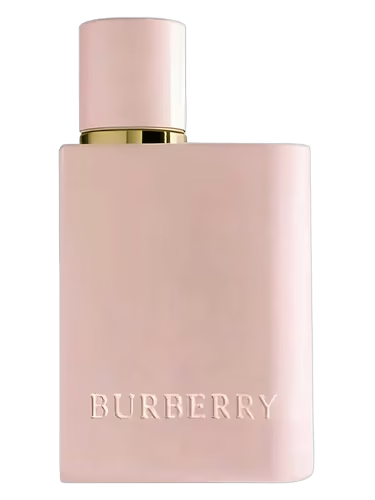
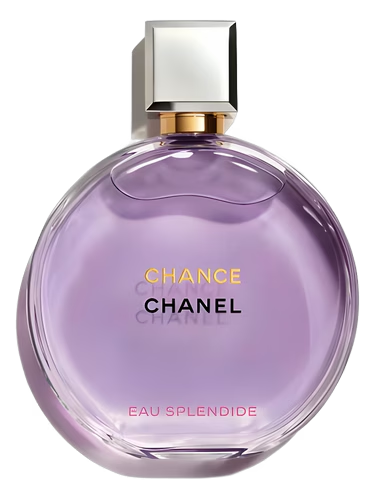
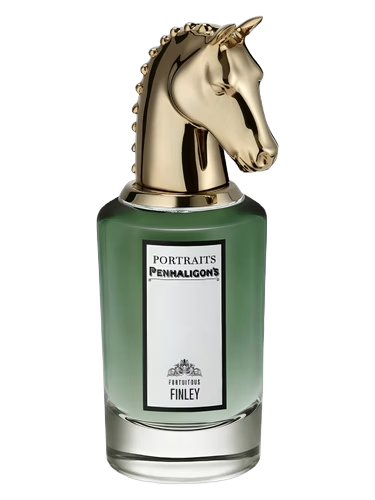
What is Kadam?
Kadam, or Kadamba, is a tropical evergreen tree native to South Asia whose flowers are prized for their intensely sweet and intoxicating floral aroma, traditionally used in Indian attars.What does Kadam smell like?
It possesses a rich, creamy, and indolic floral scent with tropical, heady qualities and a unique, slightly fruity-honeyed undertone that provides significant lasting depth.How is Kadam essence extracted?
The fragrance is historically captured through hydro-distillation into a sandalwood base to create attars, while modern methods include Soxhlet, microwave-assisted, and ultrasound-assisted extraction.What are some top perfumes featuring Kadam?
Notable fragrances include Areej Le Dore Al Majmua, House of Matriarch Antimony, Anjali Perfumes Kadamba, and Aromata Mirabilia Kadamba Attar.When is Kadam in season?
The Kadam tree typically enters its flowering phase during the South Asian rainy season, with fragrant globe-like flowers reaching peak bloom between June and August.