Fragrance Notes Are Layers Of Scent That Are Layered To Form The Final Fragrance. Fragrance Notes Are Categorised Into Three Main Elements Based On How Long They Take To Evaporate, And How Long They Typically Last Following Application: Top Notes, Heart Notes And Base Notes.
Jujube Blossom
Jujube Blossom offers a delicate, green-white floral scent, often described as light, sweet, and airy with hints of honey and a fresh, herbal nuance. It evokes the ephemeral beauty of spring, providing a subtle, uplifting, and slightly fruity floral layer, distinct from heavy white flowers, prized for its natural simplicity.

Origin & Extraction Of Jujube Blossom
The Jujube Blossom note is derived from the Chinese date tree (*Ziziphus jujuba*), a plant with a long and storied history in Asia, primarily for its fruit (jujubes), which are used extensively in traditional medicine, cuisine, and cultural practices. Historically, the delicate, slightly honeyed scent of the blossom itself was not a foundational element in classical Western perfumery, which relied heavily on notes like rose, jasmine, and foundational citruses (Bergamot, Lemon) imported from the Mediterranean. Therefore, Jujube Blossom lacks the centuries-long legacy of notes crucial to structures like the 18th-century Eau de Cologne.
Its relevance to perfumery is a relatively modern phenomenon, gaining traction in the late 20th and 21st centuries as perfumers began exploring more exotic, subtle, and naturalistic floral notes, often drawn from Asian flora, to provide a light, airy, and unique signature. It is employed in contemporary fragrance design to create a delicate, green-white floral layer that is less heavy than traditional white flowers, appealing to niche and designer houses looking for sophisticated simplicity and an ephemeral, spring-like freshness.
Extraction Methods of Jujube Blossom
Historically, the aromatic compounds of jujube (Ziziphus jujuba) were captured through traditional methods such as simple infusion or maceration in oils and fats, similar to the ancient process of enfleurage used for delicate flowers. In rural China, where the tree has been cultivated for over 4,000 years, blossoms were often processed alongside the fruit to create medicinal extracts using water or alcohol simmering techniques. While the tree's fruit and leaves have long been subjected to steam distillation and solvent extraction for essential oils, the blossom itself remained a rare subject for commercial perfumery due to its small size and modest fragrance yield.
In modern perfumery, jujube blossom is rarely available as a standard commercial essential oil or absolute. Instead, the note is typically achieved through headspace technology, a non-destructive method that captures the scent molecules directly from the air surrounding the living flower. This "ScentTrek" or "NaturePrint" approach allows perfumers to analyze and reconstruct the delicate, honeyed, and slightly green profile of the blossom using synthetic accords. For botanical research, advanced techniques such as steam distillation coupled with drop-by-drop solvent extraction (S3DE) and supercritical CO2 extraction are employed to isolate volatile components while preserving the flower's complex and transparent aromatic signature.
Jujube Blossom, known for its delicate, light, and sweet green-white floral scent with hints of honey, is a relatively specialized note in modern perfumery. While it may not be as foundational as rose or jasmine, it is often employed by houses seeking a fresh, airy, and naturalistic spring floral signature, distinct from traditional heavy white florals. This note imparts a subtle elegance and a unique, uplifting character that appeals to niche and contemporary fragrance consumers looking for simplicity and ephemeral beauty.
- The use of Jujube Blossom is often subtle, appearing in compositions where a light, slightly fruity floral lift is desired, serving to brighten the opening or heart of a spring-themed scent.
- One notable example showcasing the delicate nature of this note is found in fragrances like **L'Occitane en Provence's Néroli & Orchidée Eau de Toilette**, where Jujube Blossom provides a sweet, green counterpoint to the richer white florals.
- Another modern interpretation features in **Hermès' Un Jardin sur le Nil**, although indirectly, as its pursuit of a 'green mango' and 'lotus' freshness echoes the light, airy, and slightly fruity floral quality that Jujube Blossom naturally offers.
The note truly shines in fragrances that emphasize natural simplicity and quiet sophistication. In such compositions, it helps to create an olfactory experience reminiscent of a fleeting moment in a serene garden. For instance, niche brands may use it to enhance a minimalist structure; while specific mainstream examples are rare, scents that achieve this delicate, honeyed sweetness include those focusing on less common Asian flora, like some releases from the house of **Jo Malone** or certain limited-edition collections from **Gucci Flora**. It bridges the gap between fresh citrus openings and soft, musky bases, preventing the scent from becoming overly sharp or too dense.
Furthermore, in the context of high-end and artisanal perfumery, Jujube Blossom is sometimes paired with clean notes like white tea or crisp green accords to emphasize its light, herbal nuance. This strategic use ensures the fragrance maintains transparency and longevity without sacrificing its delicate character. A fragrance that captures a similar serene, slightly sweet green atmosphere is **Annick Goutal's Petite Chérie**, which, though centered on pear and rose, shares the same ambition of capturing a light, spring-like innocence that is closely aligned with the profile of the Jujube Blossom note.
Sustainability Of Jujube Blossom
Sustainability of Jujube Blossom
- Promoting climate-resilient agriculture by utilizing drought-tolerant trees that thrive in arid regions with minimal water requirements
- Reducing chemical dependency through the cultivation of species with natural resistance to most pests and diseases, ideal for organic farming
- Supporting soil conservation and restoration by using deep-rooted trees to stabilize degraded land and prevent desertification
- Advancing circular economy practices by repurposing pruned branches and straw as in situ mulch to conserve soil moisture
- Mitigating climate change through significant carbon sequestration, with mature plantations capturing 5 to 10 tons of CO2 per hectare annually
- Enhancing agricultural biodiversity by integrating hardy, underutilized fruit trees into low-maintenance, water-wise landscapes
Trivia
The triterpene glycoside zizipine found in jujube leaves has the unique ability to temporarily "turn off" the perception of sweet taste in humans without affecting the ability to sense bitterness, acid, or salt.
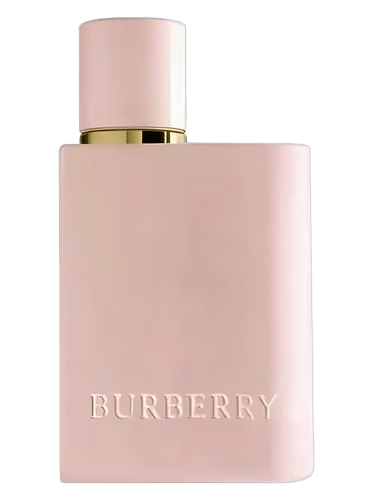
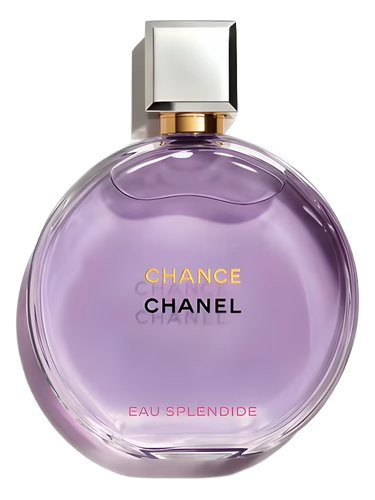
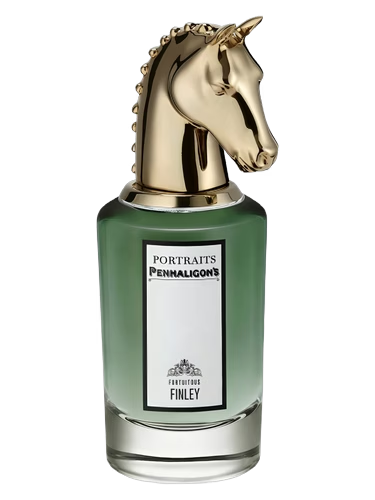
Most Popular Scents Using Jujube Blossom
What is Jujube Blossom?
Jujube Blossom is a fragrance note derived from the Chinese date tree, Ziziphus jujuba, a plant native to Southeast Asia with a long history in traditional medicine and culture.What does Jujube Blossom smell like?
It offers a delicate, green-white floral aroma that is light, sweet, and airy, featuring subtle honeyed hints and fresh herbal nuances.How is Jujube Blossom essence extracted?
The note is primarily achieved through reconstruction or headspace technology, which captures and mimics the scent of the living flower since natural commercial oils are rare.What are some top perfumes featuring Jujube Blossom?
Notable fragrances include Floraïku And Your Lips, Pierre Guillaume Paris Morning In Tipasa 7.2, and Auphorie Shennong.When is Jujube Blossom in season?
The fragrant, pale greenish-yellow flowers typically bloom during the late spring and summer months, specifically from May through July.