Fragrance Notes Are Layers Of Scent That Are Layered To Form The Final Fragrance. Fragrance Notes Are Categorised Into Three Main Elements Based On How Long They Take To Evaporate, And How Long They Typically Last Following Application: Top Notes, Heart Notes And Base Notes.
Jarana Flower
Jarana Flower offers a vibrant, intense floral scent characterized by a fresh, watery quality, reminiscent of Brazilian river waters. It provides a unique, sparkling, and clean aquatic-floral touch to compositions, blending brightness with a dewy freshness.

Origin & Extraction Of Jarana Flower
The Jarana Flower note, characterized by its vibrant, intense floral scent and fresh, watery quality reminiscent of Brazilian river waters, is a relatively specialized ingredient in perfumery. Unlike classic notes such as Bergamot or Lemon, which were foundational to European perfumery (e.g., Eau de Cologne) dating back centuries, the Jarana Flower is a more modern and exotic addition. Its introduction reflects a contemporary trend where perfumers seek out unique, photorealistic aquatic-floral elements from regions like South America, moving beyond traditional heavy floral structures toward lighter, cleaner, and more specific nature-inspired compositions.
This note is primarily valued for its ability to provide a sparkling, dewy freshness and floral intensity, distinguishing it from simple aquatic accords. As such, its history in fine fragrance is short but significant, predominantly featuring in niche and contemporary collections that focus on capturing the biodiversity of Brazil. Its role in modern compositions is typically as a bright heart note or a unique supporting top note, lending vitality, purity, and a sophisticated, non-traditional floral signature to the perfume.
Extraction Methods of Jarana Flower
As a niche botanical note, jarana flower is not widely extracted or traded in the perfumery industry. Historically and traditionally, its aromatic character is often reconstructed using jasmine-type molecules such as benzyl acetate and low doses of indole, combined with tropical-green elements and honeyed sweetness to mimic its natural scent profile.
For similar fragile flowers, traditional extraction methods have included enfleurage, where fresh blossoms are pressed into fat to absorb their fragrance, and solvent extraction using non-polar solvents like hexane to create a concrete, which is further processed into an absolute. Modern advancements have introduced supercritical CO2 extraction, which operates at lower temperatures to preserve delicate volatile compounds without the use of harsh heat or chemical solvents. Additionally, innovative techniques like microwave-assisted extraction (MAE) and ultrasound-assisted extraction (UAE) are being explored to improve yields and reduce processing time for delicate floral materials.
The Jarana Flower note, characterized by its vibrant, intense floral scent and fresh, watery quality reminiscent of Brazilian river waters, is a relatively specialized ingredient, often appearing in fragrances designed to capture a specific exotic or aquatic-floral theme. Its clean, sparkling nature makes it ideal for uplifting and unique compositions, distinguishing it from traditional heavy florals.
- One of the most notable fragrances to feature the Jarana Flower is **Natura Ekos Flor do Luar**, a scent that draws heavily on the biodiversity of Brazil. It utilizes the flower's bright, dewy freshness to create a luminous and authentic tropical floral experience.
- Another example where a similar aquatic-floral profile is sought is in certain limited-edition or regional collections, where the aim is to replicate the specific scent profile of unique South American flora. These often use the Jarana Flower note to lend a signature watery sparkle to their compositions.
Due to its modern and specific profile, Jarana Flower is less likely to be found in classic European perfumery (such as traditional Eaux de Cologne) but is a prized element in contemporary niche houses focusing on photorealistic nature scents and fresh, clean compositions. It elevates a simple aquatic accord by adding genuine floral intensity and vibrance.
Its role is typically that of a heart note or a supportive top note, ensuring the fragrance opens with a unique, invigorating floral freshness that speaks to purity and vitality. This clean, sparkling quality ensures its continued use in modern perfumes that aim for a bright, sophisticated, and slightly exotic signature, often blended with white musks or light woods for endurance.
Sustainability Of Jarana Flower
Sustainability of Jarana Flower
- Adopting eco-friendly technologies such as hydroponics, drip irrigation, and rainwater harvesting to minimize water usage and optimize resource management
- Implementing integrated pest management (IPM) strategies to reduce reliance on chemical pesticides and protect local ecosystems
- Promoting a circular economy by transforming organic waste into nutrient-rich fertilizers through advanced composting techniques
- Transitioning to renewable energy sources, including solar power, to significantly reduce the carbon footprint of greenhouse operations
- Utilizing sustainable substrates, such as rice husks, and reforestation programs to enhance soil health and restore local biodiversity
- Reducing environmental impact through the use of biodegradable and compostable packaging materials like paper wraps and plant-based plastics
- Optimizing logistics with sea freight trials and direct farm-to-container loading to decrease transportation-related greenhouse gas emissions
- Ensuring ethical labor practices and social responsibility through certification schemes like Fairtrade, Rainforest Alliance, and the F.O.S.S standard
Trivia
Many tropical flowers like the jarana are pollinated by nocturnal moths and bats, which is why they are often pale in color to be visible in low light and become most intensely fragrant at night to attract their pollinators in the dark.
Most Popular Scents Using Jarana Flower
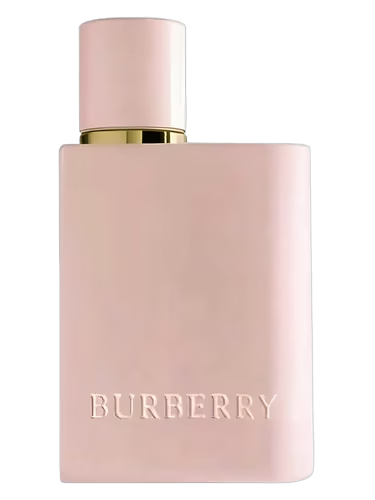
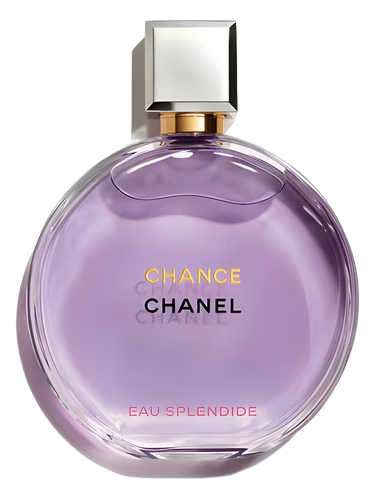
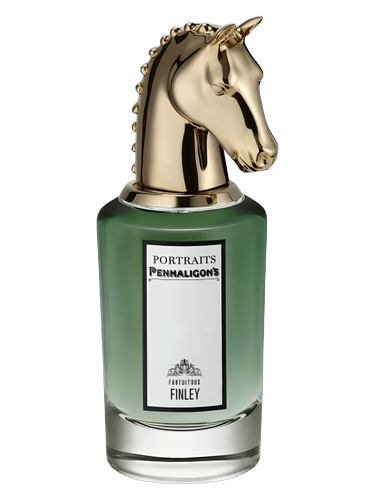
What is Jarana Flower?
Jarana Flower is a vibrant, intense floral note from the Lecythis jarana tree native to the Amazon basin, prized for its unique aquatic-floral character.What does Jarana Flower smell like?
It offers a sparkling, clean, and dewy scent reminiscent of Brazilian river waters, blending floral intensity with a fresh, watery quality.How is Jarana Flower essence extracted?
As a niche note, its scent is often reconstructed using jasmine-type molecules, though traditional methods like solvent extraction or modern CO2 extraction can be used for similar delicate flowers.What are some top perfumes featuring Jarana Flower?
Notable fragrances featuring this note include Natura Ekos Flor do Luar and Natura Ekos Ryo Vivo.When is the Jarana Flower in season?
The flower follows a tropical cycle where blooming is triggered by the transition between wet and dry periods in its native equatorial habitat.