Fragrance Notes Are Layers Of Scent That Are Layered To Form The Final Fragrance. Fragrance Notes Are Categorised Into Three Main Elements Based On How Long They Take To Evaporate, And How Long They Typically Last Following Application: Top Notes, Heart Notes And Base Notes.
Jade Flower
Jade Flower offers a delicate yet exotic blend, often featured in a Cactus Flower & Jade profile. It presents fresh, green, and slightly sweet-spicy nuances, combining the tart, bright zest of grapefruit and agave with the subtle, smooth warmth of crushed leaves and vanilla.

Origin & Extraction Of Jade Flower
The Jade Flower note, although derived from a plant with a long history (Crassula ovata), has a relatively modern history in fine perfumery, unlike foundational notes such as Bergamot or Citron. Its use became notable as contemporary perfumers, particularly in niche and artisanal houses, began seeking unique green and botanical notes to move beyond traditional floral and aquatic profiles. This note is often featured as part of a complex accord, such as 'Cactus Flower & Jade,' valued for its ability to convey a sophisticated, non-traditional freshness that blends tart, bright facets (reminiscent of grapefruit or agave) with a subtle, crushed-leaf warmth.
The relevance of Jade Flower in perfumery today lies in its capacity to lend an airy, luminous quality that is distinctively modern and clean. It functions as a sophisticated bridge in compositions, ensuring a seamless transition from volatile top notes to softer, musky or woody bases. Its rise reflects a trend towards capturing photorealistic or abstract natural elements in fragrance, appealing to the modern market's demand for unique botanical essences, often employed in light, unisex, and fresh spring/summer compositions where clarity and subtle persistence are desired.
Extraction Methods of Jade Flower
Historically, the extraction of jade flower (or jade essence) is rooted in traditional oriental medicine and ancient distillation techniques. As documented in classical texts like Treasures in Oriental Medicine, jade was traditionally processed by pulverizing the ore into a fine powder and mixing it with liquids like rice liquor or dew. In some historical practices, these mixtures were cooked in copper vessels to create jade liquor, also known as divine jade water, which was prized for its purported ability to discharge waste materials from the body and promote general health.
Modern commercial and medicinal extraction methods utilize more rigorous scientific processes. A standard contemporary method involves a specialized distillation process where pre-processed nephrite jade ore—pulverized, sorted, and cleaned—is mixed with sterile distilled water in an evaporator, typically at a ratio of 1:4. The mixture is heated to temperatures of 100°C or higher. As the mixture boils, specific mineral components are eluted from the jade into the water, which then vaporizes and is collected through heat exchange to form a high-purity jade distilled solution. Recent advancements also include phytochemical screening and the use of organic solvents like ethanol, methanol, and chloroform to isolate specific active compounds such as saponins, phenols, and terpenoids for pharmaceutical and cosmetic applications.
The Jade Flower note, known for its fresh, green, and subtly sweet-spicy profile (often associated with Cactus Flower & Jade), is primarily a feature in modern, often niche, or artisanal perfumery rather than historical classics. It is prized for lending an airy, luminous quality, especially in compositions aiming for a watery, botanical freshness that avoids traditional overly aquatic or sugary floral tropes. When incorporated, the Jade Flower provides a unique, sophisticated twist, contributing tart, bright zest alongside smooth, crushed-leaf warmth. This distinct signature allows it to blend seamlessly into green, aromatic, and sometimes tropical scents.
- A notable example that utilizes a similar fresh, green-floral profile is Gucci Bloom Acqua di Fiori, though it emphasizes green notes and Galbanum rather than a literal Jade Flower extraction.
While a specific, long list of "famous" fragrances built entirely around the Jade Flower (Crassula ovata) is challenging to compile, the composite accord known as 'Cactus Flower & Jade' has gained significant recognition in home fragrance and modern contemporary perfumery. The usage generally highlights the scent's ability to create an atmosphere of serene, dewy gardens. The fragrance note supports compositions that seek to evoke a clean, slightly mysterious botanical essence, perfect for unisex fragrances.
- Another scent often cited for its delicate green floralcy is Marc Jacobs Daisy, which uses a bright, dewy combination that echoes the fresh quality of Jade Flower, even if the specific material is not listed.
The true fame of the Jade Flower note often lies in specialized independent and niche brands who seek out unique, less-common florals to differentiate their offerings. These perfumers leverage its complexity—the balance of tartness (like grapefruit or agave) and warm, powdery sweetness (like vanilla and soft woods)—to construct complex heart notes that transition well from bright citrus tops to soft, musky bases. Its delicate nature makes it a subtle yet persistent anchor in fresh spring and summer compositions.
Sustainability Of Jade Flower
Sustainability of Jade Flower
- Conservation of the Philippines jade vine (Strongylodon macrobotrys), which is currently endangered in the wild due to extensive deforestation and habitat degradation
- Promoting the cultivation of jade plants (Crassula ovata) as low-maintenance, drought-tolerant indoor greenery that requires minimal water and resources to thrive
- Enhancing indoor air quality through the use of jade plants, which are known to absorb harmful chemicals such as benzene and formaldehyde
- Supporting biodiversity by protecting natural rainforest biomes where the jade vine serves as a critical nectar source for pollinating bats at twilight
- Encouraging sustainable propagation practices through easy vegetative reproduction, allowing for the sharing of plant cuttings to reduce the need for commercial nursery resources
Trivia
While the jade vine is famous for its stunning, luminous claw-shaped flowers that glow at twilight, the blooms themselves have no natural scent, leading perfumers to create an "imaginary" olfactory profile for them.
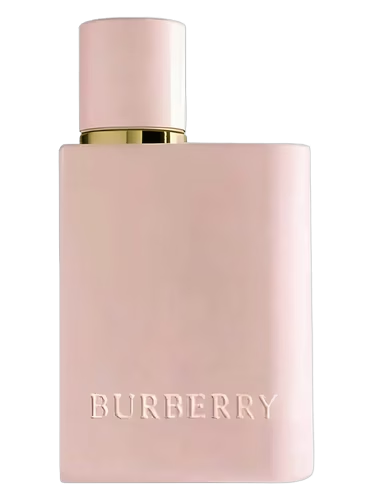
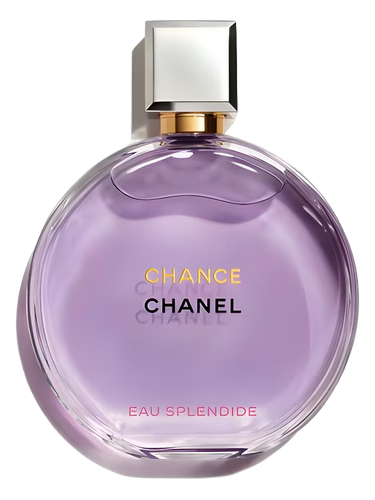
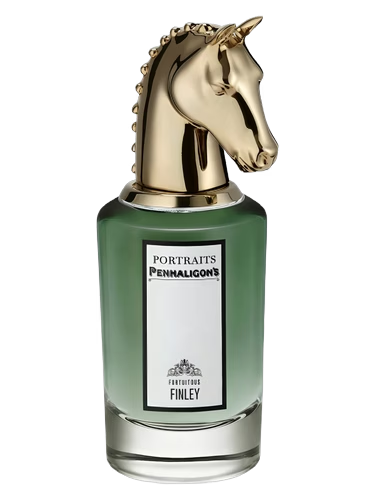
Most Popular Scents Using Jade Flower
What is Jade Flower?
Jade Flower is a modern botanical note derived from the jade plant (Crassula ovata) native to South Africa, prized in niche perfumery for its clean, green, and luminous quality.What does Jade Flower smell like?
It features a delicate, exotic aroma blending tart grapefruit and agave zest with the smooth, sweet-spicy warmth of crushed leaves and vanilla.How is Jade Flower essence extracted?
Modern extraction involves specialized distillation of pre-processed jade ore or the use of organic solvents to isolate specific botanical compounds.What are some top perfumes featuring Jade Flower?
Popular fragrances featuring this note include Kendra Scott Jade Blossom, Regime des Fleurs Jade Vines, Thomas de Monaco Jade Amour, and L'Erbolario Jade Plant.When is Jade Flower in season?
The plant typically enters its blooming phase from late winter to early spring, producing clusters of star-shaped flowers after a period of cooler autumn and winter temperatures.