Fragrance Notes Are Layers Of Scent That Are Layered To Form The Final Fragrance. Fragrance Notes Are Categorised Into Three Main Elements Based On How Long They Take To Evaporate, And How Long They Typically Last Following Application: Top Notes, Heart Notes And Base Notes.
Isabella Grape
Isabella Grape offers a unique, rich fruity profile, characterized by its "foxy" aroma and notes of dark berries (strawberry and raspberry). It blends a sweet, juicy depth with an unusual, slightly alcoholic, or yeasty undertone, lending a complex, wine-like, and sometimes earthy sophistication to fragrances.

Origin & Extraction Of Isabella Grape
The Isabella grape (Vitis labrusca 'Isabella') is a hybrid American grape variety, discovered in the early 19th century in South Carolina. It is renowned for its distinctive "foxy" aroma, which refers to a musky, earthy, and sometimes wine-like scent that includes pronounced notes of dark berries like raspberry and strawberry. Traditionally cultivated for direct consumption, juice, and wine (particularly in regions where European Vitis vinifera struggled), the unique, intense fragrance of the Isabella grape was initially recognized more in culinary and beverage contexts than in fine European perfumery.
The inclusion of Isabella Grape as a specific note in perfumery is a more contemporary phenomenon, gaining relevance with the rise of fruity, gourmand, and photorealistic fragrance styles in the late 20th and 21st centuries. Perfumers utilize synthetics or headspace technology to capture the grape’s complex, sweet-tart, and slightly earthy profile, moving beyond traditional floral and amber accords. This note is valued for its ability to lend a rich, intoxicating, and often nostalgic fruitiness, offering a departure from common berries or citrus to create modern, sophisticated compositions.
Extraction Methods of Isabella Grape
In the context of perfumery, Isabella grape is considered a fantasy note because there is no commercially standard essential oil extracted directly from the fruit for fragrance use. Instead, its distinctive sweet and "foxy" aroma is typically recreated synthetically using molecules like methyl anthranilate. Historically, the essence of the grape was captured through traditional winemaking and culinary processes, such as manual stomping (pressing) of the skins and fruit to release juice for fermentation or the production of artisanal jellies and distillates.
Modern extraction techniques for industrial and nutraceutical applications have become highly sophisticated to preserve the grape's bioactive compounds. Recent developments include the use of sequential green extraction technologies, such as Supercritical Fluid Extraction (SFE-CO2) to isolate lipophilic fractions and Ultrasound-Assisted Extraction (UAE) to efficiently recover phenolic compounds. Other advanced methods involve Pressurized Liquid Extraction (PLE) and cellular extraction to capture water-soluble phyto-compounds and antioxidants from the pomace, skins, and leaves without the high heat associated with traditional distillation.
The Isabella Grape, with its distinctive "foxy" and dark berry-like aroma, is a specialized note often utilized in contemporary niche perfumery to achieve a rich, intoxicating, and wine-like fruitiness. While it doesn't appear in the mainstream classics, it is valued by modern perfumers for adding sophisticated depth and a slightly alcoholic or earthy undertone, moving compositions beyond simple sweetness. This complexity allows the note to bridge fresh openings with gourmand or oriental bases.
- One notable example showcasing the rich, unique character of grape notes, which the Isabella variety enhances, is often found in the work of houses known for pushing boundaries. Although not explicitly listing Isabella Grape, fragrances like those from **Tom Ford** or niche houses may employ complex grape accords to achieve that sought-after wine-like depth.
In the designer sphere, when specific grape notes appear, they typically lend a juicy, almost photorealistic fruitiness. While the specific mention of Isabella Grape is rare, similar dark berry and fruit notes are frequently used in popular lines. Houses such as **Guerlain** and **Giorgio Armani** utilize rich fruit components to add a luxurious opening to their contemporary offerings, where the musky, sweet facets of Isabella Grape would provide a distinctive signature.
- Brands like **Bath & Body Works** also employ highly concentrated, sweet fruit accords, where the raspberry and strawberry nuances inherent in the Isabella Grape profile translate into consumer-friendly, vibrant scent experiences.
The future of the Isabella Grape note lies primarily in niche and artisanal perfumery, where its unique, complex profile allows for creative interpretations of gourmand and fruity themes. For instance, **Byredo** often uses unconventional notes to tell evocative stories, and a dark, wine-like fruit like Isabella Grape aligns perfectly with fragrances that aim to be unique and memorable. As the trend toward high-definition, evocative fruit notes continues, the Isabella Grape is set to grow in prominence as a sophisticated alternative to common berries.
Sustainability Of Isabella Grape
Sustainability of Isabella Grape
- Reducing chemical intervention and synthetic pesticide use due to the variety's natural high resistance to pests like phylloxera and fungal diseases like powdery mildew
- Implementing circular economy principles through the valorization of wine industry by-products, such as repurposing grape pomace into high-value nutraceuticals and bioactive extracts
- Adopting green extraction technologies like supercritical fluid extraction and pressurized liquid extraction to recover compounds from waste with minimal environmental impact
- Supporting climate resiliency by cultivating hardy, adaptable heirloom varieties that thrive in marginal conditions and require fewer resources than sensitive Vitis vinifera cultivars
- Promoting organic viticulture and biodiversity through the use of cover crops to protect soil health and improve water infiltration in vineyards
Trivia
The Isabella grape is often called the forbidden fruit of the wine world; it was banned for commercial winemaking in the European Union for decades because officials claimed its distinct raspberry and "foxy" strawberry-like flavors were offensive to the traditional palate.
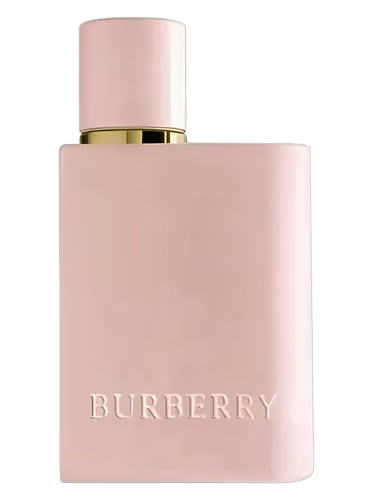
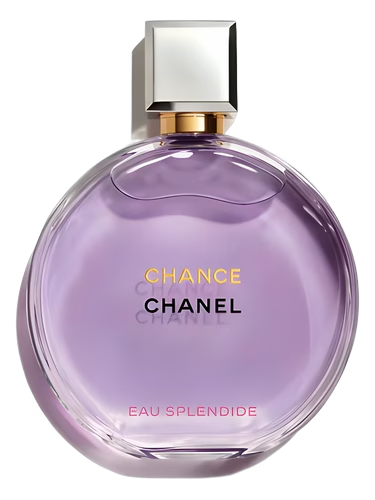
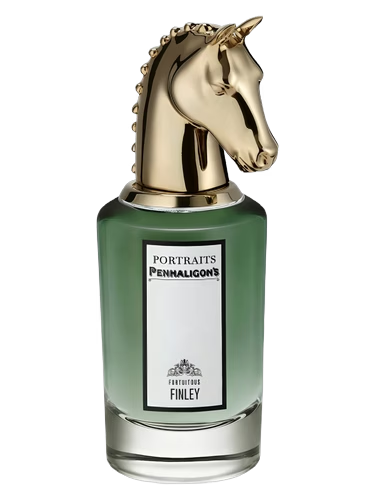
Most Popular Scents Using Isabella Grape
What is Isabella Grape?
The Isabella grape is a hybrid American grape variety discovered in the 19th century, known for its unique "foxy" aroma and used in contemporary perfumery as a fantasy note.What does Isabella Grape smell like?
It offers a rich, wine-like profile with notes of dark berries like strawberry and raspberry, a musky "foxy" scent, and slightly alcoholic or earthy undertones.How is Isabella Grape essence extracted?
In perfumery, it is a fantasy note typically recreated synthetically using molecules like methyl anthranilate, as there is no standard essential oil extracted directly from the fruit.What are some top perfumes featuring Isabella Grape?
Notable fragrances include Givenchy L'Interdit, Armani My Way, Al-Rehab Grape, and Nishane Karagoz.When is Isabella Grape in season?
The vines bloom in the spring, and the fruit traditionally reaches peak ripeness during the harvest season in late September.