Fragrance Notes Are Layers Of Scent That Are Layered To Form The Final Fragrance. Fragrance Notes Are Categorised Into Three Main Elements Based On How Long They Take To Evaporate, And How Long They Typically Last Following Application: Top Notes, Heart Notes And Base Notes.
Iris Pallida
Iris Pallida offers an exquisite, powdery, and intensely elegant aroma, centered on earthy, creamy orris butter notes. It is often described as a soft, starchy floral with violet nuances and a complex, rooty, slightly dry-woody character. This sensual note lends sophistication, depth, and a musky, comforting undertone.

Origin & Extraction Of Iris Pallida
The history of Iris Pallida in perfumery is deeply rooted in the cultivation of its rhizomes (orris root) for their unique aromatic compounds, particularly irone, which provides its signature powdery, woody, and violet-like scent. Although iris itself has been used for centuries for medicinal and fragrant purposes, the use of orris root in fine French perfumery became prominent starting in the Renaissance, with Florence, Italy, becoming the primary center of cultivation. The long and laborious process of drying, aging (up to five years), and extracting the root makes orris one of the most expensive raw materials, earning it the nickname "liquid gold." This commitment to luxury established iris as a foundational note in classical perfumery, symbolizing elegance and high quality.
Iris Pallida's enduring relevance is cemented by its role in classic and contemporary compositions. It is not just a top note but a powerful fixative and heart note that gives a composition structure and longevity. Historically, it contributed the creamy, comforting powderiness to fragrances like Guerlain's early creations. In modern perfumery, Iris Pallida continues to be essential, notably used to create sophisticated, smooth textures—from the cool, green elegance of Chanel No. 19 to the modern, suede-like, and slightly gourmand interpretations found in fragrances like Dior Homme, demonstrating its versatility across traditional feminine and contemporary masculine scent profiles.
Extraction Methods of Iris Pallida
The primary method for extracting iris pallida essence involves a multi-year process centered on the plant's rhizomes. Traditionally, the harvested rhizomes are cleaned, hand-peeled (to produce white orris) or sliced (for black orris), and then aged for three to six years. This prolonged drying period is essential for the oxidative degradation of precursors into irones, the molecules responsible for the signature violet-like scent. Historically, these aged and dried rhizomes were ground into a fine powder and subjected to hydrodistillation or steam distillation to produce a thick, waxy substance known as iris butter or orris concrete.
Modern extraction techniques have expanded to include volatile solvent extraction of the ground rhizomes to create resinoids, or the use of organic solvents on iris butter to produce a highly concentrated iris absolute. Recent industrial advancements have introduced innovative ripening processes that utilize controlled environmental conditions to trigger the development of irones in a matter of hours or days rather than years. Additionally, fractional and vacuum distillation are employed to refine the extract's irone content, while supercritical CO2 extraction is occasionally used to capture a more precise aromatic profile without the application of high heat.
Iris Pallida is one of the most precious and expensive raw materials in perfumery, renowned for transforming fragrances with its luxurious, powdery, and rooty character. Its use signifies a dedication to quality and elegance, moving beyond simple floral notes to create depth and complexity. In the realm of classic haute parfumerie, few fragrances exemplify its exquisite effect better than Guerlain Shalimar. While not strictly an iris soliflore, the orris root, derived from Iris Pallida, provides a creamy, grounding powderiness that balances the famous vanilla and citrus structure, contributing to its timeless sophistication.
- Guerlain Shalimar: Uses orris to soften and deepen the iconic oriental structure.
- Chanel No. 19: Features Iris Pallida to lend a cool, green, and aloof elegance.
Modern perfumery has embraced Iris Pallida to create contemporary masterpieces, often leveraging its creamy, suede-like texture. Perhaps the most celebrated contemporary usage is found in Dior Homme (Original Formulation). This fragrance defied traditional masculine norms by placing the delicate, yet powerful, iris note at its center, rendering a sophisticated, slightly cosmetic, and addictive aroma. The intensity of the orris butter in this perfume gives it an almost gourmand feel, mingling with cocoa and leather to create a revolutionary scent profile that set a new standard for luxury designer fragrances.
- Dior Homme (Original Formulation): Centralized the iris note in a masculine fragrance, pairing it with cocoa and leather.
- Prada Infusion d'Iris: Focuses on the clean, fresh, and slightly metallic facet of the note for a transparent, minimalist scent.
The versatility of Iris Pallida allows it to feature across different fragrance families, from powdery florals to sophisticated leather chypres. Its lasting power, thanks to the non-volatile nature of orris butter, makes it an ideal heart or base note. A perfect example of its pure, unadulterated beauty can be found in niche fragrances like Frederic Malle Iris Poudre, which showcases the note in all its glory—powdery, starchy, and slightly woody—cementing its status as the "Queen of Perfume Materials" and demonstrating why its complex aroma remains an enduring symbol of luxury in scent creation.
Sustainability Of Iris Pallida
Sustainability of Iris Pallida
- Promoting sustainable weed management through the use of allelopathic substances from rhizomes as natural, biodegradable alternatives to synthetic herbicides
- Enhancing agro-biodiversity by integrating iris cultivation into agroforestry systems alongside olive and almond groves
- Developing innovative, bio-based antimicrobial and repellent products from olive and arbutus trees to ensure the microbiological safety of rhizomes without harsh chemicals
- Adopting precision agriculture and patented accelerated aging technologies to reduce the traditional three-year drying process to just a few hours, significantly lowering energy consumption
- Supporting socio-economic resilience in marginal rural areas of Tuscany and France by preserving traditional manual harvesting techniques and establishing local producer networks
- Utilizing iris plants as effective ground cover and carbon sinks that thrive in ordinary garden soils with minimal maintenance and high drought resistance
Trivia
It can take several years of drying and aging for the Iris pallida rhizome to fully develop its signature violet-like fragrance, which is then used to produce orris butter, one of the most expensive ingredients in perfumery.
Most Popular Scents Using Iris Pallida
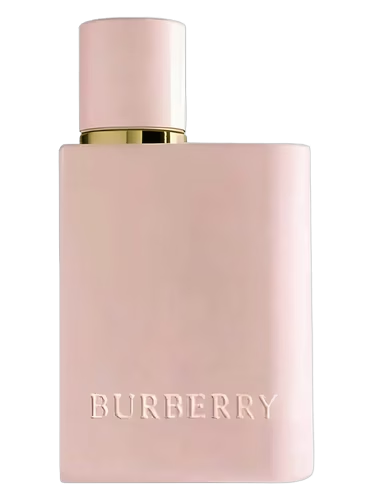
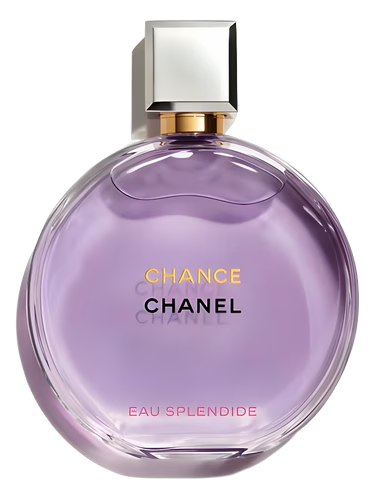
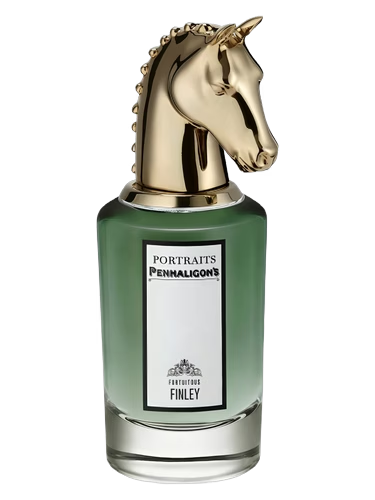
What is Iris Pallida?
Iris Pallida is a species of iris cultivated for its rhizomes, known as orris root, which are aged and processed to create one of the most precious and expensive raw materials in perfumery.What does Iris Pallida smell like?
It offers an exquisite, powdery, and earthy aroma characterized by creamy orris butter notes, soft violet nuances, and a complex, rooty, slightly dry-woody character.Why is Iris Pallida called "liquid gold"?
It is referred to as "liquid gold" because of the laborious multi-year process required to dry and age the roots, making the resulting essence one of the most costly ingredients in the world.How is the essence of Iris Pallida extracted?
The aged rhizomes are typically ground and subjected to steam distillation to produce a thick substance known as iris butter, though modern solvent and CO2 extraction methods are also used.What are some top perfumes featuring Iris Pallida?
Iconic fragrances containing this note include Guerlain Shalimar, Chanel No. 19, Dior Homme, Prada Infusion d'Iris, and Frederic Malle Iris Poudre.When is Iris Pallida in season?
The plant typically blooms with fragrant lavender-blue flowers during late spring and early summer, primarily between the months of May and June.