Fragrance Notes Are Layers Of Scent That Are Layered To Form The Final Fragrance. Fragrance Notes Are Categorised Into Three Main Elements Based On How Long They Take To Evaporate, And How Long They Typically Last Following Application: Top Notes, Heart Notes And Base Notes.
Iris Butter
Iris Butter offers a delicate, sweet, warm, and highly luxurious powdery-floral aroma, reminiscent of violet flowers. It features mellow, woody undertones and is highly valued in perfumery for adding sophisticated depth, timeless elegance, and excellent tenacity to a fragrance composition.

Origin & Extraction Of Iris Butter
The history of the Iris note in perfumery is deeply rooted in antiquity, but its use as "Iris Butter" (derived from the Orris root, or rhizome, of the iris flower, primarily Iris pallida, Iris germanica, and Iris florentina) is foundational to classical perfumery, especially in France. Unlike volatile flower extracts, Orris root must be dried and aged for several years (up to five) before distillation, a lengthy process that produces the creamy, precious oil known as Iris Butter or Orris Absolute. This laborious, time-intensive process makes it one of the most expensive raw materials in the world, valued historically for imparting a delicate, luxurious, and highly tenacious powdery-woody scent, reminiscent of violet and vintage makeup.
Due to its high cost and sophisticated profile, Iris has traditionally been associated with aristocratic and luxurious scents, cementing its role as a key ingredient in fine French perfumery and classic powdery accords. In modern perfumery, the note has experienced a renaissance, moving beyond traditional feminine roles to add velvety texture and elegance to contemporary compositions, including masculine fragrances (such as Dior Homme). Its unique ability to bridge floral, woody, and gourmand territories makes it highly valued for creating sophisticated depth and ensuring a long-lasting, elegant dry-down.
Extraction Methods of Iris Butter
The extraction of iris butter, also known as orris butter or concrete, is one of the most time-intensive processes in perfumery. Historically, the method begins with the manual harvesting of three-year-old rhizomes from species like Iris pallida or Iris germanica. These roots are cleaned, peeled by hand using traditional knives like the roncolino, and then aged for three to five years. This prolonged drying period is essential for a slow enzymatic oxidation process that converts odorless iridals into irones, the molecules responsible for the signature violet-like aroma. Once aged, the hardened rhizomes are finely milled into a powder and subjected to steam distillation to yield a waxy, semi-solid substance rich in myristic acid and irones.
Modern advancements have introduced techniques to accelerate and refine this traditional cycle. To bypass the multi-year aging process, artificial rapid aging methods and enzymatic routes using peroxidising compositions are now employed to induce irone formation more quickly. Additionally, while steam distillation remains the standard for producing the waxy butter, solvent extraction using petroleum or benzene is often used to create an iris resinoid or absolute. Newer industrial processes, such as those developed in the Landes region of France, utilize innovative treatment methods that can prepare fresh rhizomes for distillation in just a few hours rather than years, ensuring consistent quality and controlled pricing for high-end fragrance and cosmetic applications.
Iris Butter, known for its delicate, luxurious, and highly powdery aroma, is a star ingredient in many high-end and niche fragrances. Its smooth, rooty, and slightly warm woody undertones provide an unparalleled sophistication and depth, making it the most expensive raw material in perfumery. One of the most celebrated contemporary uses is in **Dior Homme Intense**, where the iris is a central note, giving the masculine composition a creamy, almost lipstick-like elegance.
- Another landmark fragrance where Iris Butter shines is in **Valentino Uomo Intense**, which utilizes the note to create a rich, enveloping leather and vanilla composition.
Historically, the scent of iris (and by extension, Iris Butter/Orris) is foundational to classic French perfumery. The use of this note elevates a fragrance, lending it a timeless, aristocratic feel. In the niche sector, fragrances like **Acqua di Parma Iris Nobile** showcase the note's softer, more floral characteristics, blending it with citrus and white flowers for a luminous effect.
- A modern icon built around this expensive ingredient is **Chanel Misia**, which highlights the cosmetic powder aspect of the note, evoking the scent of a vintage makeup bag.
The tenacity of Iris Butter is crucial to its value, ensuring the sophisticated, elegant dry-down of a perfume lasts for hours. This quality is evident in fragrances like **Frederic Malle Iris Poudre**, a fragrance that deliberately celebrates the clean, powdery perfection of the iris root. It’s often used in conjunction with other notes like musk, vetiver, and sandalwood to anchor its beautiful, warm floral character.
Sustainability Of Iris Butter
Sustainability of Iris Butter
- Promoting a circular economy by establishing complete local production chains that process raw rhizomes into finished iris butter on-site, significantly increasing producer income
- Reducing environmental impact by decreasing transport volume from 15,000 kg of raw material to just 52 kg of processed product, leading to a substantial reduction in carbon emissions
- Implementing eco-friendly cultivation and extraction methods, including the use of specialized distillation technology and quality control laboratories to ensure high standards
- Supporting social sustainability and generational renewal by attracting young entrepreneurs to agricultural cooperatives and ensuring fair compensation for local farmers
- Preserving biodiversity and cultural heritage through the cultivation of traditional species like Iris pallida and Iris florentina using sustainable agricultural practices
- Adopting organic farming methods and maintaining biodiverse ecosystems to ensure the long-term health of the soil and local landscape
Trivia
Iris butter, one of the most expensive ingredients in perfumery, is known as "blue gold" because it can command prices exceeding that of literal gold due to a labor-intensive process where the plant's roots must be aged for up to six years to develop their scent.
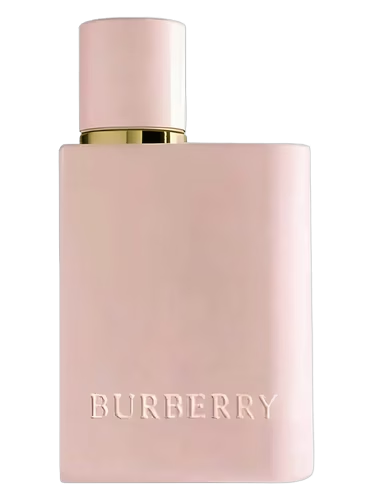
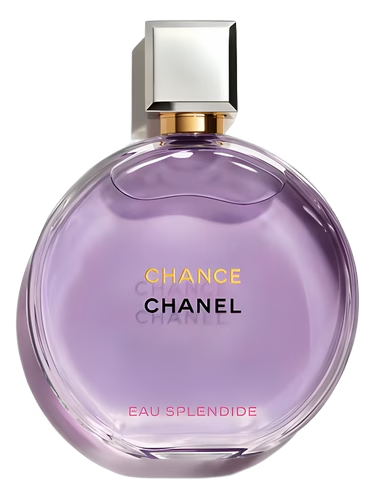
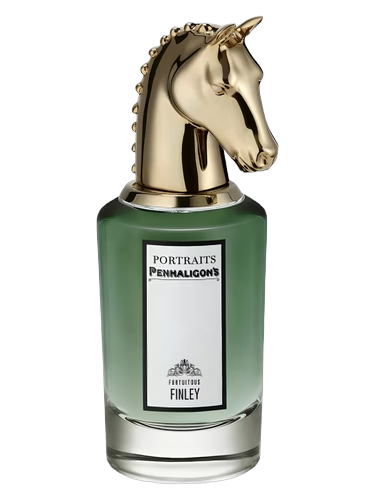
Most Popular Scents Using Iris Butter
What is Iris Butter?
Iris Butter, also known as orris butter or concrete, is a precious, waxy substance derived from the dried and aged rhizomes of the iris plant, primarily Iris pallida and Iris germanica.What does Iris Butter smell like?
It offers a luxurious, powdery-floral aroma reminiscent of violet flowers, characterized by creamy, woody undertones and a sophisticated, lipstick-like elegance.Why is Iris Butter so expensive?
It is one of the world's most expensive raw materials because the rhizomes must be aged for three to five years to develop their scent, and the extraction process yields very little essential oil.How is Iris Butter extracted?
The aged rhizomes are finely milled into powder and traditionally subjected to steam distillation to yield a semi-solid, waxy butter rich in irones.What are some top perfumes featuring Iris Butter?
Iconic fragrances highlighting this note include Dior Homme Intense, Chanel No 19, Frédéric Malle Iris Poudre, and Serge Lutens Iris Silver Mist.When is the iris plant in season?
Iris plants typically bloom from late spring to early summer, usually between June and July, though the aromatic value lies in the roots harvested after several years of growth.