Fragrance Notes Are Layers Of Scent That Are Layered To Form The Final Fragrance. Fragrance Notes Are Categorised Into Three Main Elements Based On How Long They Take To Evaporate, And How Long They Typically Last Following Application: Top Notes, Heart Notes And Base Notes.
Impatiens
Impatiens is a delicate, fantasy floral note, conveying the fragile, fresh scent of shade-loving flowers. It offers a light, airy aroma that is subtly sweet and transparent, often used to introduce a gentle, ephemeral freshness to compositions.

Origin & Extraction Of Impatiens
Impatiens, derived from a delicate, shade-loving flower, is considered a "fantasy floral" note in perfumery because its scent is usually too fragile or subtle to be extracted naturally and is therefore recreated synthetically. Unlike historically foundational notes such as Rose or Jasmine, Impatiens does not possess an ancient legacy in fragrance. Its relevance emerged in modern perfumery, particularly from the late 20th century onward, coinciding with the industry's shift toward creating more luminous, transparent, and aquatic floral compositions. Its introduction reflects a demand for notes that capture a natural, dewy freshness and move away from heavy, abstract florals.
Used primarily as a sophisticated modifier, the Impatiens note functions to lend an ephemeral, "freshly watered garden" or "moist" quality to a scent, enhancing the feeling of airiness and realism in floral bouquets. It is rarely a standalone star ingredient but is subtly blended into contemporary light fragrances, often complementing green, white floral, and aquatic accords to prevent them from becoming dense. This use is characteristic of modern niche and designer lines that specialize in capturing moments in nature, making it a valuable tool for perfumers aiming for understated elegance and sheer tranquility in their compositions.
Extraction Methods of Impatiens
Historically, the aromatic and medicinal properties of Impatiens, particularly Impatiens balsamina, were captured through simple infusion and maceration techniques. Traditional methods involved soaking fresh or dried flowers, stems, and leaves in solvents like water or ethanol for extended periods to extract bioactive compounds such as anthocyanins and flavonoids. Another common traditional practice included decoction, where plant material was boiled in water or alcohol under reflux to create concentrated extracts for medicinal use.
Modern extraction techniques have evolved to include more efficient and precise processes such as ultrasound-assisted extraction (UAE), which utilizes high-frequency sound waves to rupture plant cells and release volatile oils and pigments more rapidly than traditional soaking. Advanced high-performance liquid chromatography (HPLC) and high-performance countercurrent chromatography (HPCCC) are now employed to isolate and characterize specific chemical constituents like naphthoquinones and quercetin. Additionally, recent studies explore the use of supercritical CO2 extraction and specialized solvent mixtures (e.g., acetone or varying concentrations of ethanol) optimized by response surface methodology to maximize the yield and stability of natural dyes and antioxidants for use in the cosmetic and food industries.
As a delicate, fantasy floral note, Impatiens is primarily used in modern perfumery to evoke an ethereal, watery freshness associated with shade-loving garden flowers. This subtle and transparent aroma is rarely the headline note but acts as a sophisticated modifier, often lending a gentle, ephemeral moistness to compositions. Its primary function is to enhance the 'green' or 'dewy' facets of other florals, helping to create ultra-light, airy, and hyper-realistic floral bouquets, ensuring the fragrance feels luminous rather than heavy. While not historically present in classic fragrances, it is a tool for contemporary perfumers seeking realistic nature effects, such as in certain limited-edition flankers of fresh lines like **Issey Miyake L'Eau d'Issey**.
Impatiens is particularly effective in niche and artistic fragrances that aim to capture a moment in nature rather than a traditional heavy floral scent. For instance, the note may be subtly integrated into compositions from houses known for light, aquatic, and green accords, providing that distinct "freshly watered garden" feel. Though specific fragrances often list broader notes like 'aquatic florals' or 'water flowers', the olfactory effect attributed to Impatiens can be experienced in scents striving for sheer tranquility and quiet elegance, complementing notes like cyclamen, white tea, or lotus to keep the composition understated and airy. A good example of this delicate style is found in some serene, light garden releases by **Jo Malone London** or similar houses focusing on single-note clarity and freshness.
The success of Impatiens lies in its subtlety; it provides a clean, sweet transparency that prevents complex floral hearts from becoming too cloying or dense. Its modern usage highlights a trend away from heavy, abstract florals towards lighter, more nuanced nature-based scents, appealing to consumers looking for understated elegance. Although it may not appear on the official ingredient list of every fragrance, its effect is often blended into synthetic or reconstructed accords to replicate a fresh, watery atmosphere. This technique is sometimes utilized in transparent compositions such as those found within the **Aerin Lauder** line, where the focus is on light, wearable, and elegant floral stories.
Sustainability Of Impatiens
Sustainability of Impatiens
- Transitioning to disease-resistant varieties like Beacon and SunPatiens to reduce the need for intensive fungicide applications against downy mildew
- Utilizing self-seeding and easy propagation from cuttings to provide a renewable source of plants and reduce annual consumer waste
- Promoting biodiversity in shade gardens by integrating impatiens with various perennials and foliage plants to move away from unsustainable monocultures
- Adopting precise irrigation techniques, such as drip systems or soaker hoses, to optimize water use and minimize leaf moisture that leads to disease
- Implementing responsible garden waste management by disposing of diseased plants off-site to prevent long-term soil contamination
Trivia
Impatiens are nicknamed "touch-me-nots" because their mature seed pods are so "impatient" to open that they explode at the slightest touch, launching seeds up to 20 feet away. Additionally, these flowers undergo a natural sex change during their life cycle, starting as male when they first open and becoming female once the pollen shell is shed.
Most Popular Scents Using Impatiens
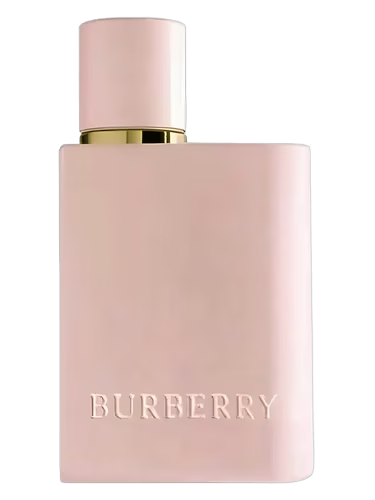
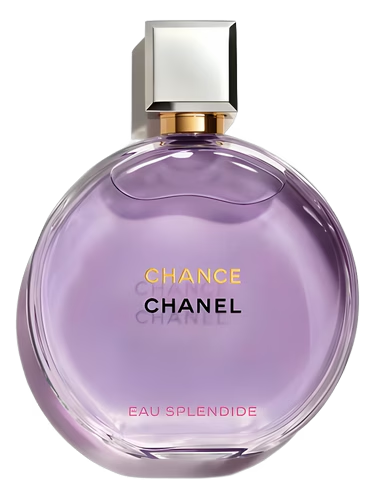
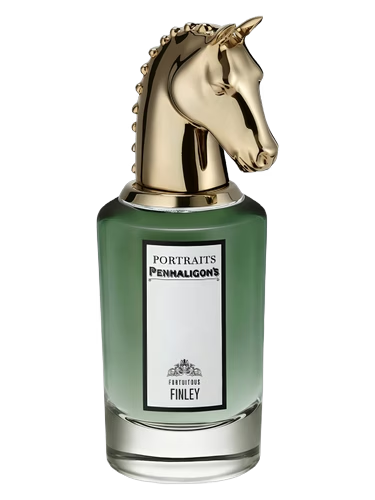
What is Impatiens in perfumery?
Impatiens is considered a fantasy floral note because its scent is usually too fragile to be extracted naturally and is instead recreated synthetically to capture its dewy, natural freshness.What does Impatiens smell like?
It offers a delicate, light, and airy aroma that is subtly sweet and transparent, often used to add an ephemeral, watery freshness to modern floral compositions.How is the Impatiens note extracted?
While historically captured through infusion and maceration, modern methods include solvent extraction and advanced techniques like ultrasound-assisted extraction to isolate its aromatic properties.What are some top perfumes featuring Impatiens?
Notable fragrances including this note are La Manufacture Impatiente, O Boticário Floratta Red, Dzintars Prieks, Fragrifert Parfumeur Balsemien, and Lonkoom Parfum Retro Blue.When is Impatiens in season?
These flowers are prolific bloomers typically in season from late spring through the first frost of autumn, though they can grow year-round in tropical climates.