Fragrance Notes Are Layers Of Scent That Are Layered To Form The Final Fragrance. Fragrance Notes Are Categorised Into Three Main Elements Based On How Long They Take To Evaporate, And How Long They Typically Last Following Application: Top Notes, Heart Notes And Base Notes.
Hyssop
Hyssop oil presents a distinctive, warm aromatic and sharply herbaceous profile. It features a penetrating camphoraceous scent with green, slightly spicy undertones, offering a clean, invigorating, and potent opening. In perfumery, it is valued for its unique medicinal-herbal lift and dry, vibrant intensity, often used sparingly to add complexity.

Origin & Extraction Of Hyssop
Hyssop (Hyssopus officinalis) has a long history outside of fine fragrance, primarily valued throughout the ancient world and into the Middle Ages for its traditional medicinal and purifying uses, as hinted at in historical texts and herbalism. Its sharp aromatic and camphoraceous profile made it a common garden herb. However, its specific incorporation into modern Western fine perfumery, particularly as a distinct and prized essential oil note, is relatively specialized. It is generally not considered a foundational ingredient like citrus notes (Bergamot or Lemon) were to the historical Eau de Cologne structure, but rather a more contemporary choice for adding complexity.
In perfumery, Hyssop is utilized for its unique warm, dry, and intensely herbaceous qualities, often serving as a potent supporting note. Its use gained traction in contemporary and niche perfumery as perfumers sought complex green, slightly medicinal, or "monastic" aromatic elements. It is often employed sparingly to provide a clean, invigorating lift and to lend greater longevity and structure to herbal or fougère compositions, bridging brisk top notes with rich aromatic hearts.
Extraction Methods of Hyssop
The primary method for extracting hyssop essential oil is steam distillation of the plant's dried flowering aerial parts, leaves, and stems. This traditional process involves passing pressurized steam through the plant material to vaporize the volatile aromatic compounds, which are then condensed and separated from the hydrosol. Historically, simple hydrodistillation—boiling the herb directly in water—was the standard "folk method" used to capture its medicinal properties, often followed by longer maceration in solvents like alcohol or oils to create tinctures and infusions.
Modern commercial production has introduced advanced technologies to improve yield and chemical purity. The latest methods include Instant Controlled Pressure Drop (DIC) technology, which uses rapid pressure transitions to extract high-quality oil with greater antioxidant activity than conventional methods. Other contemporary techniques include supercritical CO2 extraction and ultrasound-assisted extraction (UAE), which allow for the selective capture of delicate molecules without the heat degradation often associated with traditional boiling.
Hyssop, with its distinctive aromatic, camphoraceous, and sharply herbaceous profile, is generally used as a supporting note to provide a clean, invigorating herbal lift, rather than being the dominant feature. Its potency means it is often reserved for niche and artisanal fragrances seeking a specific medicinal or green complexity. One noteworthy example that utilizes hyssop to enhance its aromatic structure is Fougère Royale (2010) by Houbigant, where it contributes to the signature herbal, clean greenness of the fougère composition, linking the brisk top notes to the richer heart of lavender and geranium.
- Hyssop is also valued in compositions that emphasize intense herbal freshness or a Mediterranean garden feel. In fragrances where green and aromatic elements dominate, such as some modern interpretations of classic colognes or complex herbal accords, hyssop lends its dry, vibrant intensity.
While not as ubiquitous as lavender or rosemary, hyssop appears in sophisticated blends that aim for an earthy, almost monastic purity. For instance, in the realm of luxury and niche perfumery, you might find Hyssop adding a sharp, clean clarity to aromatic woody scents, providing a counterpoint to sweeter resins or florals. Though specific mass-market "famous perfumes" with Hyssop as a highlight are rare, its subtle yet essential role is often to sharpen and dry out the overall aroma, guaranteeing the longevity of the initial herbal blast, a characteristic sometimes appreciated in classic scents like certain versions of Eau de Cologne Impériale style fragrances.
- Contemporary perfumers incorporate Hyssop for a unique, almost therapeutic freshness, making it a favorite for modern aromatic-green scents. Its unique scent bridges the gap between pure herbal notes and subtle spice.
The intensity and slightly bitter-green nuance of Hyssop make it particularly effective when paired with other members of the Lamiaceae family, such as sage or mint. Its use in the fragrance world mirrors its traditional uses in herbalism, adding a purifying, clear note. In the fragrance **Hyssop** by Aftelier, the note is given a starring role, demonstrating its capacity to carry a complex, invigorating scent profile, proving that while it remains a specialized ingredient, when correctly employed, it can define the character of a truly unique aromatic composition.
Sustainability Of Hyssop
Sustainability of Hyssop
- Promoting biodiversity by serving as a powerful pollinator magnet that attracts and supports honeybees, bumblebees, butterflies, and hummingbirds
- Adopting regenerative and sustainable farming methods, including the use of non-GMO seeds and the elimination of synthetic pesticides, herbicides, and fertilizers
- Enhancing agricultural resilience through the cultivation of drought-tolerant and hardy perennial species that thrive in poor, sandy, or rocky soils with minimal water requirements
- Implementing natural pest management by using hyssop as a companion plant to repel flea beetles and cabbage moths while providing habitats for beneficial insects like lacewings
- Reducing environmental impact through carbon-neutral shipping, small-batch production to eliminate waste, and the use of biodegradable cleaning products and recyclable glass or metal packaging
Trivia
Historically used as a "holy herb" for spiritual purification, hyssop was so highly valued for its aromatic cleansing properties that it was traditionally used in the Middle Ages as a strewing herb to repel the plague and mask unpleasant odors.
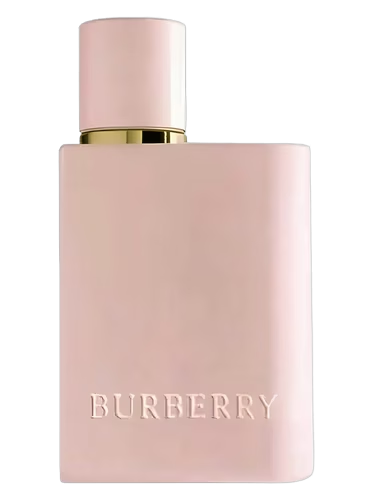
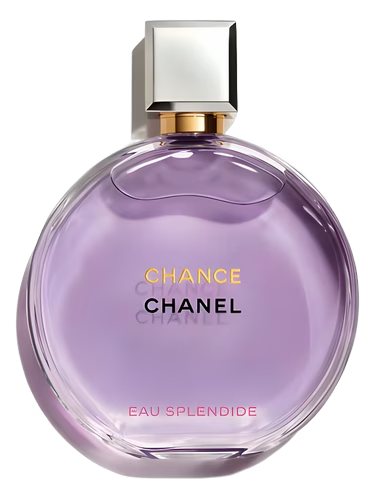
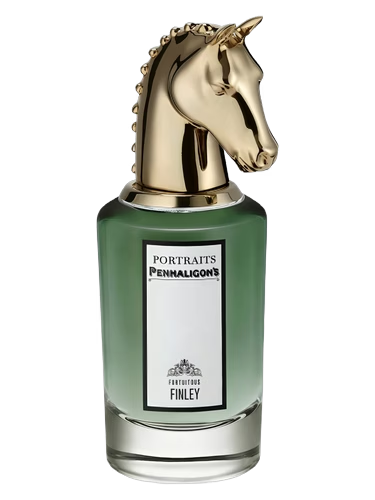
Most Popular Scents Using Hyssop
What is Hyssop?
Hyssop is a perennial herb native to Southern Europe and the Middle East, valued for its warm, medicinal-herbal aromatic profile and historical use in purification rituals.What does Hyssop smell like?
It features a penetrating camphoraceous scent with a warm, sharply herbaceous profile, including green, slightly spicy undertones and a dry, vibrant intensity.How is Hyssop essence extracted?
The oil is primarily obtained through steam distillation of the plant's dried flowering parts, leaves, and stems, though modern methods like supercritical CO2 extraction are also used.What are some top perfumes featuring Hyssop?
Notable fragrances include Le Labo Eucalyptus 20, Goldfield & Banks Australia Purple Suede, Chloé Hysope, and Houbigant Fougère Royale.When is Hyssop in season?
The plant begins its cycle in early spring and reaches peak activity during the summer, with flowers typically blooming from June through September.