Fragrance Notes Are Layers Of Scent That Are Layered To Form The Final Fragrance. Fragrance Notes Are Categorised Into Three Main Elements Based On How Long They Take To Evaporate, And How Long They Typically Last Following Application: Top Notes, Heart Notes And Base Notes.
Hyacinth
The Hyacinth note delivers a potent, intoxicating floral aroma, characterized by a dominant green, leafy freshness, often described as metallic and sharp. It possesses a complex sweetness reminiscent of honey or lilac, underpinned by subtle spicy, earthy, and sometimes powdery nuances, capturing the essence of spring bloom.

Origin & Extraction Of Hyacinth
Hyacinth, valued for its potent, green, and slightly metallic floral aroma, gained prominence in classic perfumery, particularly within the green floral family that flourished in the mid-20th century. Its complexity—blending sharp, leafy freshness with sweet, honeyed nuances—made it a key ingredient for capturing the essence of spring bloom. It was essential for creating the elegant, cool, and assertive green structures found in vintage masterpieces.
Historically, Hyacinth played a crucial role in foundational scents, providing a vibrant, dewy green lift to compositions. Its ability to bridge sharp citrus top notes with softer white florals ensured its indispensable status in works like Guerlain's Chamade and Chanel No 19. While strongly associated with these classic styles, modern perfumers continue to utilize its green and aquatic facets to inject realism and natural vitality into contemporary compositions, seeking transparent, lively freshness.
Extraction Methods of Hyacinth
Historically, the extraction of aromatic compounds from hyacinth flowers was achieved through enfleurage, a labor-intensive traditional method where petals were placed on layers of animal fat to absorb their delicate scent. This was later replaced by solvent extraction using petroleum ether or benzene to produce a concrete, which is then processed with alcohol to create hyacinth absolute. For industrial and textile purposes, water hyacinth fibers have long been extracted through manual scraping, retting in water for several days, or boiling the stems to separate the fibrous material from the plant's pulp.
Modern extraction techniques have evolved to include advanced mechanical decorticating machines that grate the outer stems to yield higher quantities of uniform fibers. For fragrance and bioactive compounds, contemporary methods utilize supercritical CO2 extraction and ultrasound-assisted extraction (UAE). These technologies allow for the capture of complex aromatic profiles and antioxidants without the high heat or harsh chemicals used in traditional processes, ensuring a more sustainable and high-purity yield.
Hyacinth is a pivotal note in classic perfumery, especially within the green floral family, representing the fresh, sometimes sharp, essence of spring. Its potent, complex aroma—a blend of green foliage, honeyed sweetness, and subtle metallic freshness—made it indispensable during the mid-20th century. One of the most historically significant uses of Hyacinth is found in Chamade by Guerlain, where it lends a bright, slightly bitter green opening that perfectly complements the rich floral heart.
- A prominent example of Hyacinth's green facet is in Chanel No 19, a fragrance renowned for its elegant, cool, and assertively green character, where the note is crucial in establishing the crisp, verdant structure.
- In Anais Anais by Cacharel, Hyacinth contributes to the central bouquet, balancing its intense greenness with softer white florals to create a romantic, delicate, and timeless classic.
- The note is also famously used in the original version of Diorissimo by Dior, providing a vibrant, dewy green lift that supports the central lily-of-the-valley accord, capturing the scent of a garden after spring rain.
While often associated with vintage masterpieces, Hyacinth continues to be featured in contemporary niche and designer fragrances, valued for its ability to inject a strong sense of realism and natural vitality. Modern perfumers employ it carefully, utilizing its green and aquatic facets to create transparent, lively compositions that contrast with heavier base notes. Its complexity allows it to bridge sharp citruses and soft florals, ensuring its continued relevance in fragrance creation.
Sustainability Of Hyacinth
Sustainability of Hyacinth
- Reducing environmental impact by utilizing high-quality synthetic reproductions to replace heart-stoppingly expensive natural extraction processes
- Adopting biotech and biobased technology to create sustainable, high-performance aroma molecules that meet rising environmental responsibility standards
- Sourcing certified organic and wildcrafted raw materials from suppliers committed to 100% purity and authentic chemical profiles
- Promoting animal welfare through the production of vegan-suitable and cruelty-free fragrance oils that contain no animal by-products
- Implementing non-GMO and gluten-free manufacturing processes to ensure safer, more transparent ingredient standards for global consumers
Trivia
In the Victorian era, the juice from hyacinth bulbs was so remarkably sticky that it was commonly used as a natural glue for binding books.
Most Popular Scents Using Hyacinth
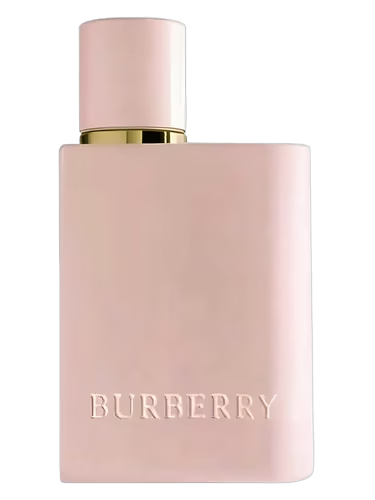
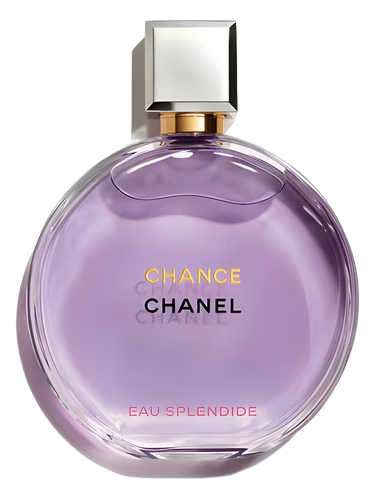
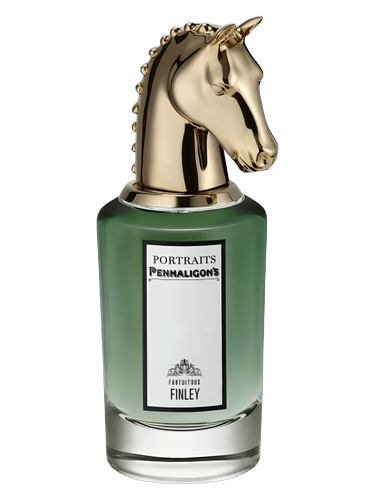
What is Hyacinth?
Hyacinth is a potent, green floral note derived from the spring-blooming bulbous plant native to the Eastern Mediterranean region, including Turkey and Iran.What does Hyacinth smell like?
It features a dominant green, leafy freshness that is often metallic and sharp, with a complex honey-like sweetness and subtle spicy, earthy, and powdery nuances.How is Hyacinth essence extracted?
Modern essence is primarily obtained through solvent extraction of the flowers to produce an absolute, while contemporary methods also include supercritical CO2 extraction.What are some top perfumes featuring Hyacinth?
Notable fragrances featuring this note include Guerlain Chamade, Chanel No 19, Cacharel Anais Anais, and Versace Pour Homme.When is Hyacinth in season?
Hyacinths are classic spring-blooming bulbs that typically flower once a year between March and May, reaching their peak fragrance during this period.