Fragrance Notes Are Layers Of Scent That Are Layered To Form The Final Fragrance. Fragrance Notes Are Categorised Into Three Main Elements Based On How Long They Take To Evaporate, And How Long They Typically Last Following Application: Top Notes, Heart Notes And Base Notes.
Hoya Carnosa Wax Plant
The Hoya Carnosa Wax Plant offers a varied profile, ranging from intensely sweet and creamy vanilla to fresh, bright, and slightly waxy floral notes. The scent is often described as complex, combining deep sweet facets with an uplifting, subtle citrus or clean floral quality, depending on the specific variety used.

Origin & Extraction Of Hoya Carnosa Wax Plant
The Hoya Carnosa, or Wax Plant, does not share the centuries-old history in classical perfumery attributed to notes like rose, jasmine, or traditional citruses. Native to Asia and Australia, its incorporation into fine fragrance is a relatively modern phenomenon. Historically, its primary uses were ornamental, due to its star-shaped, waxy flowers, which possess a delicate, creamy, and sweet scent. The specific note began gaining traction in the late 20th and 21st centuries as perfumers, particularly in the niche and artisanal sectors, started exploring exotic and photorealistic floral essences beyond the established European palette.
The note's relevance in contemporary perfumery lies in its complex profile—a unique blend of intense sweetness (often likened to vanilla or creamy honey) and fresh, waxy greenness. This duality allows it to act as a bridge between lush white florals and more comforting gourmand accords. As modern houses seek novel ways to create unique, long-lasting floral bouquets with signature sillage, Hoya Carnosa provides a sophisticated, slightly lactonic texture, offering a distinctive and highly sought-after alternative to common tropical or garden floral ingredients.
Extraction Methods of Hoya Carnosa
The extraction of Hoya carnosa essence is primarily achieved through methods such as solvent extraction, hydrodistillation, and reflux extraction. Traditionally, fragrance compounds were obtained from the flowers using hydrodistillation or simple maceration in organic solvents like ethanol. For medicinal use, historical "folk methods" involved grinding the leaves into a powder and submersing them in 96% ethanol for several days, followed by evaporation to create a thick, concentrated extract. For flower extracts, traditional reflux extraction at 100°C was often employed to isolate volatile constituents.
In modern applications, advanced techniques like vacuum distillation and spray-drying are used to produce stable, powdered botanical extracts for cosmetic and pharmaceutical use. Recent scientific developments have introduced highly sensitive analytical methods such as solid-phase microextraction (SPME) and dynamic headspace trapping to capture and identify delicate aromatic molecules without the use of heat or toxic solvents. These contemporary methods allow for a more precise profile of the plant's volatile compounds, preserving the integrity of the fragrance while ensuring the purity required for topical anti-aging and antibacterial formulations.
The Hoya Carnosa, or Wax Plant, note is a nuanced and relatively modern inclusion in perfumery, valued for its complex profile that can swing between intensely sweet vanilla and fresh, waxy floral characteristics. While not a classical note like rose or jasmine, it has found a home in contemporary fragrance compositions, particularly in niche and artisanal houses seeking a unique, creamy floral depth. One example is the perfume Hoya Carnosa by a well-known niche house, which centers this delicate, milky-sweet aroma to create a photorealistic interpretation of the flower in bloom, often supported by subtle musk and green notes.
- * * *
The use of the Hoya Carnosa note often imparts a creamy, almost lactonic sweetness that is appealing to gourmand and white floral lovers alike. Its versatility allows it to be paired successfully with heavier bases like sandalwood or amber to ground the light floralcy, or with bright citrus openings to emphasize its fresh, waxy facets. In mainstream perfumery, you might find this note listed in complex floral bouquets or exotic compositions. For instance, some describe the creamy, slightly vanilla-tinged floral heart of Velvet Orchid Lumière as having a Hoya-like quality, even if the note isn't explicitly named, reflecting the current trend toward sweet, multi-layered white florals.
- * * *
As perfumers continue to explore more photorealistic and exotic floral essences, the Hoya Carnosa Wax Plant stands out for its distinctive balance of sweetness and freshness. It acts as an intriguing, slightly exotic anchor in compositions designed for longevity and sillage. A lesser-known but dedicated example is the niche scent Wax Flower Dream, which highlights the plant's unique creamy-waxy texture and subtle green undertones, positioning the Hoya as a sophisticated alternative to traditional gardenia or tuberose, appealing to collectors looking for novel floral complexity.
- Blooming typically occurs from spring through fall, with flowers often becoming most fragrant in the evening
- The active growing season spans from spring to early fall, during which the plant requires more frequent watering and regular fertilization
- Growth naturally slows down during the late fall and winter months as the plant enters a semi-dormant state
- In winter, the plant requires significantly less water and can tolerate cooler night temperatures down to 50°F (10°C)
- Flower buds develop on permanent structures called peduncles, which should not be pruned as they rebloom year after year
Sustainability Of Hoya Carnosa Wax Plant
Sustainability of Hoya Carnosa
- Promoting long-term indoor air quality by utilizing the plant as a natural biofilter to absorb common household toxins
- Reducing environmental waste through easy propagation from stem cuttings, allowing for the sustainable sharing of plants without commercial packaging
- Conserving water resources by leveraging the plant's semi-succulent nature and drought tolerance, which requires infrequent irrigation
- Encouraging low-impact gardening by thriving in root-bound conditions, minimizing the need for frequent repotting and new plastic containers
- Supporting biodiversity by providing nectar-rich flowers that can attract natural pollinators when grown in suitable outdoor environments
Trivia
Hoya carnosa was found by the University of Georgia to be an exceptional air purifier, capable of efficiently removing volatile organic pollutants from indoor environments.
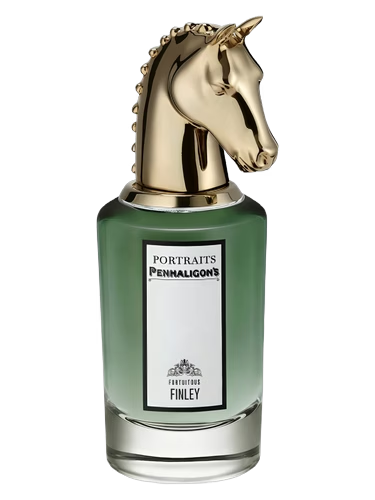
Most Popular Scents Using Hoya Carnosa Wax Plant


What is Hoya Carnosa?
Hoya Carnosa, also known as the Wax Plant or Porcelain Flower, is a tropical climbing vine native to East Asia and Australia, valued in perfumery for its unique, multi-faceted floral aroma.What does Hoya Carnosa smell like?
The scent is complex and varied, ranging from intensely sweet and creamy vanilla or honey-like notes to fresh, bright, and slightly waxy floral facets.How is Hoya Carnosa essence extracted?
In modern perfumery, its aromatic profile is typically captured through solvent extraction, hydrodistillation, or advanced headspace technology to preserve its delicate, milky-sweet compounds.What are some top perfumes featuring Hoya Carnosa?
Notable fragrances include Oscar de la Renta Oriental Lace, SWITCH Perfumes No. 1, Reserved Regular Eau de Parfum, and Aftelier Memento.When is Hoya Carnosa in season?
The plant typically blooms from spring through fall, and its flowers are unique for becoming most fragrant during the evening hours.