Fragrance Notes Are Layers Of Scent That Are Layered To Form The Final Fragrance. Fragrance Notes Are Categorised Into Three Main Elements Based On How Long They Take To Evaporate, And How Long They Typically Last Following Application: Top Notes, Heart Notes And Base Notes.
Hollyhock
Hollyhock offers a delicate, green-tinged floral profile, distinctively mild and soft with subtle aquatic and powdery nuances, hinting at a sweet, almost sensual depth. It provides a refined, natural lift, often bridging fresh openings with more complex, warm, and luxurious floral heart notes in feminine compositions.

Origin & Extraction Of Hollyhock
Hollyhock does not hold a prominent historical position in classic perfumery like foundational notes such as Rose or Jasmine. The flower, known scientifically as *Alcea rosea*, is primarily associated with traditional gardening and folk remedies. Its subtle, mild, and delicate scent profile makes extracting a strong, pure essential oil challenging, meaning it was generally bypassed in early perfumery which relied on more potent, naturally derived ingredients for mass production. Historically, it was used more often in floral waters or simply for its ornamental value rather than as a central, lasting aromatic component.
The incorporation of Hollyhock into fine fragrance is largely a modern trend, emerging with the rise of niche and contemporary perfumery in the late 20th and early 21st centuries. Perfumers now value it for its ability to introduce a refined, soft, and green-tinged floral nuance, often recreated using advanced synthetic accords or headspace technology to capture its delicate scent more accurately and make it stable in a composition. This allows Hollyhock to be used to bridge sharp citrus top notes with warmer, sophisticated heart accords, adding a natural, tranquil, and slightly powdery texture to modern floral compositions, especially in brands seeking photorealistic garden scents.
Extraction Methods of Hollyhock
Historically, hollyhock has been processed through simple traditional methods such as hot infusions, decoctions, and macerations to extract its medicinal mucilage and pigments for use in teas, tinctures, and food coloring. Manual crushing of the flowers, leaves, and stems into a pulp (poultice) was also a standard practice for topical applications. Ancient Chinese and Tibetan medicine utilized aqueous extracts of the plant for various therapeutic preparations, focusing on the high concentration of phenolic compounds and flavonoids.
Modern extraction techniques have evolved to include advanced methods like methanol and ethanol solvent extraction to isolate specific active constituents such as kaempferol and quercetin for pharmacological research. Recent developments also include a specialized method for extracting high-purity mucilage by placing stems and leaves in a mesh bag and performing multiple cycles of heating, leaching, and mechanical pressing. This process is followed by concentration in a water bath and alcohol precipitation to isolate the sticky substances, solving historical issues with liquid-slag separation and improving the extraction rate for industrial and medicinal use.
The Hollyhock note, characterized by its delicate, green-tinged, and subtly sweet floral profile, is typically used in refined feminine compositions where a soft, natural lift is desired. Because it is a relatively mild and less common floral note compared to rose or jasmine, it often serves as an elegant bridge between sharp, fresh top notes and complex, warm heart notes. While not a central star in classic perfumery, contemporary fragrance houses use it to evoke a sense of garden tranquility and natural beauty.
- A prominent example where Hollyhock is featured is Jo Malone London's Hollyhock & Clover, which showcases the note's fresh, green facets alongside clover, giving the fragrance a clean, pastoral atmosphere.
- Another fragrance that subtly incorporates this note for its powdery, soft nuance is occasionally listed in the heart of certain limited-edition floral fragrances by houses like Chloé, particularly those focused on delicate garden florals.
Due to the specific nature of the Hollyhock flower—often difficult to extract a strong, pure essential oil—it is frequently recreated using modern headspace technology or synthetic accords. This allows perfumers to capture its delicate scent profile, including its slightly aquatic and powdery nuances, ensuring the note remains stable and long-lasting in the final composition. This technique is favored by niche and artistic brands aiming for photorealistic floral bouquets.
In modern high-end perfumery, Hollyhock can be found supporting main floral themes, adding a unique, almost ethereal texture. For instance, some interpretations of sophisticated garden fragrances, such as select offerings from Guerlain's Aqua Allegoria collection, have been rumored to use this subtle note to round out their compositions, providing a soft transition and adding depth without overpowering the primary accords like peony or lily.
Sustainability Of Hollyhock
Sustainability of Hollyhock
- Enhancing local biodiversity by providing nectar-rich food sources for bees, butterflies, and hummingbirds
- Promoting low-intervention gardening through a natural self-seeding habit that allows plants to persist for years without replanting
- Supporting healthy ecosystems by serving as a host plant for various insect species, including the hibiscus sawfly and hollyhock weevil
- Encouraging organic and sustainable farming practices that focus on soil enrichment and water conservation
- Utilizing resilient and adaptable plant species that can thrive in impoverished soils and diverse environmental conditions
Trivia
While hollyhocks are iconic for their garden stature and vibrant colors, they are considered silent flowers in perfumery because they produce almost no natural scent, requiring perfumers to reconstruct their aroma using other materials.
Most Popular Scents Using Hollyhock
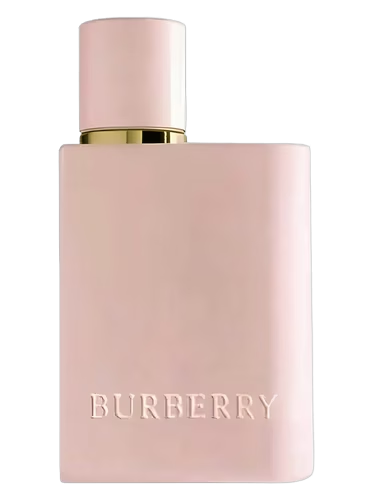
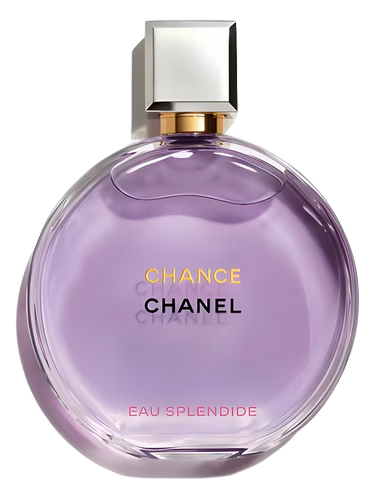
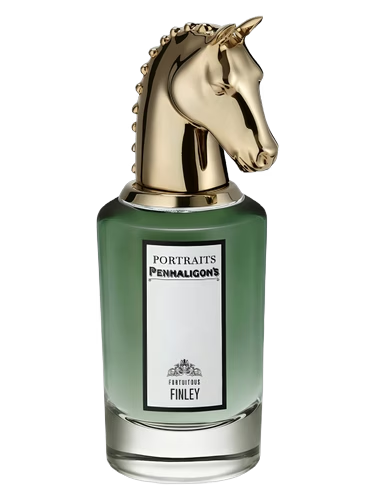
What is Hollyhock?
Hollyhock is a tall, flowering plant from the mallow family that is primarily associated with traditional cottage gardens and is used in modern perfumery for its soft, green-tinged floral profile.What does Hollyhock smell like?
The fragrance note is delicate and mild, offering a soft, green floral aroma with subtle aquatic and powdery nuances and a hint of sweet depth.How is the Hollyhock note extracted?
Because hollyhocks produce almost no natural scent through traditional means, the note is typically recreated by perfumers using advanced headspace technology or synthetic accords to capture its ethereal essence.What are some top perfumes featuring Hollyhock?
Notable fragrances that incorporate this note include Jo Malone London's Hollyhock & Clover, L'Erbolario 3 Rosa, and Moss Hill Hollyhock Signature Scent.What is the role of Hollyhock in a fragrance composition?
Hollyhock often serves as an elegant bridge between fresh top notes and warm heart notes, adding a natural, tranquil, and slightly powdery texture to floral bouquets.