Fragrance Notes Are Layers Of Scent That Are Layered To Form The Final Fragrance. Fragrance Notes Are Categorised Into Three Main Elements Based On How Long They Take To Evaporate, And How Long They Typically Last Following Application: Top Notes, Heart Notes And Base Notes.
Holly Flower
Holly Flower offers a refined and sophisticated profile, blending delicate floral sweetness with fresh, crisp green and slightly woody undertones. It possesses an invigorating aroma, often featuring a subtle spicy edge and hints of mild, sweet fruitiness (like peach or berry), creating an elegant and inviting scent.

Origin & Extraction Of Holly Flower
The Holly Flower note, derived from the Ilex plant species, does not share the long, foundational history in classical perfumery enjoyed by notes like Bergamot or Rose. Its use is predominantly a modern phenomenon, emerging as perfumers sought to expand the traditional palette with unique, photorealistic, and seasonal green floral elements. Historically, holly was associated more with winter holidays, medicine, and ornamental use than with fine fragrance, meaning it lacks the centuries of documentation found with traditional European raw materials.
In contemporary perfumery, the Holly Flower note serves a niche role, often employed to evoke a crisp, sophisticated, and slightly green freshness associated with the winter season. Its ability to blend delicate floral sweetness with subtle woody and spicy nuances makes it a useful bridging note between bright, airy openings and richer, foundational heart notes. Its profile is particularly sought after in seasonal collections and artisanal fragrances that aim to capture unique botanical themes.
Extraction Methods of Holly Flower
Historically, the aromatic compounds of delicate blossoms like the holly flower were often captured through enfleurage, one of the oldest extraction techniques. This labor-intensive process involved layering fresh flowers over animal or vegetable fats, allowing the fragrance to diffuse into the fat over several days or weeks. The resulting pomade was then washed with alcohol to separate the fragrant molecules. Another traditional approach included simple maceration, where flowers were soaked in hot oils to break down membranes and absorb the floral essence.
In modern perfumery, holly flower extraction typically utilizes more efficient and precise technologies. Solvent extraction is common, using volatile solvents like hexane to create a concrete, which is then processed with ethyl alcohol to produce a highly concentrated absolute. For preserving the most delicate, heat-sensitive aromatic profiles, advanced techniques such as supercritical CO2 extraction are employed. This method uses carbon dioxide in a fluid state to dissolve and extract oils at lower temperatures, ensuring a pure extract that remains free of solvent residue and closely mimics the natural scent of the living flower.
The Holly Flower note, with its delicate floral sweetness and crisp, green undertones, is often used in niche and seasonal fragrances to evoke a sense of winter freshness or refined elegance. While not a classic mainstream note, it offers perfumers a sophisticated way to introduce a light, slightly woody, and subtly fruity dimension. This characteristic makes it suitable for compositions that aim for an ethereal and unique natural scent profile, moving beyond traditional floral bouquets.
- One notable example showcasing the Holly Flower note is Jo Malone London's Holly & Vine Cologne, which often features this note to capture the festive and bright green essence of the holiday season, pairing it with juicy red berries and soft woody accents.
- Another fragrance that sometimes incorporates the sweet, green facets of holly is The Healing Garden's White Holly, aiming for a clean, comforting, and slightly powdery winter-themed scent.
- In the niche market, the note may appear as a supporting player in various seasonal or botanical lines, such as certain releases from Demeter Fragrance Library, although these are often focused on photorealistic single notes.
The primary function of the Holly Flower note in perfumery is to bridge green, fresh elements with delicate, sweet florals, lending an airy quality to the final composition. It contrasts sharply with heavier winter notes like incense or spices, offering a light, invigorating counterpoint. Its subtle spicy edge and hint of peach or berry allow it to integrate smoothly into both floral and chypre structures, providing complexity without overwhelming the brighter top notes.
Sustainability Of Holly Flower
Sustainability of Holly Flower
- Reducing environmental impact by avoiding wild overharvesting and supporting cultivated holly farms and nurseries to protect wild populations
- Promoting biodiversity and ecosystem health by providing vital winter food sources and shelter for native bird and wildlife species
- Utilizing organic fertilizers such as bone meal and fish emulsion to build long-term soil health and reduce chemical runoff
- Implementing sustainable gardening practices like deep-root watering and mulching to improve drought tolerance and conserve water resources
- Adopting eco-friendly floral design methods that eliminate the use of petroleum-based floral foams and repurpose green waste into compost
- Mitigating ecological threats by monitoring and managing invasive species like English holly to prevent the displacement of native vegetation
Trivia
Holly trees are dioecious, meaning they are either male or female, and in a classic case of botanical irony, two of the most popular cultivated varieties were misnamed by plant breeders: the Silver Queen is actually a male plant, while the Golden King is female.
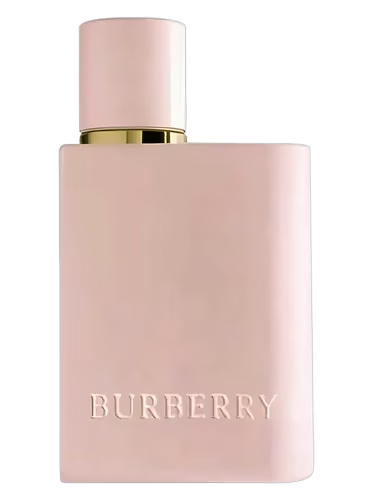
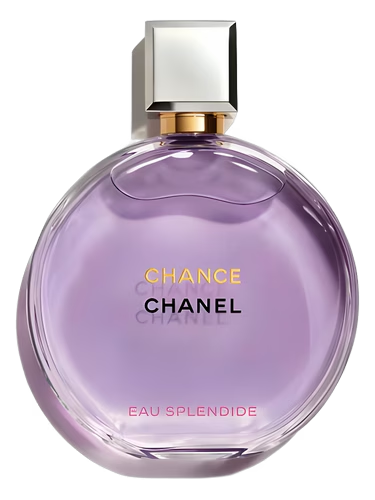
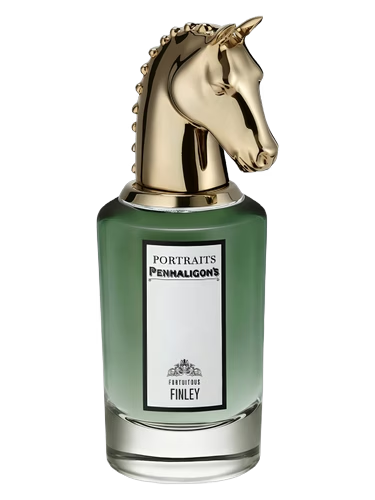
Most Popular Scents Using Holly Flower
What is Holly Flower?
Holly Flower is a refined fragrance note derived from the Ilex plant species, primarily used in modern niche and seasonal perfumery to evoke a crisp, winter-themed freshness.What does Holly Flower smell like?
It offers a sophisticated profile that blends delicate floral sweetness with fresh green and slightly woody undertones, often featuring a subtle spicy edge and hints of mild fruitiness like peach or berry.How is Holly Flower essence extracted?
In modern perfumery, it is typically extracted using solvent extraction to create an absolute or through advanced supercritical CO2 extraction to preserve its delicate, heat-sensitive aromatic profile.What are some top perfumes featuring Holly Flower?
Notable fragrances include Jo Malone London Holly & Vine Cologne, Room 1015 Hollyrose, and Thera Cosmeticos Heinz.When is Holly Flower in season?
Holly trees typically bloom in the spring and early summer, between May and August, while their iconic scarlet berries ripen in late autumn and persist through the winter months.