Fragrance Notes Are Layers Of Scent That Are Layered To Form The Final Fragrance. Fragrance Notes Are Categorised Into Three Main Elements Based On How Long They Take To Evaporate, And How Long They Typically Last Following Application: Top Notes, Heart Notes And Base Notes.
Hog Plum
Hog Plum offers a citrus-aromatic profile that is acidic, sunny, and long-lasting in perfumery. It presents a bright, refreshing aroma, often with a prominent citrus sweetness that intertwines with rose nuances, evoking a vibrant, natural feel.

Origin & Extraction Of Hog Plum
Hog Plum, derived from the fruit of the *Spondias mombin* tree (also known as Spanish Plum or Yellow Mombin), has a long history of traditional use in tropical regions of the Americas and Africa, primarily in cuisine and folk medicine. As a perfumery note, however, Hog Plum is a modern addition, reflective of a broader contemporary interest in exotic and non-traditional fruity accords. Its inclusion in fragrances is often the result of synthetic reconstruction, aiming to capture the fruit's unique acidic, sunny, and sometimes rosé-tinged aroma that is valued for its longevity and bright quality.
Its relevance to perfumery is found almost exclusively within niche and modern mainstream compositions, where perfumers seek to add an unexpected tropical zest that goes beyond standard citrus fruits. The note is used to inject an immediate, vibrant lift and a distinctly naturalistic, green-aromatic facet to the opening of a fragrance. By blending its characteristic citrus sweetness with subtle rose nuances, Hog Plum serves as an exotic bridge between the bright top notes and the emerging floral or woody heart of a perfume.
Extraction Methods of Hog Plum
Historically, the extraction of aromatic compounds from the hog plum (Spondias mombin and Spondias pinnata) relied on traditional manual and basic mechanical techniques. These included air-drying the leaves or fruit peels for several weeks followed by manual grinding to create a fine powder, which was then subjected to simple maceration or solvent extraction using honey, water, or spirits. For the fruit's pulp, traditional juice extraction involved manual pressing or the use of simple mechanical devices to separate the liquid from the leathery outer skin and fibrous core.
Modern extraction methods have evolved to include more specialized and efficient technologies. Steam distillation and hydro-distillation using Clevenger-type apparatus are standard for capturing the essential oils from the fruit's peel, while solvent extraction with n-hexane is frequently used to isolate oils from the seed kernels. Recent advancements have introduced ultrasound-assisted extraction (UAE) and supercritical CO2 extraction, which allow for the capture of delicate phenolic compounds and antioxidants at lower temperatures, preserving the fruit's complex nutritional and aromatic profile. Additionally, modern industrial juice extractors utilize variable shaft speeds and controlled loading to optimize the moisture and nutrient yield from the pulp.
As a distinctive and relatively modern note, Hog Plum is typically utilized in niche and contemporary compositions seeking an exotic, bright, and long-lasting citrus-aromatic lift. Its unique profile, which balances sharp acidity with a sunny sweetness and subtle rose nuances, prevents it from being overshadowed by more common citrus notes like Bergamot or Lemon. Fragrances featuring Hog Plum often aim to capture the vibrancy of tropical locations, using the note to inject a naturalistic, green facet that is both invigorating and refined. This makes it an ideal component for sophisticated summer scents and tropical-themed creations.
- A notable example of Hog Plum's use is found in **Guerlain Aqua Allegoria Limon Verde**, where its tropical zest complements the central lime and sugar cane accord, adding an unexpected, tangy depth that enhances the exotic freshness of the composition.
- The note also makes an appearance in select luxury artisanal lines, such as **Parfums Dusita Splendiris**, providing a luminous, acidic opening that lifts the heavier iris and earthy vetiver notes.
- In the fragrance **Hermès Un Jardin sur le Nil**, while not explicitly listed, an accord reminiscent of the acidic, green-tinged freshness of Hog Plum contributes to the central mango and green vegetable notes, helping to define the scent's iconic, aqueous, and unripe fruit character.
In modern perfumery, Hog Plum's role is often to serve as an exotic bridge between highly volatile citrus top notes and the more enduring floral or woody heart notes. Its slight bitterness and green undertones, mentioned in its odor profile, allow it to integrate smoothly into complex structures, lending sophistication without becoming overly sweet. Perfumers select Hog Plum when they desire a bright opening that carries an element of surprise or tropical novelty, moving beyond the familiar classical citrus palette.
Sustainability Of Hog Plum
Sustainability of Hog Plum
- Enhancing biodiversity and restoring degraded land through reforestation projects, as the tree thrives in poor soils and provides habitats for various wildlife
- Promoting climate resilience by utilizing the tree's natural drought resistance and deep root system to prevent soil erosion and improve soil health
- Supporting low-input agricultural systems as the tree is a hardy species that requires minimal irrigation, no chemical fertilizers, and resists most common pests
- Fostering local economic development by providing smallholder farmers with a high-potential, low-maintenance crop for both culinary and medicinal use
- Advancing sustainable land use through community engagement and education initiatives led by organizations like Grow Billion Trees Partners
Trivia
The hog plum tree was described by a 16th-century Portuguese explorer as producing a "white oil like milk" that is very sticky, while its leaves can be distilled into an aromatic oil that perfectly mimics the scent of the fruit pulp.
Most Popular Scents Using Hog Plum
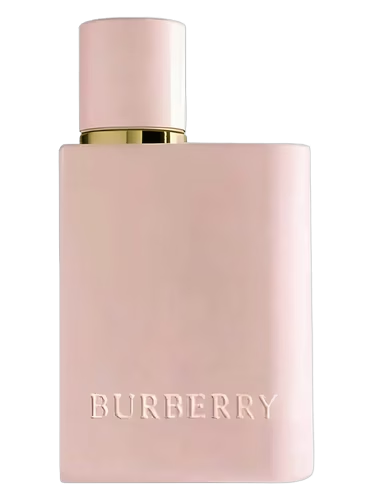
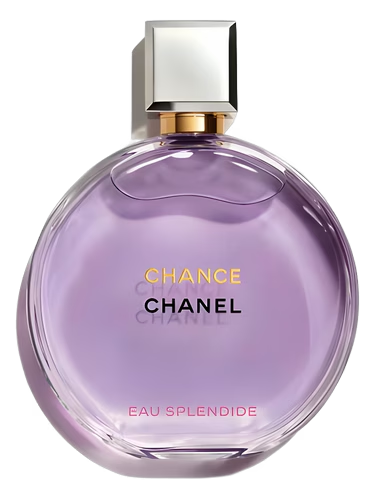
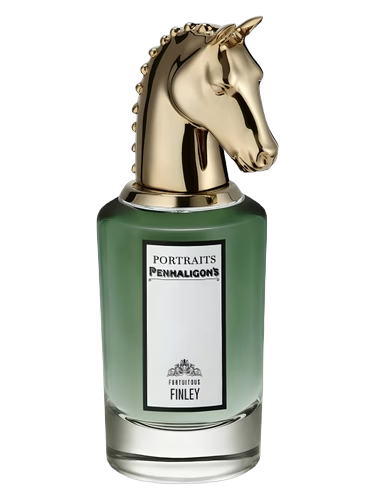
What is Hog Plum?
Hog Plum, also known as Spondias mombin or Yellow Mombin, is a tropical fruit tree native to the Americas that is used in modern perfumery for its unique citrus-aromatic profile.What does Hog Plum smell like?
It features a bright, acidic, and sunny aroma with a prominent citrus sweetness intertwined with subtle rose nuances and green-aromatic facets.How is the Hog Plum note used in perfumery?
In fragrances, it typically serves as a vibrant heart note or an exotic bridge, providing a long-lasting tropical lift and a naturalistic, slightly bitter freshness.Is there a natural Hog Plum essential oil?
There is no standard commercial essential oil or absolute; the note is usually synthetically reconstructed or created as an accord to capture the fruit's specific scent.What are some top perfumes featuring Hog Plum?
Notable fragrances include Guerlain Aqua Allegoria Limon Verde, L'Occitane Au Brésil Olinda, Tiziana Terenzi Vele, and Avon Sheer Passion Simply Tempting.When is Hog Plum in season?
Depending on the region, it typically blooms in spring, with fruit ripening and harvest occurring between November and April in some climates, or May to July in others.