Fragrance Notes Are Layers Of Scent That Are Layered To Form The Final Fragrance. Fragrance Notes Are Categorised Into Three Main Elements Based On How Long They Take To Evaporate, And How Long They Typically Last Following Application: Top Notes, Heart Notes And Base Notes.
Hoary Stock
Hoary Stock offers a rich, layered floral scent that is both sweet and spicy, with nuances of cloves, honey, and almonds, resembling lilac or carnation. It provides a vibrant, complex body note, ideal for evoking romance, vintage elegance, or the atmosphere of a spring garden in sophisticated floral compositions.

Origin & Extraction Of Hoary Stock
Hoary Stock, also known as Gillyflower or Matthiola incana, is a historic garden flower whose use in perfumery is primarily based on its rich, complex scent profile rather than historical use of the natural extract. The flower's aroma is distinctive, combining a heady sweetness with spicy facets reminiscent of cloves and a subtle undertone of almond or honey, placing it historically in the realm of opulent, warm floral compositions. While it is not a traditional cornerstone of classical perfumery like Rose or Jasmine, its scent has been sought after to impart a sense of vintage elegance and deep, complex floralcy, often filling out the heart notes of fragrances that aimed for a rich, powdery, or spicy floral effect, particularly those popular in the early to mid-20th century.
In contemporary perfumery, the Hoary Stock note is typically recreated synthetically or as part of a complex accord to capture its multifaceted character, as natural extraction can be difficult or inconsistent. This note is valued for its ability to bridge the gap between bright opening notes and warmer, heavier bases such as amber, tonka bean, or vanilla. Its spicy and almond nuances make it a perfect complement to other rich florals like carnation or heliotrope, contributing to modern gourmand-floral and oriental-floral categories, where it provides a unique texture and sophisticated sweetness without resorting to common white floral tropes. It remains a distinctive choice for niche fragrances looking to evoke a romantic, deeply scented spring garden atmosphere.
Historically, the fragrance of Hoary Stock was captured through enfleurage, an ancient technique where flower petals were placed on layers of purified animal fat to absorb their delicate essential oils over several days. This labor-intensive method was the primary way to harvest the scent of fragile blossoms that could not withstand the high heat of early steam distillation. Traditional maceration in carrier oils was also commonly employed by early herbalists to create fragrant ointments and medicinal salves.
In modern perfumery, the essence of Hoary Stock is primarily obtained through volatile solvent extraction to produce a concrete, which is then processed into an absolute. This method is preferred for its ability to capture the complex, spicy, and clove-like aromatic profile of the flowers without thermal degradation. Additionally, recent advancements in supercritical CO2 extraction are utilized to produce high-purity extracts that more accurately reflect the living scent of the flower while remaining free of chemical residues.
Hoary Stock, with its unique blend of sweet, spicy, and almond-like floral facets, is a note often used to introduce a vintage elegance and rich texture to perfume compositions. Its complexity, which resembles both lilac and carnation, makes it a sophisticated choice for opulent florals. Although not as universally famous as notes like jasmine or rose, it has been subtly utilized by classic houses to build out elaborate, romantic bouquets, contributing depth without dominating the composition. For instance, its spicy-clove undertones are perfectly suited to accompany rich amber or powdery heliotrope bases.
- The Hoary Stock note contributes significantly to the full-bodied heart of several classic and modern floral perfumes. Its presence helps bridge the gap between bright top notes and warmer, spicier bases, ensuring a long-lasting and seamless transition.
One notable example where a similar spicy floral profile is celebrated is in the realm of carnation-focused fragrances, which share the Hoary Stock's clove-like warmth. While specific perfumes explicitly naming "Hoary Stock" are often found in more niche or exclusive lines, the general floral profile is reminiscent of the rich, romantic sophistication found in fragrances like **L'Air du Temps** by Nina Ricci, where a complex floral heart offers a spicy, enduring sweetness. This note is valued for its ability to convey the atmosphere of a lush, traditional spring garden, evoking feelings of romance and timeless beauty.
- In contemporary perfumery, Hoary Stock's almond and honey nuances are sometimes leveraged in white floral gourmand compositions. It provides a creamy, nutty sweetness that complements rich notes like vanilla, tonka bean, or even heliotrope, moving the scent profile away from simple freshness toward something more enveloping and decadent.
Due to its spicy-sweet complexity, Hoary Stock (or scents built around its profile) is well-suited for fragrances designed to project warmth and vintage glamour. It lends itself to classic oriental-floral and powdery-floral categories. A fragrance that successfully uses this sophisticated, layered floral effect is **Flowerbomb** by Viktor&Rolf, where layers of complex florals and sweet, gourmand notes create a vibrant and captivating aroma that aligns with the multifaceted nature of the Hoary Stock scent.
Sustainability Of Hoary Stock
Sustainability of Hoary Stock
- Supporting local ecosystems and biodiversity by providing a rich source of nectar and pollen for bees, butterflies, and other essential pollinators
- Promoting eco-friendly gardening through the use of organic, non-GMO heirloom seeds to preserve genetic diversity
- Encouraging the reduction of chemical interventions by utilizing natural pest resistance and sustainable cultivation practices like crop rotation and cover cropping
- Enhancing soil health and water retention by incorporating organic matter, which increases drought resilience and reduces the need for supplemental irrigation
- Utilizing low-maintenance and hardy plant varieties that require minimal resources and interventions once established in suitable temperate climates
Trivia
Hoary stock, also known as gillyflower, is celebrated for its unusual clove-like scent that becomes significantly more intense and intoxicating at night to attract pollinators.
Most Popular Scents Using Hoary Stock
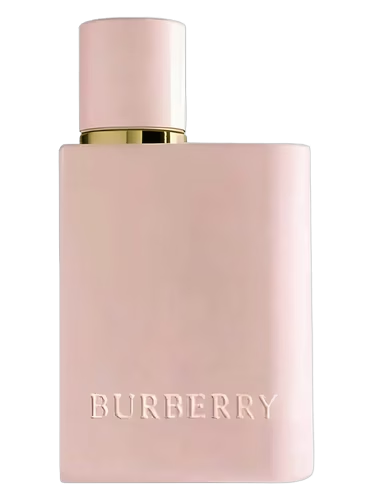
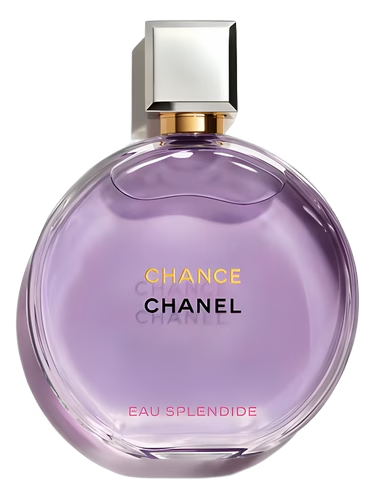
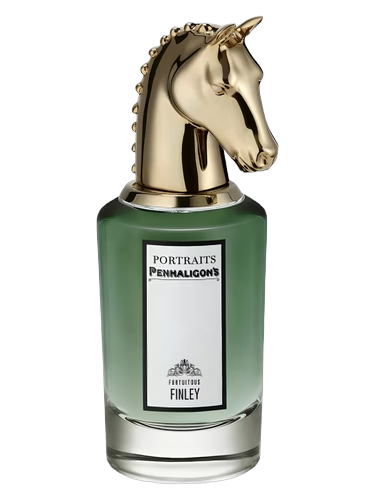
What is Hoary Stock?
Hoary Stock, also known as Matthiola incana or Gillyflower, is a historic Mediterranean garden flower prized in perfumery for its rich, multifaceted floral scent that combines sweetness with spicy undertones.What does Hoary Stock smell like?
It offers a complex aroma characterized by a heady sweetness with spicy facets of cloves and subtle nuances of honey and almonds, often compared to the scent of lilac or carnation.How is the Hoary Stock note captured in perfumes?
While historically captured via enfleurage, modern perfumery typically uses volatile solvent extraction to create an absolute or recreates the scent as a synthetic concept accord to ensure consistency.What are some top perfumes featuring Hoary Stock?
Notable fragrances include L'Erbolario Frutto della Passione, SKLVA Urban Petunia, Freddie Albrighton Someone Else's Flowers, and John Mac Steed Black.When is Hoary Stock in season?
As a cool-season plant, it primarily blooms from late spring to mid-summer, typically between April and July, reaching its aromatic peak during these temperate months.