Fragrance Notes Are Layers Of Scent That Are Layered To Form The Final Fragrance. Fragrance Notes Are Categorised Into Three Main Elements Based On How Long They Take To Evaporate, And How Long They Typically Last Following Application: Top Notes, Heart Notes And Base Notes.
Hibiscus
Hibiscus offers a delicate, fruity, and slightly tangy floral aroma. It combines watery, clean, and subtly musky notes with bright, sweet-tart nuances, reminiscent of cranberry or red berries. It is often used to add a sheer, refreshing, and tropical lift, giving compositions a vibrant, luminous heart.

Origin & Extraction Of Hibiscus
The use of Hibiscus in fine perfumery is a modern development, lacking the centuries-old tradition associated with foundational notes like rose or jasmine. Historically, the hibiscus flower—native to tropical and subtropical regions—was primarily utilized in teas, folk medicine, and traditional textiles rather than for essential oil extraction in Western fragrance making. Its unique scent profile, which is delicate, fruity, and slightly tangy, only gained traction in the late 20th and early 21st centuries as perfumers began seeking exotic, clean, and vibrant floral alternatives to traditional heavy white florals.
Hibiscus's contemporary relevance stems from its ability to bridge the gap between volatile citrus top notes and deeper musky or amber bases. It is not generally derived from the flower itself but rather synthesized to capture the specific red berry-like, watery, and slightly sweet-tart nuances, providing a sheer, luminous heart to modern compositions. This note is now frequently featured in niche and designer fragrances aiming to evoke tropical settings, reflecting a trend toward lighter, more abstract, and sophisticated floral interpretations designed for year-round wear and increased vitality.
Extraction Methods of Hibiscus
Historically, hibiscus essence has been obtained through traditional infusion and maceration techniques, where fresh or dried petals are steeped in base oils like coconut or solvents like alcohol to create therapeutic tinctures and hair treatments. Ancient Ayurvedic practices often involved boiling the flowers in oil to extract their bioactive compounds. For the seeds, traditional cold pressing using mechanical screw presses has been used for centuries, particularly in North Africa, to produce a nutrient-rich vegetable oil without the use of heat or chemicals.
Modern commercial and scientific methods have evolved to include advanced distillation and green technologies. Conventional hydrodistillation and steam distillation are widely used to isolate the essential oil from the petals, with studies indicating that longer extraction times typically yield higher concentrations of volatile compounds. Recent innovations include microwave-assisted hydrodistillation (MAHD), which is more energy-efficient and provides a higher yield while reducing the carbon footprint by 40%. Additionally, supercritical CO2 extraction and solvent extraction with hexane are employed to capture a broader spectrum of antioxidants and fatty acids for high-end cosmetic and dermatological applications.
The delicate, fruity, and slightly tangy floral aroma of Hibiscus is increasingly utilized in contemporary fine perfumery to introduce a sheer, vibrant, and tropical dimension. Unlike traditional floral notes, hibiscus offers a unique sweet-tart nuance, often reminiscent of red berries or cranberry, which gives compositions a luminous heart and a refreshing lift. It is often employed in fragrances designed to evoke sun-ddrenched locations and exotic freshness.
- A prominent modern example is **Hibiscus Mahajad** by Maison Crivelli, a renowned fragrance creation that centers the note's exotic and vibrant character.
- Another notable fragrance utilizing the note is Aerin's **Hibiscus Palm Eau de Toilette**, which features hibiscus alongside solar florals like tiare flower and ylang-ylang, capturing the essence of a tropical evening.
In designer and niche perfumery, the hibiscus note serves to bridge the gap between bright citrus openings and deeper, muskier dry-downs, providing a sweet-tart freshness that is less common in traditional floral scents. Its ability to convey both a clean, watery transparency and a subtle fruitiness ensures the resulting fragrance is both uplifting and sophisticated, appealing to those seeking modern, vivid floral compositions. The use of hibiscus moves beyond simple sweetness to inject complexity and vitality.
- The note offers a unique alternative to classic white florals, contributing a distinctive, luminous quality that is often paired with notes like ginger and frangipani to enhance its tropical profile, as seen in many high-end resort-inspired collections.
Ultimately, the inclusion of the Hibiscus note signals a trend toward vivid and unique floral interpretations. Fragrances like Aerin's and Maison Crivelli's showcase how this flower can be the defining element of a composition, moving it firmly into the exotic floral family while maintaining a sophisticated, bright, and utterly captivating olfactory experience that defines contemporary tropical luxury.
Sustainability Of Hibiscus
Sustainability of Hibiscus
- Achieving the industry's first Gold-level Farm Sustainability Assessment (FSA) verification for hibiscus sourcing, ensuring high standards for social, environmental, and economic management
- Implementing modern extraction technologies that significantly reduce water consumption while simultaneously increasing the yield and quality of the raw material
- Promoting sustainable agricultural practices in arid regions, focusing on the responsible use of soil and manual harvesting techniques that conserve local resources
- Utilizing ambrette seeds from hibiscus varieties as a sustainable, plant-based alternative to synthetic musks and ethically challenged animal-derived ingredients like ambergris
- Developing long-term, direct partnerships with local farming communities in regions like Aswan, Egypt, to ensure stable supply chains and support regional economic resilience
- Advancing genetic research and biotechnology to "resurrect" the scents of extinct species, such as the Hawaiian hibiscus, preserving the biochemical heritage of the planet
Trivia
While most hibiscus flowers have no natural scent because they are pollinated by birds rather than insects, the "Hibiscus waimeae" and "Hibiscus arnottianus" from Hawaii are the only two species of scented hibiscus in the world.
Most Popular Scents Using Hibiscus
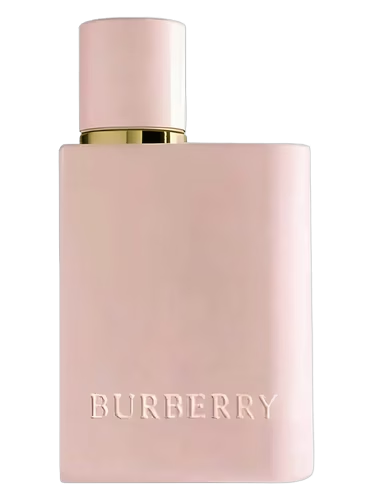
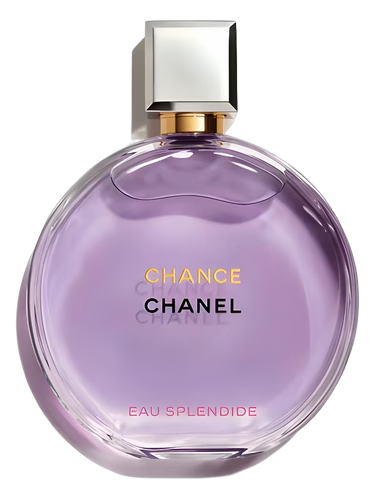
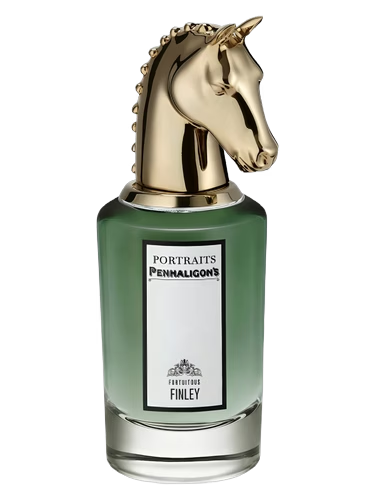
What is Hibiscus?
Hibiscus is a tropical and subtropical flower whose use in fine perfumery is a modern development, offering a vibrant and exotic floral alternative to traditional heavy florals.What does Hibiscus smell like?
It features a delicate, fruity, and slightly tangy floral aroma with watery, musky notes and bright, sweet-tart nuances reminiscent of cranberry or red berries.How is Hibiscus essence extracted?
Modern hibiscus essence is typically obtained through solvent extraction, while historical methods involved traditional infusion and maceration techniques.What are some top perfumes featuring Hibiscus?
Notable fragrances include Maison Crivelli Hibiscus Mahajád, Aerin Hibiscus Palm, Jo Malone London Red Hibiscus Cologne Intense, and Bvlgari Omnia Coral.When is Hibiscus in season?
Tropical types can bloom year-round in warm regions, while hardy varieties are typically in season from mid-summer through early fall.