Fragrance Notes Are Layers Of Scent That Are Layered To Form The Final Fragrance. Fragrance Notes Are Categorised Into Three Main Elements Based On How Long They Take To Evaporate, And How Long They Typically Last Following Application: Top Notes, Heart Notes And Base Notes.
Hemlock
Hemlock (Black Hemlock Absolute) offers a complex, sweet balsam-like scent, reminiscent of black spruce. It features powerful undertones of blackcurrant, alongside smoky and leather facets, lending a deep, resinous, and woody profile to sophisticated fragrances.

Origin & Extraction Of Hemlock
Hemlock (Black Hemlock Absolute), unlike the poison associated with the name, is derived from a type of evergreen. Its use in fine perfumery is a relatively modern and niche development, distinct from the classical ingredients of traditional European fragrance. The note gained relevance as perfumers, particularly in the late 20th and early 21st centuries, began exploring complex, dark, and abstract forest profiles. It is prized for its ability to offer a sophisticated, sweet balsam-like, and woody aroma reminiscent of black spruce, making it suitable for compositions aiming to evoke dense, natural landscapes.
The Hemlock note is valued specifically for its unique character, which includes subtle blackcurrant undertones alongside smoky and leather facets. This complex profile helps it to bridge the gap between heavy base notes (like wood and resin) and darker heart notes. Its inclusion in fragrances, often by artisanal houses like Slumberhouse, signifies a departure from mainstream fresh scents, providing depth, longevity, and a nuanced intensity to woody-oriental or leather-based structures.
Extraction Methods of Hemlock
The primary method for extracting hemlock essential oil (Tsuga canadensis) is steam distillation of the needles and twigs. In this process, pressurized steam is passed through the plant material in a distillation vessel, causing the volatile aromatic compounds to vaporize. These vapors then travel through a cooling system where they condense back into a liquid form, allowing the pure essential oil to be separated from the water-based hydrosol.
Historically, Indigenous cultures utilized the needles and twigs in simpler ways, such as creating hot infusions, decoctions, and poultices to release the plant's medicinal properties. Twigs were also heated in steam baths to provide relief for respiratory and rheumatic conditions. Modern advancements have integrated the extraction process into a circular economy, frequently sourcing byproducts from the lumber industry—specifically the discarded twigs and needles—to produce high-quality oil for perfumery and aromatherapy. Additionally, some contemporary producers employ innovative low-pressure distillation techniques to better preserve the delicate, fresh-coniferous aromatic profile of the tree.
Hemlock (Black Hemlock Absolute) is a sophisticated note in modern and niche perfumery, appreciated for its dark, complex, and balsamic profile. Unlike the poison typically associated with the name, the fragrance note is derived from a type of evergreen, offering a sweet, resinous, and woody aroma reminiscent of black spruce, often utilized to lend depth and longevity to compositions. Because of its unusual profile, Hemlock is less common in mainstream perfumery and frequently appears in artisanal scents that seek to evoke dense forests or dark, brooding landscapes.
- A prominent and early champion of complex forest notes is Serge Lutens, whose body of work often explores the deeper, less-traveled paths of scent.
When used effectively, the Hemlock note provides a rich, slightly smoky, and leather-tinged undertone that grounds brighter elements. One perfume famously utilizing this unique profile is Slumberhouse Rume (discontinued), which showcased a dense, dark coniferous effect where the sweet balsam character of hemlock contributes significantly to the fragrance's signature resinous intensity. This demonstrates Hemlock's ability to act as a profound bridge between woody base notes and darker, spicy heart notes.
- Another area where Hemlock's unique blackcurrant and balsam facets are valuable is in fragrances aiming for an abstract, architectural greenness, often seen in high-end artistic houses.
Modern usage of Hemlock often focuses on its subtle blackcurrant undertone, which adds a fruity yet sophisticated nuance to its woody core. While not always listed explicitly, the rich, smoky, and coniferous qualities of the note can be found supporting the overall structure of dark, opulent fragrances like certain releases from Imaginary Authors, adding a layer of sophisticated mystery. The Hemlock note, therefore, remains a tool for perfumers looking to craft evocative, deep, and highly nuanced woody-oriental or leather-based compositions, moving far beyond simple freshness.
Sustainability Of Hemlock
Sustainability of Hemlock
- Utilizing certified organic and wildcrafted sourcing practices to ensure the preservation of natural forest habitats and biodiversity
- Prioritizing sustainable harvesting of needles and twigs from long-lived conifer species to maintain the stability of forest ecosystems
- Supporting environmentally conscious distillers in North America who utilize steam distillation methods to minimize chemical waste and environmental impact
- Promoting a circular economy through the use of recyclable packaging and materials that prioritize forest conservation and high recycled content
- Monitoring the conservation status of botanical sources via the IUCN Red List to protect near-threatened species from over-exploitation
Trivia
In Ancient Greece, hemlock was notoriously used to execute condemned prisoners, most famously the philosopher Socrates, who was forced to drink a toxic infusion of the plant in 399 BC.
Most Popular Scents Using Hemlock
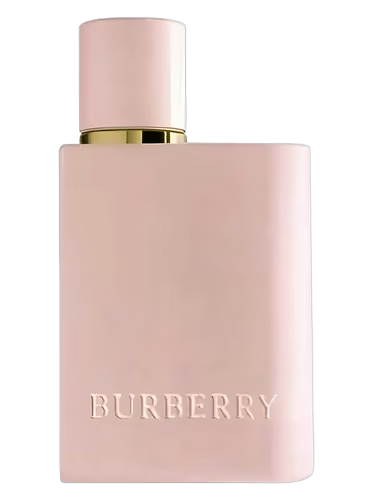
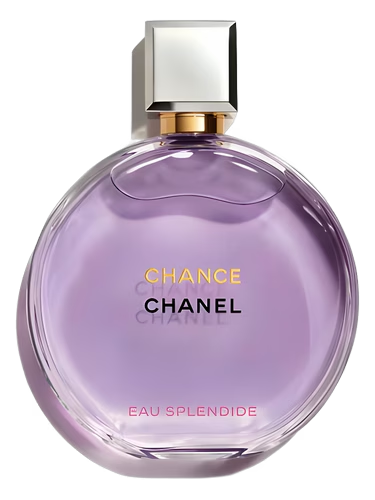
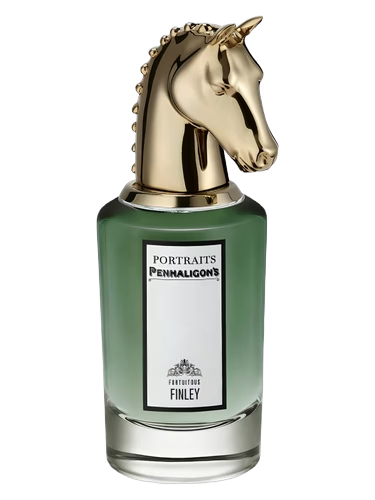
What is Hemlock in perfumery?
Hemlock, specifically Black Hemlock Absolute, is a note derived from a type of evergreen tree, used in niche perfumery to create complex, dark, and resinous forest profiles.What does Hemlock smell like?
It offers a complex, sweet balsam-like scent reminiscent of black spruce, featuring powerful undertones of blackcurrant along with smoky and leather facets.How is Hemlock essence extracted?
The essential oil is primarily extracted through steam distillation of the needles and twigs of the Tsuga canadensis tree.What are some top perfumes featuring Hemlock?
Notable fragrances include Parfums Quartana Hemlock, Libertine Fragrance Black Hemlock, Solstice Scents Hemlock, and Slumberhouse Rume.Is the Hemlock used in perfume poisonous?
No, the fragrance note is derived from an evergreen tree and is distinct from the toxic Conium maculatum plant famously used in ancient Greece.