Fragrance Notes Are Layers Of Scent That Are Layered To Form The Final Fragrance. Fragrance Notes Are Categorised Into Three Main Elements Based On How Long They Take To Evaporate, And How Long They Typically Last Following Application: Top Notes, Heart Notes And Base Notes.
Hazelnut
Hazelnut offers a warm, comforting, and intensely nutty gourmand scent. It possesses creamy, slightly sweet, and buttery facets with subtle dry, earthy, and toasted undertones, often evocative of praline or roasted nuts. It is used to add rich texture and depth, blending beautifully with vanilla, woods, and spices in oriental and winter compositions.

Origin & Extraction Of Hazelnut
Hazelnut, derived from the fruit of the hazel tree, has long been appreciated globally as a food source, but its specific use as a distinct aromatic note in fine perfumery is a relatively modern development, gaining traction with the rise of the gourmand fragrance category. Prior to the late 20th century, nutty facets in perfumes were often implied through combinations of woody, spicy, and balsamic notes. The shift toward photorealistic and comforting food-inspired scents allowed perfumers to directly incorporate the rich, warm, and subtly earthy aroma of hazelnut, often achieved through synthetic aroma molecules or specific extract blends.
The prominence of hazelnut surged in the early 21st century as fragrance trends moved towards sweet, complex, and textural compositions. It is frequently employed to evoke sensations of roasted nuts, praline, and warm, buttery textures, making it a key component in oriental and winter fragrances. The note excels at bridging the gap between sweeter ingredients like vanilla and cocoa and drier elements such as woods and tobacco, adding a comforting depth and unique creamy richness that elevates the gourmand experience beyond simple sweetness.
Extraction Methods of Hazelnut
The primary method for extracting hazelnut oil is cold-pressing, which involves mechanically pressing the kernels using expellers without the application of heat. This process is preferred for preserving the oil's natural flavor, aroma, and nutritional profile. Historically, the extraction of hazelnut fragrance or flavor was achieved through simpler techniques such as maceration, where crushed or roasted nuts were soaked in alcohol or water for several weeks, or through basic mechanical pressing using hand-operated tools like the DaveBilt or spindle compression crackers to isolate the kernels before oil extraction.
Modern commercial production has introduced advanced technologies to improve efficiency and purity. Latest methods include supercritical fluid extraction (SFE) using carbon dioxide and auxiliary solvents like ethyl alcohol, which allows for extraction at low temperatures to preserve delicate organoleptic and antioxidant properties. Other innovative approaches utilize high-power ultrasonic baths to enhance phenolic yield and freeze-drying (lyophilization) to stabilize volatile components. These industrial systems often integrate automated de-husking, aspiration for shell-kernel separation, and precision roasting to trigger the Maillard reaction before the final extraction phase.
The hazelnut note is a key component in the modern gourmand fragrance family, valued for its creamy, comforting, and toasted aroma that adds unique texture to compositions. One widely recognized fragrance that highlights this rich nuttiness is 1 Million Lucky by Rabanne (2018). This scent blends the hazelnut with green plum and woody elements, offering a fresh yet indulgent profile that captures the essence of roasted nuts and sweet praline.
- Other notable fragrances featuring hazelnut include Amouage Guidance Eau de Parfum, where the nutty facet adds a warm, complex layer to the luxurious composition.
Hazelnut also frequently appears in niche and artisanal perfumery, where perfumers utilize its complexity to create sophisticated, dessert-like experiences. A great example of this is Bon Parfumeur 501 praline, licorice, patchouli. Here, the hazelnut sets a delicious, slightly earthy tone, paving the way for the gourmand heart of praline and licorice, which creates a warm, sweet, and comforting bubble reminiscent of childhood treats. This demonstrates how hazelnut effectively bridges the gap between pure sweetness and drier, earthier base notes.
- The note can also be found in elegant releases such as Ginger Biscuit Cologne (2023) by Jo Malone London, contributing a buttery, rich depth to the spicy, seasonal aroma.
More recently, hazelnut has been used to lend a modern, sweet vitality to contemporary designer scents. For instance, Dolce & Gabbana Devotion Intense Eau de Parfum features the note to emphasize warmth and indulgence, blending it seamlessly with sweet citrus and vanilla to create a captivating and highly attractive gourmand signature. The inclusion of hazelnut often signals a fragrance designed for cooler weather, providing a cozy, rich, and intensely appealing olfactory experience.
Sustainability Of Hazelnut
Sustainability of Hazelnut
- Utilizing perennial trees that sequester more carbon than annual crops and help build soil organic matter through extensive root systems
- Reducing soil erosion and improving water drainage via natural soil binding and year-round ground cover from leaf litter and volunteer vegetation
- Promoting climate resilience as a drought-resistant crop that thrives on marginal or sloping land unsuitable for other food production
- Advancing circular economy practices by repurposing pruning residues and shells as bioenergy sources to replace fossil fuels
- Implementing regenerative agriculture through major industry charters that focus on soil health, biodiversity protection, and integrated pest management
- Ensuring social sustainability by partnering with international organizations like the ILO to eliminate child labor and improve conditions for seasonal migrant workers
- Achieving high levels of supply chain transparency and traceability from farm to factory through digital mapping and third-party certifications
Trivia
In the world of fine wine, the aroma of hazelnut is a prestigious marker of the aging process, particularly in red wines that have been matured in oak barrels.
Most Popular Scents Using Hazelnut


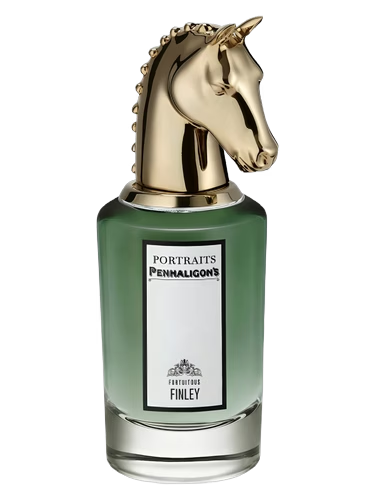
What is Hazelnut?
Hazelnut is a warm, comforting, and intensely nutty gourmand note derived from the fruit of the hazel tree, often used to add rich texture and depth to perfumes.What does Hazelnut smell like?
It possesses a creamy, buttery, and slightly sweet profile with toasted undertones, reminiscent of praline or roasted nuts, and often features subtle earthy or woody facets.Is Hazelnut a natural or synthetic note?
While natural cold-pressed hazelnut oil exists, its scent is often too subtle for perfumery, so perfumers typically reconstruct the note using synthetic aroma molecules to achieve a photorealistic and long-lasting aroma.What are some top perfumes featuring Hazelnut?
Popular fragrances highlighting this note include Valentino Uomo, Rabanne 1 Million Lucky, Amouage Guidance, and Dolce & Gabbana Devotion Intense.When is Hazelnut in season?
The hazelnut cycle begins with winter blooming and spring pollination, but the nuts typically reach peak ripeness and are harvested from late August through October.