Fragrance Notes Are Layers Of Scent That Are Layered To Form The Final Fragrance. Fragrance Notes Are Categorised Into Three Main Elements Based On How Long They Take To Evaporate, And How Long They Typically Last Following Application: Top Notes, Heart Notes And Base Notes.
Hazel Blossom
Hazel Blossom offers a tranquil, simple, and fresh floral aroma. It carries a delicate, pure green scent often intertwined with subtle hints of wood and a rejuvenating energy. This note provides a serene, airy lift, distinct from the richer, nutty aspects of hazelnut, focusing instead on the light, vegetal essence of the bloom.

Origin & Extraction Of Hazel Blossom
The Hazel Blossom note is a specialized and relatively modern addition to the perfumer's palette, distinguishing itself from the older, more foundational citrus and classic floral notes. Historically, hazelnut was sometimes used for its gourmand, nutty aspects, but the delicate, fresh, and green profile of the blossom itself gained prominence in contemporary perfumery, particularly as houses began exploring more subtle, photorealistic, and naturalistic green floral accords. Its rise is tied to the demand for serene, airy, and gentle scents that evoke the feeling of a forest in springtime, rather than heavy or traditional floral bouquets.
Its primary relevance today lies in its ability to offer a unique, vegetal freshness that avoids the bitterness of standard green notes and the heaviness of richer florals. Modern perfumers employ Hazel Blossom to create a luminous, non-sweet bridge between volatile top notes and lighter woody or musky bases. Although it does not possess a centuries-long legacy in classic Eau de Cologne like Bergamot, its inclusion in high-end collections, such as Jo Malone London, has cemented its status as a sophisticated, airy, and naturally fresh component in contemporary fragrance design.
Extraction Methods of Hazel Blossom
Historically, hazel blossom and witch hazel extracts were obtained through simple decoction and infusion methods. Native American traditions involved boiling the stems, twigs, and bark in water to create a liquid extract for treating skin ailments. This traditional process focused on simmering the plant material for extended periods to leech out active compounds like tannins and flavonoids, resulting in a dark-colored liquid base.
Modern commercial production primarily utilizes steam distillation to produce a clear, stable extract. In this process, segments of the plant are placed in large vats and subjected to high-pressure steam for approximately 36 hours. This vaporizes the volatile essences, which are then condensed and filtered. Advanced laboratory techniques also employ microwave-assisted extraction and supercritical CO2 extraction to capture delicate aromatic molecules and water-soluble phyto-compounds with greater precision and speed.
The Hazel Blossom note, prized for its delicate, fresh, and slightly green floral aroma, is a specialized scent, often featured in compositions that aim for a serene and airy naturalism rather than heavy floral or gourmand intensity. While less common than notes like rose or jasmine, it has been embraced by modern houses seeking subtle, sophisticated interpretations of spring air and subtle woodiness. One of the most recognizable examples of this note's use is in the Jo Malone London collection, specifically in the fragrance English Oak & Hazelnut. This scent often uses the lighter, non-nutty profile of the blossom to complement the wood and nut core, providing a luminous, fresh opening that evokes the tranquility of a European forest in bloom.
In contemporary niche perfumery, Hazel Blossom is sometimes employed to create a bridge between green top notes and light woody bases. It adds a unique, vegetal dimension that prevents a composition from becoming overtly sweet. It features prominently in certain creations by L'Artisan Parfumeur, although they tend to use the related hazelnut note more frequently. Another key fragrance that subtly incorporates this gentle freshness is Aqua Allegoria Flora Nymphea by Guerlain, where the blossom note blends seamlessly with other spring flowers and honey, offering a sparkling, ethereal quality that is signature to the Aqua Allegoria line.
The success of the Hazel Blossom note lies in its ability to be both light and grounding, carrying hints of both floral delicacy and underlying wood. This complex balance makes it a favorite for 'clean' and 'natural' fragrances. Although the note is relatively modern, its usage in scents like Wild Hazel Blossom by Crabtree & Evelyn (now discontinued, but historically significant) cemented its reputation as a pure, refreshing, and slightly green floral ingredient, distinct from the popular gourmand hazelnut scent, ensuring the emphasis remains on the light, fresh bloom.
Sustainability Of Hazel Blossom
Sustainability of Hazel Blossom
- Utilizing non-invasive native species that thrive in understory zones without interfering with utility infrastructure or requiring mechanical clearing
- Promoting Integrated Vegetation Management (IVM) to maintain ecological health and stabilize soil against erosion, particularly in wet areas and riverbanks
- Supporting pollinator conservation by providing a critical late-season nectar source for moths, flies, and bees during dormant periods
- Adopting maintenance-free landscaping practices as the plants are naturally resistant to most pests and diseases, reducing the need for chemical interventions
- Encouraging the use of hazel as a sustainable, permaculture-friendly alternative to water-intensive crops like almonds
Trivia
Hazel blossom notes are prized for their ability to evoke the "tender innocence" of early spring by combining a delicate floral sweetness with an unexpected, underlying hint of nuttiness that pays tribute to the hazelnut tree from which they originate.
Most Popular Scents Using Hazel Blossom
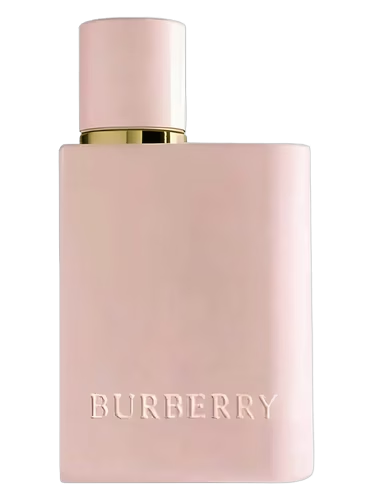
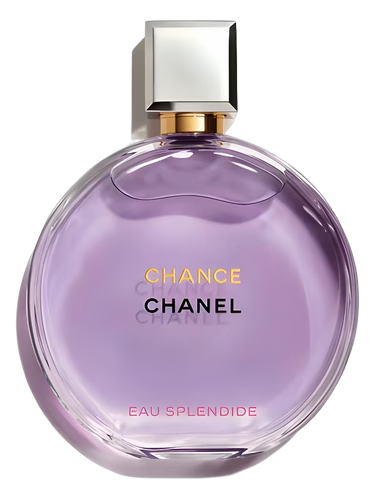
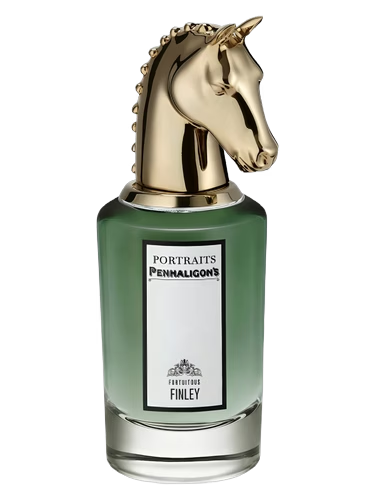
What is Hazel Blossom?
Hazel Blossom is a delicate, fresh floral note derived from the catkins of the hazelnut tree, prized in contemporary perfumery for its serene and airy naturalism.What does Hazel Blossom smell like?
It offers a tranquil, simple aroma characterized by pure green scents, subtle woody hints, and a faint, dusty sweetness that evokes the atmosphere of a forest in early spring.How is Hazel Blossom essence extracted?
While traditionally obtained through decoction, modern commercial production primarily uses steam distillation to create a stable extract from the plant segments.What are some top perfumes featuring Hazel Blossom?
Notable fragrances include Jo Malone London English Oak & Hazelnut, Guerlain Aqua Allegoria Flora Nymphea, and Zoologist Chipmunk.When is Hazel Blossom in season?
Depending on the species, hazel blossoms typically bloom in late autumn (mid-October to December) or very early spring (late January to April).