Fragrance Notes Are Layers Of Scent That Are Layered To Form The Final Fragrance. Fragrance Notes Are Categorised Into Three Main Elements Based On How Long They Take To Evaporate, And How Long They Typically Last Following Application: Top Notes, Heart Notes And Base Notes.
Hawthorn
Hawthorn offers a powerful and complex floral profile, characterized by a sweet, honeyed fragrance. This sweetness is layered with distinctive, darker nuances often described as dirty or animalic, providing a rich, slightly indolic depth. It is a striking scent that balances luminous floral notes with a sophisticated, heady foundation.

Origin & Extraction Of Hawthorn
Hawthorn, also known by its French name Aubépine, has a long history of use in European culture, valued for its medicinal properties and its intensely fragrant blossoms. In perfumery, its use solidified within the classical tradition, particularly as a key component in early 20th-century fragrances. Its unique aroma, which balances sweet, honeyed floral notes with a distinctive, slightly indolic (or "dirty") undertone, allowed perfumers to create rich, heady, and complex floral compositions that possessed excellent staying power and depth. This note was crucial for building the opulent, romantic floral structures characteristic of the era.
The note remains relevant today, often acting as a sophisticated support note rather than a central star in modern mainstream perfumery. It is frequently employed to add a creamy, powdery texture, or to enhance the richness of other white florals, such as tuberose or heliotrope, preventing them from becoming too sharp or clean. While classic Eaux de Cologne relied more heavily on citrus, Hawthorn helped define the next generation of rich floral and floriental perfumes, securing its place as an enduring, complex ingredient favored by houses aiming for a vintage or highly sophisticated scent profile.
Extraction Methods of Hawthorn
Historically, hawthorn aromatic and bioactive compounds were obtained through traditional maceration and infusion techniques. These methods involve steeping fresh or dried berries, leaves, or flowers in solvents like alcohol, water, or oil for several weeks to create tinctures and extracts. Simple distillation and percolation were also traditionally used to capture the plant's volatile components for medicinal and fragrance purposes.
Modern extraction has advanced to utilize more efficient and precise technologies. Supercritical CO2 extraction is now a leading method for producing high-quality hawthorn essential oil and seed oil, as it operates at lower temperatures to preserve delicate bioactive compounds without using harmful chemical solvents. Additionally, microwave-assisted extraction (MAE) and ultrasonic extraction have emerged as innovative techniques that significantly reduce processing time and energy consumption while increasing the yield and purity of the hawthorn essence.
Hawthorn is a vital, complex floral note frequently used to give a composition a sense of sweet, creamy depth and a distinctive indolic lift. In classic and vintage perfumery, Hawthorn (Aubépine) was instrumental in creating opulent, romantic florals. While modern perfumery sometimes favors cleaner notes, Hawthorn remains a secret weapon for perfumers aiming for sophisticated, heady florals that lean towards the classic, such as the note's use in the timeless and elegant florientals of the late 20th century. It contributes a powdery yet potent sweetness that anchors lighter notes.
- * * *
One of the most famous and foundational uses of Hawthorn is in the iconic fragrance, **Ombre Rose L'Original** by Jean-Charles Brosseau. In this masterpiece, the Hawthorn note is expertly blended with rose, iris, and tonka bean, contributing a honeyed, powdery softness that defines its timeless, slightly vintage character. Furthermore, the note is often utilized in complex aldehydic florals to support the main structure, giving lift and a creamy texture, allowing the scent to feel rich and voluminous. The note's unique duality—sweet and slightly "dirty"—makes it challenging but rewarding for high-end perfumery.
- * * *
In contemporary niche perfumery, Hawthorn sees renewed appreciation for its complex profile. Fragrances like **Love Tuberose** by Amouage showcase Hawthorn (or its closely related components) to enhance the creamy, slightly animalic richness of the central tuberose note, giving the perfume a dense, addictive quality. By pairing it with notes like heliotrope and vanilla, the perfumer can amplify the note's baked, almond-like facets, transforming it into a luxurious, warm, and highly sophisticated gourmand-floral signature, proving its versatility beyond traditional classic structures.
Sustainability Of Hawthorn
Sustainability of Hawthorn
- Utilizing synthetic recreations, such as anisic aldehyde, to preserve wild populations and reduce the environmental impact of large-scale harvesting
- Promoting the use of natural extracts derived from upcycled flowering aerial parts (fresh, frozen, or dried) to minimize agricultural waste
- Supporting biodiversity by prioritizing the cultivation of Crataegus monogyna, an abundant and non-toxic species that serves as a vital habitat for birds and insects
- Researching innovative, eco-friendly extraction techniques like cold enfleurage and vapor trapping to develop high-quality natural ingredients for modern perfumery
- Adhering to strict IFRA and EU safety regulations to ensure the responsible and ethical use of both natural and synthetic aromatic compounds
Trivia
Hawthorn flowers have long been symbolically linked with fertility and sexual abandonment, so much so that they were used as a symbol of marriage by the ancient Romans and believed to spell good fortune by the Greeks.
Most Popular Scents Using Hawthorn
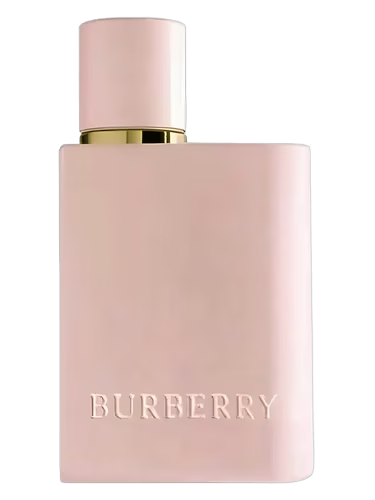
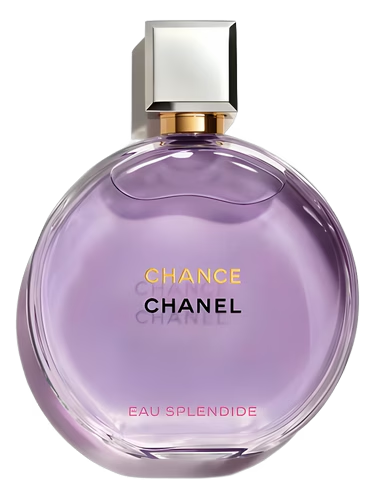
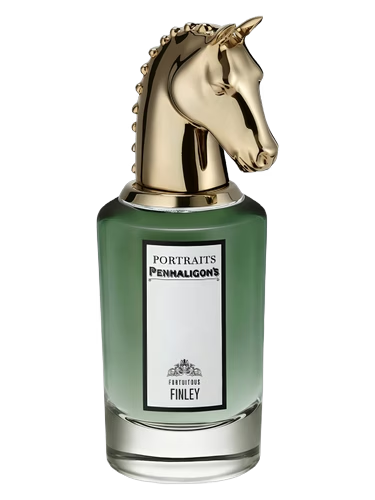
What is Hawthorn?
Hawthorn, also known as Aubépine, is a complex floral note derived from the blossoms of the hawthorn tree, historically valued in classical European perfumery for its rich, heady aroma.What does Hawthorn smell like?
It offers a powerful, sweet, and honeyed fragrance balanced with distinctive animalic or indolic depth and creamy, powdery facets.How is Hawthorn essence extracted?
In modern perfumery, high-quality hawthorn essence is often obtained through supercritical CO2 extraction, though traditional methods included maceration and simple distillation.What are some top perfumes featuring Hawthorn?
Iconic fragrances containing this note include Dior Fahrenheit, Kenzo Flower by Kenzo, Chanel Beige, and Ombre Rose L'Original.When is Hawthorn in season?
The hawthorn tree typically produces a vibrant bloom of white, pink, or crimson flowers during the month of May in the Northern Hemisphere.