Fragrance Notes Are Layers Of Scent That Are Layered To Form The Final Fragrance. Fragrance Notes Are Categorised Into Three Main Elements Based On How Long They Take To Evaporate, And How Long They Typically Last Following Application: Top Notes, Heart Notes And Base Notes.
Hassaku
Hassaku presents a complex Japanese citrus profile, blending the refreshing sweetness of mandarin orange with a distinctly tart and slightly bitter zest. It offers an uplifting and bright aroma, often described as sweet yet refreshing, with nuances of both grapefruit and mandarin.

Origin & Extraction Of Hassaku
Hassaku, a Japanese citrus hybrid known for its complex flavor profile combining mandarin sweetness with grapefruit's tartness and bitterness, is a relatively recent addition to the perfumer's palette. While traditional citruses like Bergamot and Lemon have centuries of history in fine perfumery, Hassaku's inclusion often reflects modern trends toward niche and Asian-inspired freshness. Its sophisticated, nuanced aroma allows it to be used in contemporary compositions that seek a more refined and enduring citrus top note than typical volatile citrus oils.
In modern perfumery, Hassaku is valued for its ability to lend an exotic and unique signature to fresh fragrances, particularly in designer and niche brands looking to differentiate their Eau de Colognes. It typically serves as an uplifting top note that provides complex longevity, bridging the gap between sparkling opening notes and heart notes such as florals or green accords. Its use signals a commitment to modern, airy complexity and high-end interpretations of the fresh fragrance family.
The primary method for extracting hassaku essential oil is cold expression (pressing) of the fruit's zest or peel. This mechanical process involves rasping or squeezing the outer rind (flavedo) to release volatile oils stored in secretory glands, which preserves the fruit's unique bittersweet and floral aromatic profile. Historically, this was achieved through labor-intensive manual techniques like the sponge method, where rinds were pressed against sponges to collect the oil, or the ecuelle a piquer, a bowl lined with needles used to puncture the oil glands.
In modern commercial production, mechanical peelers and automated expression systems have replaced manual labor, often using water sprays to create an emulsion that is later centrifuged to separate the pure oil. Recent advancements focus on high-value component recovery, such as utilizing synthetic adsorbents like SP70 to isolate bioactive compounds like auraptene from the expressed oil. Additionally, fractional distillation is increasingly employed to remove phototoxic elements, ensuring the oil is safer for contemporary perfumery and skincare applications.
Hassaku, being a sophisticated and complex Japanese citrus, is often featured in contemporary and niche perfumery where its unique blend of mandarin sweetness and grapefruit zest can shine. While not as universally common as notes like Bergamot or Lemon, Hassaku provides a refined, bright, and slightly bitter opening that appeals to connoisseurs looking for an unusual twist on traditional citrus themes. Its inclusion typically signals a desire for an elegant, long-lasting freshness.
- One notable fragrance utilizing this effect is **L'Eau d'Issey Pour Homme Fraîche** by Issey Miyake, where Hassaku contributes to the powerful, invigorating top note, creating a luminous and crystalline freshness that elevates the aquatic structure.
The note has also appeared in several artisanal and Japanese-inspired fragrance lines, capitalizing on its regional authenticity. For instance, brands focusing on natural ingredients and Japanese culture often deploy Hassaku to create highly authentic and evocative scents of citrus orchards. It is prized because it moves beyond simple lemon or orange, offering a distinctive, multi-layered profile that includes sweet, tart, and subtle bitter elements simultaneously.
- In the high-end niche market, certain collections from brands like Jo Malone or Hermès' Hermessence line have experimented with Hassaku or similar Japanese citruses to add an unexpected, sophisticated layer of brightness, demonstrating its versatility across different compositions.
Ultimately, the use of Hassaku in fragrance is a choice for modern luminosity and freshness. It moves away from the heavier citrus bases and provides a clean, zesty, and highly aromatic opening that is often paired with light florals or white musks to extend its vibrant nature. This ensures the fragrance is instantly uplifting and maintains a refined, bright character throughout its development.
Sustainability Of Hassaku
Sustainability of Hassaku
- Supporting regional economic resilience in Hiroshima Prefecture by promoting Hassaku as a high-value specialty crop, ensuring stable livelihoods for local farming communities
- Reducing the carbon footprint of production through the promotion of local consumption and traditional Japanese agricultural practices that emphasize harmony with the environment
- Advancing a circular economy by researching the pharmaceutical and nutraceutical applications of fruit by-products, such as using Hassaku extract to improve metabolic health
- Implementing water-efficient cultivation techniques and organic farming methods to preserve local biodiversity and maintain soil health in coastal groves
- Preserving cultural and agricultural heritage by maintaining historic orchards and promoting the "Hassaku" lunar calendar tradition to connect consumers with seasonal, sustainable food cycles
Trivia
Hassaku is named after the first day of August in the old Japanese lunar calendar because the temple priest who discovered it claimed the fruit would only be ready to eat by that specific date.
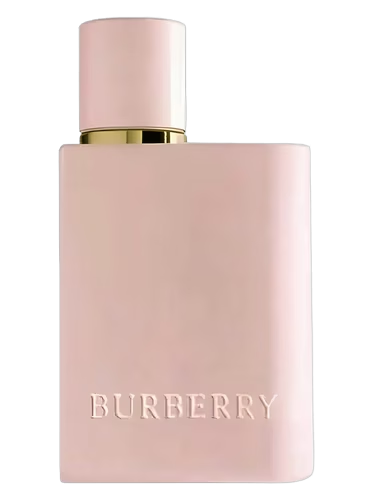
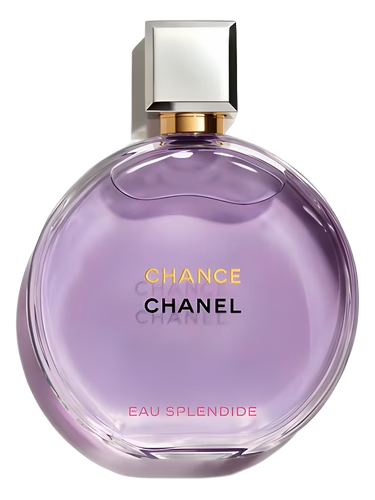
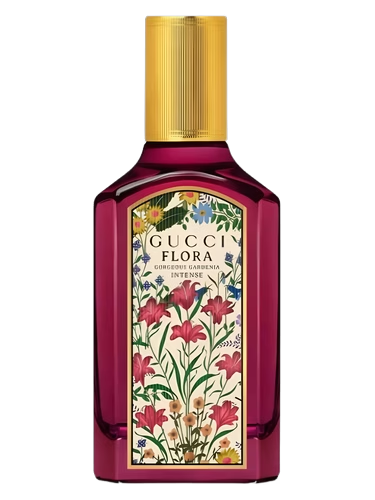
Most Popular Scents Using Hassaku
What is Hassaku?
Hassaku is a unique Japanese citrus hybrid, a cross between a pomelo and a mandarin, known for its complex bittersweet flavor and bright, zesty aroma.What does Hassaku smell like?
The scent is a bracing explosion of citrus, blending the refreshing sweetness of mandarin with the tart, slightly bitter qualities of grapefruit and lime.How is Hassaku oil extracted?
The essential oil is primarily obtained through cold expression of the fruit's peel, though some sources also mention steam distillation for aromatic products.What are some top perfumes featuring Hassaku?
Notable fragrances that highlight this note include Arcadia No. 4 Hassaku High and Shiseido Zen for Men White Heat Edition.When is Hassaku in season?
While the trees bloom in May, the fruit is harvested in winter and typically aged for one to two months, reaching its peak quality from late winter through early spring.