Fragrance Notes Are Layers Of Scent That Are Layered To Form The Final Fragrance. Fragrance Notes Are Categorised Into Three Main Elements Based On How Long They Take To Evaporate, And How Long They Typically Last Following Application: Top Notes, Heart Notes And Base Notes.
Gustavia Flower
Gustavia Flower offers a unique, nocturnal floral profile that is notably sweet and heavy. Its large, waxy white blossoms emit a powerful, luxurious, and dense aroma, often leaning toward narcotic or sensual white floral notes. It suggests richness and deep elegance, making it ideal for opulent, feminine, or oriental compositions.

Origin & Extraction Of Gustavia Flower
The Gustavia flower, also known as Heaven Lotus, is a tropical species native to Central and South America. Due to its restricted natural habitat and the difficulty in commercially extracting its essential oil, it has traditionally been a rare and exotic note in perfumery, lacking the centuries-old history of established ingredients like rose or jasmine. Its relevance began to grow in modern times, primarily in niche and artisanal perfumery, as creators sought unique, non-traditional white floral notes to impart a sense of opulence and mystery.
Because the actual Gustavia flower oil is not commonly used in mass-market fragrance, the Gustavia note found in most perfumes is a reconstructed accord. This accord is designed to capture the flower's distinctive nocturnal sweetness, density, and waxy texture, often by blending narcotic white florals, rich amber, and subtle spice notes. This synthesized approach allows perfumers to utilize its powerful, luxurious aromatic profile in complex, deep compositions, often targeting oriental or sensual feminine fragrances.
Extraction Methods of Gustavia Flower
Historically, the fragrance of the Gustavia flower, often referred to as the "Heaven Lotus," was captured using traditional maceration or enfleurage techniques. These methods involved steeping the delicate petals in fats or solvents like ethanol to slowly absorb their volatile aromatic compounds. Because the flowers are highly fragrant but physically fragile, these labor-intensive processes were necessary to preserve the subtle, creamy floral notes without the degradation caused by the high heat of steam distillation.
In modern perfumery, the extraction of Gustavia flower essence has evolved to utilize advanced solvent extraction and supercritical CO2 extraction. These contemporary methods allow for the creation of a highly concentrated absolute that more accurately reflects the living flower's scent profile. Furthermore, headspace technology is frequently employed to analyze and reconstruct the flower's aroma in a laboratory setting, capturing the "scent aura" of the blossom as it remains on the tree, which effectively bypasses the need for large-scale harvesting of these slow-growing tropical species.
The Gustavia Flower note, due to its rare and reconstructed nature, is primarily celebrated in niche and high-end artisanal perfumery where creators seek exotic, non-traditional white florals. This note's dense, sweet, and luxurious profile—often synthesized to convey its powerful nocturnal aroma—makes it suitable for opulent compositions. It is frequently employed to add a rich, mysterious depth, distinguishing a fragrance from those using more common florals like jasmine or tuberose, and is often the centerpiece of highly stylized, deep feminine or oriental scents.
- While not always listed explicitly as "Gustavia Flower," the distinct accord it represents is often found in complex white floral fragrances that aim for a heavy, waxy, and narcotic effect, such as certain rare extraits or limited-edition releases by houses like Roja Dove or Amouage.
Because the note is complex and dense, it functions beautifully in compositions designed to be long-lasting and sensuous, anchoring the fragrance heart with a powerful floral presence. Perfumes utilizing this reconstructed accord often pair it with rich, warm base notes like amber, vanilla, or resins, enhancing its sweet, almost narcotic qualities. This interplay creates a luxurious sillage, suggesting deep elegance and a tropical, exotic mystery. For example, some specialized lines might feature the Gustavia-like profile in scents centered around tropical night-blooming flowers, lending them an unusual, heavy sweetness.
- A high-profile fragrance that evokes this unique, luxurious white floral density is often found in creations like **Tiziana Terenzi Gold Kirke**, where a strong tropical/floral heart is pushed by heavy, sensual undertones, aligning with the Gustavia flower's descriptive profile of dense, waxy sweetness.
In contemporary perfumery, the Gustavia Flower accord provides perfumers with a sophisticated tool to craft imaginative and intense floral experiences. The rarity and exotic origin of the flower add to the perceived value and intrigue of the scent, appealing to consumers looking for something truly unique. Although specific designer fragrances listing the note are uncommon, the sophisticated, dense floral style it embodies is central to opulent fragrances like **Guerlain’s L'Heure Bleue** (in spirit, not composition), where heavy floral accords meet rich, enveloping bases to create an atmosphere of profound and mysterious beauty.
- Blooming for Gustavia species often occurs during the warmer months, typically from mid-spring to early summer, with some varieties like Gustavia augusta capable of flowering all year round in stable tropical environments
- Fruit production generally follows the flowering cycle, with fruits reaching maturity at the end of the dry season and into the early wet season in their native habitats
- Leaf production can occur throughout the year, but often shows pronounced peaks such as in the late wet-early dry season or after the first rains of the wet season
- Tropical varieties may require a distinct period of dormancy before initiating a new bloom cycle, and flowering can be delayed by cold winter temperatures in non-equatorial regions
Sustainability Of Gustavia Flower
Sustainability of Gustavia Flower
- Promoting biodiversity by cultivating hardy, perennial trees that provide essential habitats and food sources for wildlife like iguanas and agoutis
- Supporting carbon sequestration through the growth of evergreen trees that act as natural carbon sinks in tropical and subtropical regions
- Encouraging zero-waste practices by utilizing all parts of the plant, including edible vitamin-rich fruits and wood for local construction
- Utilizing natural seed dispersal mechanisms by maintaining ecosystems that support native fauna, ensuring the natural regeneration of forest canopies
- Advocating for water-efficient cultivation through the use of mulching and organic matter to retain soil moisture and improve soil health
Trivia
The genus was named in honor of King Gustav III of Sweden, who was a patron of the famous botanist Carl Linnaeus.
Most Popular Scents Using Gustavia Flower
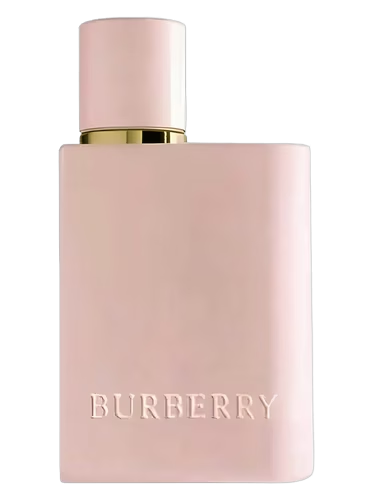
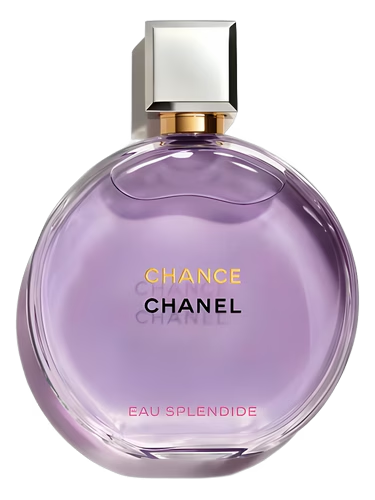
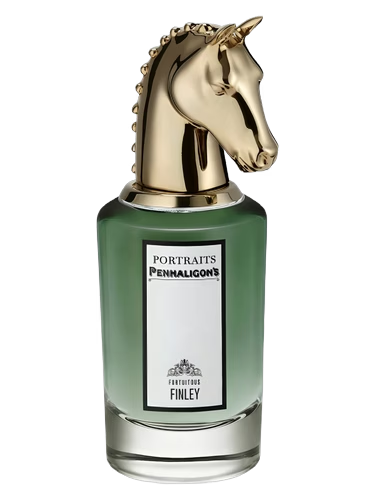
What is Gustavia Flower?
Gustavia Flower, also known as Heaven Lotus, is a tropical blossom native to Central and South America used in perfumery for its powerful and luxurious nocturnal aroma.What does Gustavia Flower smell like?
It offers a unique, heavy, and sweet floral profile with waxy and narcotic nuances, suggesting deep elegance and a creamy, tropical mystery.How is Gustavia Flower essence extracted?
While historically captured via enfleurage, modern perfumery uses solvent or supercritical CO2 extraction and headspace technology to reconstruct its scent as no large-scale commercial oil exists.What are some top perfumes featuring Gustavia Flower?
Notable fragrances include Tom Ford Vert Boheme, Tiziana Terenzi Gold Kirke, and Givaudan Gustavia Scenttrek.When is the Gustavia Flower in season?
Blooming typically occurs during warmer months from mid-spring to early summer, though some tropical varieties can flower year-round in stable environments.