Fragrance Notes Are Layers Of Scent That Are Layered To Form The Final Fragrance. Fragrance Notes Are Categorised Into Three Main Elements Based On How Long They Take To Evaporate, And How Long They Typically Last Following Application: Top Notes, Heart Notes And Base Notes.
Guava Blossom
Guava Blossom is a fantasy fruity-floral note, as the natural flowers lack a distinct scent. In perfumery, this note is constructed to evoke a sweet, tropical, and slightly creamy aroma, blending light, dewy florals with the juicy, exotic, and subtly green character of the guava fruit itself, often used for a luminous, fresh, and uplifting heart.

Origin & Extraction Of Guava Blossom
Guava Blossom is classified as a fantasy note in perfumery, which means it is a synthesized accord designed to evoke an imaginative scent rather than being derived from the natural flower, as guava blossoms themselves are not distinctly fragrant. The fruit, guava, which originated in the Americas and spread globally, only gained prominence in Western perfumery as part of the late 20th and early 21st-century trend towards exotic, tropical, and photorealistic fruit notes.
The "Guava Blossom" note specifically emerged to capture a delicate, idealized blend of light, creamy florals combined with the juicy, sweet, and slightly green character of the guava fruit. Its relevance in modern fragrance lies in its ability to contribute a luminous, refreshing, and exotic heart note to compositions, particularly within contemporary fruity-floral and tropical scents that seek to transport the wearer to an island setting.
Historically, the aromatic compounds of guava blossoms were captured through traditional Enfleurage or simple maceration techniques, where the delicate flowers were steeped in fats or oils to absorb their scent. Given the fragile nature of the blossoms, these labor-intensive manual processes were necessary to preserve the soft, floral, and slightly honeyed aromatic profile without the use of harsh heat.
Modern extraction of guava blossom essence typically utilizes steam distillation or solvent extraction to produce high-quality essential oils and absolutes. In recent years, advanced technologies such as Ultrasound-Assisted Extraction (UAE) and Microwave-Assisted Extraction (MAE) have been adapted from fruit and leaf processing to enhance yield and efficiency. Additionally, supercritical CO2 extraction is increasingly employed as a cutting-edge, eco-friendly method that operates at low temperatures, ensuring the capture of the blossom's most volatile and true-to-nature fragrant molecules while remaining free of chemical residues.
Because Guava Blossom is a synthesized "fantasy note," it is predominantly found in contemporary fruity-floral and tropical fragrances, where it serves to inject a luminous, exotic, and uplifting sweetness into the heart of the composition. While not a classic note like rose or jasmine, it is critical in scents aiming for a clear, sun-drenched, island-paradise aesthetic. Its tropical sweetness, which blends creamy florals with the juicy aspect of the guava fruit, often replaces heavier traditional white florals in modern compositions, offering a lighter, dewy feel.
- One fragrance that utilizes the tropical, fruity-floral character associated with Guava Blossom is Camille Beckman’s Guava Blossom, which showcases a playful blend of pink guava, zesty citrus peel, and tropical soda water.
The note is frequently paired with other exotic fruits, aquatic notes, and light woods to create invigorating summer and daytime scents. The goal of including Guava Blossom is often to ensure the fragrance maintains an airy freshness while still delivering a recognizable, mouth-watering tropical fruitiness, distinguishing it from sharper, traditional citruses or heavier gourmand accords. This versatility allows it to transition smoothly from a bright opening into a creamy, exotic heart.
Sustainability Of Guava Blossom
Sustainability of Guava Blossom
- Promoting biodiversity and ecosystem resilience by planting guava trees alongside other species to enrich soil and combat deforestation
- Supporting rural economies and food security in regions like Kenya and India through sustainable agroforestry and smallholder farmer initiatives
- Implementing water-efficient irrigation and soil preparation techniques to ensure optimal growth and minimize environmental stress
- Adopting circular economy principles by upcycling guava by-products into natural purees and ingredients, reducing waste in the food supply chain
- Utilizing digital platforms for geolocation and traceability of tree planting projects to ensure transparency and long-term environmental impact
Trivia
Guava trees are often called gregarious because they spread so rapidly that the seeds, which remain undigested by birds and animals, have helped the plant colonize entire islands in Hawaii, where it is now considered a beautiful but aggressive invasive species.
Most Popular Scents Using Guava Blossom
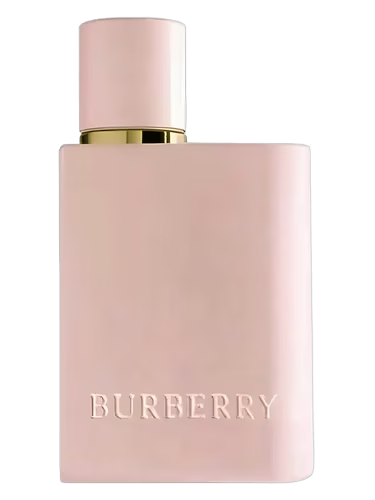
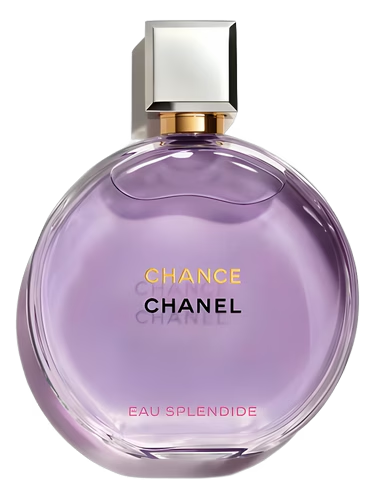

What is Guava Blossom?
Guava Blossom is a tropical fantasy note in perfumery, typically constructed as a synthetic accord to evoke the imaginative scent of the guava tree's flowers, which lack a strong natural fragrance.What does Guava Blossom smell like?
It offers a sweet, tropical, and slightly creamy aroma that blends light, dewy floral facets with the juicy, exotic, and subtly green character of the guava fruit.How is Guava Blossom essence extracted?
While historically captured through enfleurage, modern versions are typically created as synthetic accords or extracted via steam distillation, solvent extraction, or supercritical CO2 extraction.What are some top perfumes featuring Guava Blossom?
Notable fragrances include Ellis Brooklyn Guava Granita, Calvin Klein Euphoria, Versace Dylan Turquoise, and Gucci by Gucci EDP.When is Guava Blossom in season?
Guava trees typically bloom in the spring in subtropical regions, though in warmer tropical climates, they can bloom and bear fruit year-round.