Fragrance Notes Are Layers Of Scent That Are Layered To Form The Final Fragrance. Fragrance Notes Are Categorised Into Three Main Elements Based On How Long They Take To Evaporate, And How Long They Typically Last Following Application: Top Notes, Heart Notes And Base Notes.
Guava
Guava offers a sweet, tropical, and intensely juicy scent profile, often combining the bright, tartness of passion fruit and the creamy sweetness of pear and strawberry. It features refreshing, exotic nuances and subtle musky undertones, creating a vibrant and complex fruity aroma.

Origin & Extraction Of Guava
Guava is a tropical fruit native to Mexico, Central America, and South America, with cultivation spreading to many tropical and subtropical regions worldwide. Although the fruit itself has a long history, its use as a specific, prominent note in fine perfumery is relatively modern. The intense, sweet, and complex scent profile of guava—often described as a mix of passion fruit, pear, and a creamy, exotic muskiness—was challenging to capture authentically using traditional methods. Therefore, guava largely remained a background or conceptual element until the development of sophisticated synthetic aroma chemicals in the late 20th and early 21st centuries.
In contemporary perfumery, the Guava note is valued for its ability to inject a vibrant, juicy, and exotic tropical sweetness into compositions, primarily appearing in the heart or top notes of fruity floral and gourmand fragrances. Its complexity allows it to bridge the gap between sparkling citrus openings and richer, creamier bases. Modern perfumers use Guava to evoke images of lush, humid paradises, providing an immediate sense of warmth and vitality that appeals to consumers seeking joyful and unique tropical scents.
Extraction Methods of Guava
Historically, guava aromatic compounds were obtained through traditional methods such as hydrodistillation, where dried leaves or seeds were boiled in water to capture volatile oils. For guava seeds, traditional techniques often involved roasting and boiling to release the fixed oils, while leaves were sometimes infused into carrier oils like coconut or olive oil through gentle heating to create fragrant macerations. Solvent extraction was also a long-standing practice used to isolate the plant's medicinal and aromatic constituents.
Modern commercial production of guava essential oil primarily utilizes steam distillation of the leaves to preserve their antibacterial and anti-inflammatory properties. For guava seed oil, cold pressing has become the preferred method, using mechanical pressure at low temperatures to extract a phytonutrient-rich oil without chemical solvents. Recent technological advancements have introduced more efficient alternatives, such as ultrasonic-assisted extraction (UAE) and microwave-mediated hydrodistillation (MMHD). These latest methods, sometimes enhanced by enzyme-assisted or lithium salt pretreatments, aim to improve yields and protect delicate aromatic molecules from prolonged heat exposure.
The Guava note, with its vibrant blend of tropical sweetness, tartness, and creamy nuances, has become essential in modern perfumery for creating exotic and joyful compositions. It moves beyond traditional fruit notes by adding a juicy, complex vitality, often bridging sparkling citrus openings with richer, more enduring creamy or musky bases. Its prominence is often seen in fragrances designed to evoke lush, sunny, and highly energetic tropical settings.
- One notable contemporary example that highlights Guava is the Gourmand scent, Ellis Brooklyn Guava Granita Eau de Parfum. This fragrance is celebrated for capturing the fruit's intensely sweet and juicy profile, blended with other refreshing notes to create a delightful, almost edible summer scent reminiscent of a frozen poolside beverage.
In the realm of designer fragrances, Guava is frequently incorporated into successful fruity-floral launches to provide an instant, vibrant lift. For instance, the note is often rumored to contribute to the tropical heart of scents like Calvin Klein Eternity Summer editions or similar limited seasonal releases, where its exotic creaminess lends depth and character to white floral accords. This usage ensures the fragrance maintains a youthful, bright, and universally appealing freshness.
- Furthermore, Guava often appears in high-end niche compositions seeking a unique, long-lasting fruity signature. In these sophisticated contexts, it is skillfully blended with potent elements like ambergris or smooth woods to extend the volatility of the fruit, ensuring the tropical aroma persists from the opening through the drydown, creating depth and distinction. A prominent example showcasing this is often cited as Guerlain Aqua Allegoria Limon Verde, where a bright tropical fruit accord (often featuring guava) is central to the fresh composition.
Ultimately, the role of Guava is to inject a distinctive sense of humid, juicy warmth and exotic complexity into any composition. By providing a natural balance between bright zest and creamy sweetness, it has secured its place as a valued ingredient, consistently featured in collections that prioritize contemporary, uplifting, and distinctive tropical-themed fragrances.
Sustainability Of Guava
Sustainability of Guava
- Increasing the use of upcycled ingredients in guava-centric fragrances to reduce environmental waste and repurpose materials that would otherwise be discarded
- Development of high-performing biodegradable formulas, with some modern guava scents achieving over 94% biodegradability
- Prioritizing the integration of renewable ingredients, including those sourced from bio-based origins, to decrease reliance on non-renewable resources
- Adoption of patented triggered-release technologies that improve fragrance longevity, potentially reducing the need for frequent reapplication and product consumption
- Support for independent and local production methods that focus on small-batch, handcrafted processes to maintain a smaller industrial footprint
Trivia
Guavas are known as an antioxidant superfruit containing five times more Vitamin C than an orange, and they are so aromatic that they were once nicknamed the "forbidden fruit" because they grow in heavy clusters like grapes.
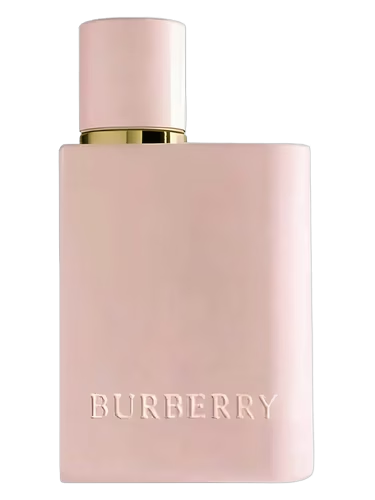
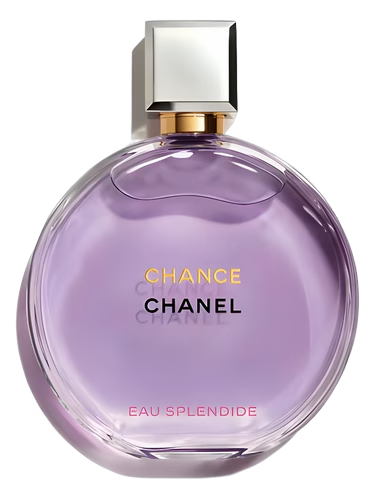
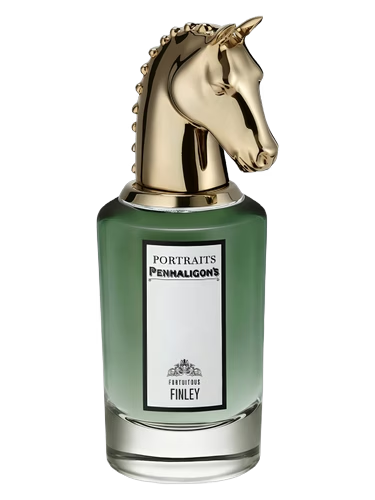
Most Popular Scents Using Guava
What is Guava?
Guava is a tropical fruit native to Mexico, Central America, and South America, now cultivated worldwide and valued in modern perfumery as a vibrant, exotic note.What does Guava smell like in perfumes?
It offers a sweet, tropical, and intensely juicy aroma that combines the tartness of passion fruit with the creamy sweetness of pear and strawberry, often featuring a subtle musky undertone.How is Guava essence extracted?
While historically obtained through hydrodistillation, modern perfumery primarily uses steam distillation of the leaves, cold pressing of the seeds, or synthetic reproduction to capture its complex profile.What are some top perfumes featuring Guava?
Notable fragrances include Ellis Brooklyn Guava Granita, ERIS PARFUMS Delta of Venus, Versace Dylan Turquoise, and Guerlain Aqua Allegoria Limon Verde.Is Guava a sustainable fragrance ingredient?
Yes, sustainability efforts include using upcycled ingredients from food waste, developing biodegradable formulas, and adopting triggered-release technologies to improve longevity and reduce consumption.