Fragrance Notes Are Layers Of Scent That Are Layered To Form The Final Fragrance. Fragrance Notes Are Categorised Into Three Main Elements Based On How Long They Take To Evaporate, And How Long They Typically Last Following Application: Top Notes, Heart Notes And Base Notes.
Ground Cherry
Ground Cherry offers a nuanced, complex fruity profile. It blends bright, slightly tart, tomato-leaf greenness with sweet, tropical notes reminiscent of pineapple, mango, and a delicate vanilla or honeyed undertone. The scent is juicy, earthy, and highly aromatic, lending an exotic, sophisticated fruitiness to compositions.

Origin & Extraction Of Ground Cherry
The Ground Cherry (Physalis) is an ancient fruit native to the Americas, cultivated as far back as the 16th century, and is related to the tomato family. Historically, it was valued globally for its unique sweet, tangy, and slightly earthy fruit, leading to common names like Cape Gooseberry. However, its use as a distinct, specialized note in fine fragrance is considered modern. Unlike foundational ingredients like Bergamot or Lemon, the Ground Cherry note, with its complex aroma that hints at tropical fruit, vanilla, and tomato leaf greenness, has only recently been explored by perfumers seeking exotic, nuanced, and sophisticated fruity accords.
In contemporary perfumery, the Ground Cherry note serves to introduce a unique, multifaceted fruitiness that moves beyond common sweet notes. Perfumers value its combination of bright greenness and subtle honeyed sweetness to create unexpected textures and depth, often in niche or avant-garde compositions. Its complex profile allows it to bridge volatile top notes with richer, more gourmand or earthy heart notes, providing a distinctive and aromatic lift that suggests natural, refined complexity rather than simple sugary fruit.
Extraction Methods of Ground Cherry
The extraction of ground cherry essence and seeds primarily involves a wet-processing method due to the fruit's soft, pulpy nature. Historically, indigenous peoples on the American Great Plains used a traditional manual technique of crushing whole wild cherries into patties and sun-drying them to create shelf-stable products. For seed extraction, traditional small-batch methods involve removing the papery husks by hand, cutting the ripe yellow berries, and squeezing the pulp and seeds into a bowl of water where the seeds are manually separated and then air-dried on smooth surfaces.
Modern commercial and research-based extraction has evolved to include more efficient mechanical processes. For larger batches, the fruit can be processed using a food processor with a dull blade and water to dislodge seeds, followed by decanting to float off unwanted pulp. Recent advancements also include cold-pressing techniques using stainless steel machinery to recover high-quality oils from the seeds, as well as supercritical fluid extraction (SFE) using carbon dioxide. SFE is increasingly favored as it captures delicate aromatic molecules and bioactive compounds without the risk of thermal degradation or solvent contamination associated with traditional distillation or chemical extraction.
The Ground Cherry (Physalis) note, while relatively modern and niche, offers a complex, tropical, and slightly green-leaf profile that has been seized upon by avant-garde and high-end perfumers seeking exotic fruit accords far removed from traditional citrus or berry notes. Because of its unique character—which blends mango and pineapple sweetness with a tart, earthy tomato-leaf nuance—it is utilized to introduce unexpected luminosity and sophisticated texture, often acting as a bridge between the sparkling opening and the warmer, more gourmand heart notes.
One notable use of this accord is found in the niche sphere, particularly in fragrances like **L'Artisan Parfumeur's Mon Numero 8**, where the Ground Cherry helps to enhance a bright, sparkling opening, lending a distinctive juiciness and a slight vegetal tartness that prevents the composition from becoming overly sweet. It serves to elevate the fresh elements, providing a natural, slightly green fruitiness that suggests ripeness and earthiness simultaneously. This sophisticated balancing act makes it a prized ingredient for creating signature, memorable top notes.
In other contemporary releases, such as select experimental lines from houses like **Comme des Garçons**, the Ground Cherry note is employed to underscore a gourmand fantasy. Its inherent vanilla and honeyed undertones are often amplified, creating a warm, slightly edible feel that retains a refreshing, tart edge. This application highlights the fruit's complex sweetness and earthy depth, ensuring the fragrance maintains an air of natural complexity and sophistication rather than the simple, sugary profile of many common fruity scents.
Sustainability Of Ground Cherry
Sustainability of Ground Cherries
- Promoting low-impact agriculture by cultivating a hardy, native annual species that thrives in diverse soil types and requires minimal chemical intervention
- Enhancing agricultural efficiency and ergonomic health through the development of innovative harvesting systems, such as inverted V-beds and trellising, to reduce labor intensity
- Supporting zero-waste and circular economy goals by repurposing prolific harvests into value-added products like jams, jellies, and preserves
- Advancing sustainable soil management through the use of mulching and organic practices to maintain moisture, suppress weeds, and improve soil quality
- Encouraging local biodiversity and seed sovereignty by utilizing the plant's natural self-seeding capabilities for easy seed saving and heirloom preservation
Trivia
Ground cherries are sometimes called 'husk tomatoes' because of their resemblance to small tomatoes and the papery, lantern-like husk that completely encases the fruit.
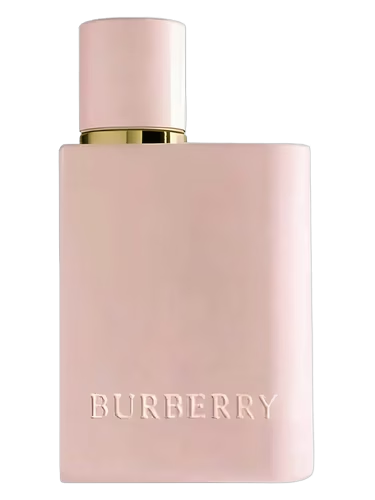
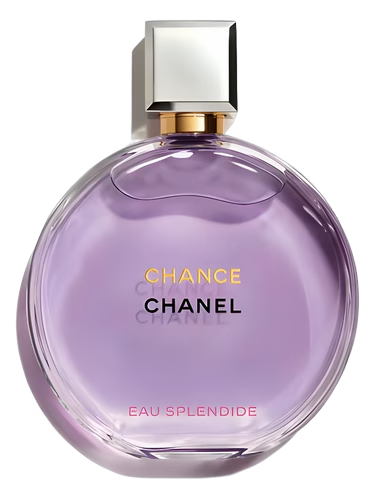
Most Popular Scents Using Ground Cherry

What is Ground Cherry?
Ground cherry is a nuanced, complex fruity note derived from the Physalis fruit, which is native to the Americas and a relative of the tomato family.What does Ground Cherry smell like?
It features a unique profile that blends bright, slightly tart tomato-leaf greenness with sweet tropical notes of pineapple and mango, finished with delicate vanilla or honeyed undertones.How is Ground Cherry essence extracted?
In perfumery, the note is typically synthetic, though the natural fruit is processed via wet-processing or supercritical fluid extraction to capture its delicate aromatic molecules.What are some top perfumes featuring Ground Cherry?
Notable fragrances including this specialized note are L'Artisan Parfumeur Mon Numero 8, Toskovat' Born Screaming, and Amyi 4.19.Is Ground Cherry a common fragrance note?
No, it is considered a modern and specialized note primarily used in niche or avant-garde perfumery to provide unexpected textures and sophisticated fruitiness.