Fragrance Notes Are Layers Of Scent That Are Layered To Form The Final Fragrance. Fragrance Notes Are Categorised Into Three Main Elements Based On How Long They Take To Evaporate, And How Long They Typically Last Following Application: Top Notes, Heart Notes And Base Notes.
Green Tangerine
Green Tangerine offers a bright, tart, and intensely fresh citrus aroma. It is crisper and less sweet than ripe mandarin, with a slight bitterness reminiscent of petitgrain or zest. It adds an invigorating, luminous, and sparkling top note, perfect for modern, airy, and energetic compositions, particularly in colognes and summer fragrances.

Origin & Extraction Of Green Tangerine
The use of tangerine and mandarin oils in perfumery dates back to the 19th century, particularly after mandarins were introduced to Europe. However, the specific "Green Tangerine" note—derived from the unripe fruit—is a more contemporary concept, gaining prominence in the late 20th and early 21st centuries. Unlike the sweeter, riper fruit, the green variety yields an oil with a sharper, tarter, and more volatile aroma, closely resembling petitgrain or bitter orange in its profile. This unique character made it highly valuable in modern perfumery as designers looked for fresh, innovative citrus notes that offered more complexity and longevity than traditional lemon or bergamot.
In modern perfumery, Green Tangerine is primarily featured in high-end, fresh, and aquatic compositions, particularly within the Eau de Cologne and contemporary masculine fragrance categories. It is prized for providing an immediate, invigorating burst of clarity and luminosity, often utilized to bridge the sparkling top notes with green, aromatic, or herbaceous heart notes. Its slight bitterness helps anchor the volatile citrus scent, lending a sophisticated structure and a clean, energetic radiance to the overall composition, distinguishing it from overtly sweet or fruity openings.
Extraction Methods of Green Tangerine
The primary method for extracting essential oil from green tangerine is cold expression (pressing) of the fresh, unripe peel. Historically, this was a manual process involving the sponge method or "ecuelle a piquer," where the rinds were pressed against sponges or spiked bowls to release the oils. Because tangerines have thinner skins than oranges or lemons, modern industrial techniques often employ specialized mechanical presses and centrifugal separators that can handle delicate peels without damaging the aromatic quality of the oil.
Recent advancements have introduced greener and more efficient technologies for tangerine oil extraction. Supercritical fluid CO2 extraction (SCF-CO2) is now used to obtain high-purity oils at lower temperatures, preventing the thermal degradation common in steam distillation. Other innovative methods include solvent-free microwave extraction (SFME) and intermittent solvent-free microwave extraction (ISFME), which utilize the fruit's own moisture to release oils rapidly. Additionally, electromagnetic heat hydrodistillation and ultrasound-assisted extraction are being explored to further improve yields and maintain the vibrant, zesty profile of the green tangerine.
Green Tangerine is highly valued in modern perfumery for its crisp, luminous, and energetic lift, often providing a sophisticated twist on traditional citrus openings. Its tart, fresh aroma, which is less sweet than ripe mandarin, makes it a perfect component for contemporary fragrances seeking a clean, effervescent, and slightly bitter edge. While not as universally used as Bergamot, Green Tangerine distinguishes itself by offering a greener, more complex scent profile, ensuring the top note remains invigorating and long-lasting.
- * * *
A notable example of Green Tangerine's impact is in the fresh aquatic category, where its intense, vibrant aroma cuts through heavier bases, adding crucial brightness. Fragrances like **Acqua di Gioia** by Giorgio Armani utilize a combination of citrus notes, where a green tangerine facet contributes to the sparkling, clean, and refreshing signature. This note helps define a scent as airy and modern, distancing it from more classic, heavier citrus blends.
- * * *
In niche and designer perfumery, Green Tangerine frequently appears in compositions designed for summer or tropical wear. It is a key player in scents such as **Tangerine Vert** by L'Artisan Parfumeur, where it is often paired with herbaceous notes like basil or mint to amplify its natural green characteristics. Its slight bitterness, reminiscent of zest or petitgrain, lends structural support to the top notes, making it a sophisticated choice for those seeking a radiant, energetic, and contemporary fragrance opening.
Sustainability Of Green Tangerine
Sustainability of Green Tangerine
- Promoting a circular economy by repurposing fruit peels into high-value by-products such as animal feed, organic fertilizers, and bio-adsorbents for wastewater treatment
- Implementing zero-waste packaging solutions, such as using 60% PCR glass containers and easily removable labels to facilitate recycling in skincare lines
- Utilizing the fruit's natural dried shell as 100% biodegradable, single-serve packaging for traditional teas, reducing the need for plastic or synthetic materials
- Ensuring supply chain transparency and traceability through detailed lot numbering and partnerships with certified facilities to meet stringent organic and pesticide residue standards
- Supporting local community initiatives and environmental advocacy through volunteer-led collaborations focused on litter-picking and ecological education
Trivia
In China and Japan, green tangerine is cherished as a symbolic fruit that heralds the end of summer and the transition into autumn.
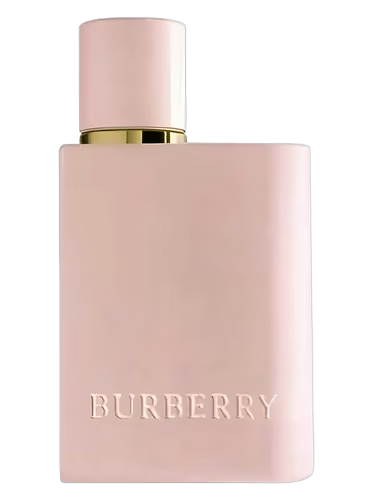
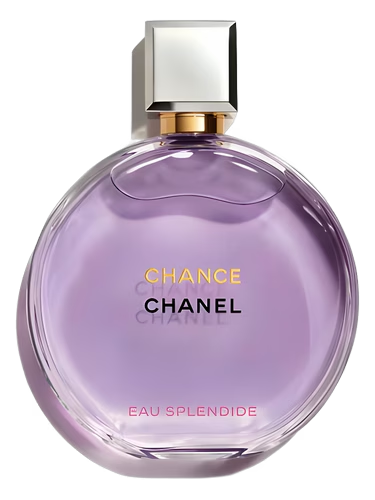
Most Popular Scents Using Green Tangerine

What is Green Tangerine?
Green Tangerine is a fragrance note derived from the unripe fruit of the tangerine tree, valued for its sharp, zesty, and refreshing profile that is crisper and less sweet than mature mandarin.How is Green Tangerine oil extracted?
The essential oil is primarily obtained through cold expression of the fresh, unripe peel to preserve its vibrant and volatile aromatic quality.What does Green Tangerine smell like?
It offers a bright, tart, and intensely fresh citrus aroma with a slight bitterness reminiscent of petitgrain, adding a luminous and sparkling lift to modern fragrances.Which perfumes feature Green Tangerine?
Notable fragrances featuring this note include Miller Harris Tangerine Vert, Phlur Tangerine Boy, Acca Kappa Green Mandarin, and Guerlain Aqua Allegoria Mandarine Basilic.When is Green Tangerine harvested?
While most tangerines reach peak sweetness in winter, Green Tangerine is specifically harvested while still unripe in late summer or early autumn to capture its sharp, zesty profile.