Fragrance Notes Are Layers Of Scent That Are Layered To Form The Final Fragrance. Fragrance Notes Are Categorised Into Three Main Elements Based On How Long They Take To Evaporate, And How Long They Typically Last Following Application: Top Notes, Heart Notes And Base Notes.
Green Pear
Green Pear offers a crisp, juicy, and intensely fresh aroma, often characterized by its bright, slightly tart, and watery green nuances. It provides an immediate, uplifting burst, reminiscent of biting into a firm, unripe fruit. This note is valued for its clean, modern fruitiness, adding an airy, vibrant quality to top notes.

Origin & Extraction Of Green Pear
The pear note, generally, has been used in perfumery for centuries, often represented by synthetic compounds or fruit accords to convey a sweet, juicy quality. However, the specific "Green Pear" note is a more modern development, gaining significant traction in contemporary perfumery since the late 20th and early 21st centuries. Its rise is connected to the demand for cleaner, more naturalistic, and airy fruit notes that move away from heavy, syrupy sweetness. Perfumers use this specific note to introduce a crisp, slightly tart, and watery freshness, capturing the essence of the fruit's firm texture and unripe, vegetal nuances.
Green Pear's relevance in modern fragrance lies in its ability to offer an immediate, sophisticated top-note burst that bridges fresh-citrus openings and floral or green hearts. While classic fragrances relied on robust florals or citruses, the green pear accord allows for an invigorating, dewy fruitiness without excessive sweetness. Its inclusion often signals a contemporary, luminous composition, making it popular in high-end designer and niche releases that aim for an elegant, vibrant, and airy impression of natural fruit.
Extraction Methods of Green Pear
Historically, the extraction of aromatic compounds and juices from pears, such as the prickly pear (Opuntia ficus-indica), was a labor-intensive manual process. This often involved hand-harvesting the fruit with tongs to avoid spines, followed by manual peeling or scraping to separate the pulp and seeds. Traditional maceration was a common technique, where fruit parenchyma was soaked in water for extended periods—often up to 72 hours—to allow for passive diffusion of mucilage and other water-soluble components. Other traditional methods included simple mechanical expression using hand-held squeezers or manual filtration through cloth to isolate juices and oils from the fibrous plant material.
Modern commercial extraction has evolved toward more efficient, technology-driven processes designed to preserve heat-sensitive bioactive compounds like vitamins and antioxidants. For pear peel extracts, contemporary methods utilize vacuum-drying or freeze-drying followed by ultrasonic-assisted extraction (UAE) with green solvents like ethanol or methanol. Cold pressing remains the standard for high-quality seed oils, while industrial-scale juice production employs high-speed mechanical extractors and centrifugal separators. The latest advancements include innovative "green" technologies such as supercritical carbon dioxide extraction, microwave-assisted extraction (MAE), ohmic heating, and high-pressure (HP) processing, which significantly improve yield and purity while reducing environmental impact.
The Green Pear note, valued for its crisp, airy, and slightly tart freshness, has been enthusiastically adopted by niche and contemporary designer houses seeking a sophisticated, clean fruit opening. A notable example is Pear Inc. by Juliette Has A Gun, which centers the entire composition around this luminous note, complementing it with a milky musk heart to enhance its modern gourmand appeal. Additionally, Guerlain utilized the green facet in Pera Granita, capturing the refreshing essence of a pear sorbet, blending the crispness of the fruit with delicate citrus and floral elements. This usage showcases Green Pear's versatility as an elegant, non-cloying opening.
- * * *
In the realm of modern fragrances, Green Pear is often integrated to provide a bright, youthful, and invigorating lift. Recent releases frequently pair it with sweeter or more complex accords. For instance, Maison Alhambra's Glacier Bella uses the note to cut through richer accords, ensuring a sparkling introduction. Similarly, LoveShackFancy's Forever In Love incorporates Green Pear to lend a dewy, vibrant fruitiness that contrasts with its deeper romantic floral core. The note's crisp quality prevents the overall composition from becoming overly heavy or saccharine, maintaining a sense of energetic lightness.
- * * *
The complexity of the Green Pear note—its blend of fresh sweetness and vegetal tartness—makes it an excellent bridge between top and middle notes. Lattafa Perfumes features the note in Layaan, using it to add a contemporary, uplifting texture to their signature profile. Oscar de la Renta’s Alibi Eau So Lucky utilizes this note to inject a burst of bright, effervescent fruitiness into the composition, setting a cheerful tone. Its popularity continues to rise, marking it as a staple in modern perfumery for creating vibrant, clean, and highly sophisticated fruit openings.
Sustainability Of Green Pear
Sustainability of Green Pear
- Advancing green chemistry through natural extraction technologies, such as Firgood, which uses the constitutive water of biomass cells as a solvent-free vector
- Reducing environmental impact by utilizing upcycled materials and over-cycled byproducts from the agri-food industry to minimize waste
- Lowering energy and water consumption by employing cold extraction processes and electromagnetic vibrations that preserve heat-sensitive olfactory molecules
- Implementing responsible sourcing practices and biodiversity protection through the use of sustainably harvested natural ingredients or eco-friendly synthetic alternatives
- Prioritizing biodegradable and renewable carbon-based ingredients to improve the overall environmental performance and lifecycle of the fragrance note
Trivia
Green pear accords rely heavily on hexyl acetate and ethyl 2,4-decadienoate, esters that replicate the crisp, juicy bite of an unripe fruit—one of the few notes where "green" describes both the color and the smell.
Most Popular Scents Using Green Pear
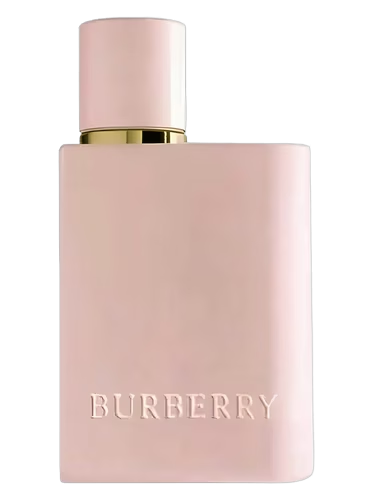
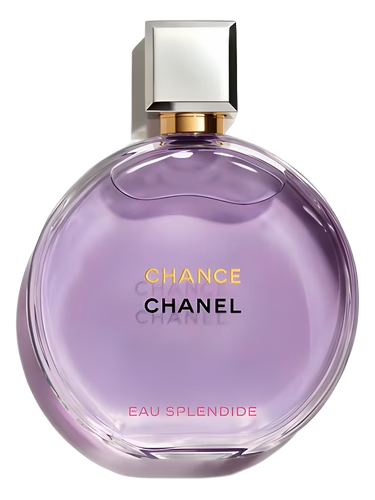
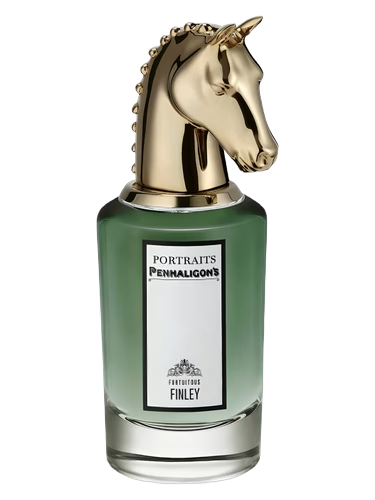
What is Green Pear?
Green Pear is a modern fragrance note known for its crisp, juicy, and intensely fresh aroma that mimics the scent of firm, unripe fruit.What does Green Pear smell like?
It features a bright, slightly tart, and watery profile with vegetal nuances, offering a clean and airy fruitiness that avoids heavy sweetness.How is Green Pear essence extracted?
While traditionally obtained through manual pressing and maceration, modern perfumery primarily uses synthetic accords or advanced technologies like supercritical CO2 extraction to preserve its delicate scent.What are some top perfumes featuring Green Pear?
Notable fragrances include Juliette Has a Gun Pear Inc., Guerlain Aqua Allegoria Pera Granita, Jo Malone English Pear & Freesia, and Hermès Un Jardin sur le Toit.When is Green Pear in season?
The fruit typically follows a seasonal cycle starting with a summer harvest in August, though winter varieties like Green Anjou remain available through spring due to cold-storage capabilities.