Fragrance Notes Are Layers Of Scent That Are Layered To Form The Final Fragrance. Fragrance Notes Are Categorised Into Three Main Elements Based On How Long They Take To Evaporate, And How Long They Typically Last Following Application: Top Notes, Heart Notes And Base Notes.
Green Anjou Pears
Green Anjou Pears offer a fresh, subtly sweet, and aromatic pear note with a crisp, juicy texture. It blends the bright, watery sweetness of ripe fruit with a delicate hint of citrus and green, earthy undertones from the skin. In perfumery, it often presents a smooth, slightly creamy, and uplifting fruitiness, providing a clean, vibrant opening.

Origin & Extraction Of Green Anjou Pears
The Green Anjou Pear, a variety known for its crisp texture and subtle, clean sweetness, originated in France near the city of Angers, hence its name. While fruit notes have always existed in perfumery, the specific use of the pear note gained significant popularity and refinement in the late 20th and early 21st centuries. Historically, earlier perfumery focused on heavier florals, resins, and classic citruses. However, as the demand for lighter, more photo-realistic, and fresh-gourmand compositions grew, perfumers began leveraging modern headspace technology and synthetic molecules to accurately capture the delicate, watery, and slightly green essence of the Anjou pear, moving beyond abstract fruity accords.
Today, the Green Anjou Pear note is primarily utilized as an uplifting and vibrant top note, particularly in contemporary designer and niche fragrances. Its clean, slightly creamy, and non-tropical fruitiness offers a sophisticated alternative to traditional bright citruses or sweeter fruits. It is valued for its ability to introduce a juicy, fresh texture to a fragrance opening, often bridging effortlessly between zesty notes and floral or light woody heart notes, giving compositions a modern sense of airy vitality and elegant freshness.
Extraction Methods of Green Anjou Pear
In perfumery, the essence of Green Anjou pear is typically captured using advanced aromatic extraction techniques rather than traditional citrus cold-pressing. Historically, the delicate scent of pears was difficult to isolate, leading to the use of simple maceration in spirits or the development of early synthetic bases to replicate its juicy profile. For botanical extracts used in functional fragrance and skincare, traditional methods involved vacuum-drying or freeze-drying the pear skin followed by ultrasonic extraction using solvent mixtures like methanol or ethanol to preserve the integrity of its volatile compounds.
Modern extraction focuses on high-fidelity techniques such as headspace technology (Live Plant extraction), which captures the scent of the fruit in its natural environment without harming it, and supercritical CO2 extraction, which uses pressurized carbon dioxide to pull aromatic molecules at low temperatures. Additionally, the fragrance industry utilizes vacuum distillation and evaporation during juice concentration to collect aqueous essences. These latest methods ensure a realistic, sweet-floral aroma that avoids the "cooked" or syrupy qualities of older distillation styles.
The Green Anjou Pear note, prized for its fresh, crisp, and clean sweetness, has become a staple in modern perfumery, offering a sophisticated alternative to traditional bright citruses. It provides an immediate sense of juicy vitality and elegant freshness, often bridging the volatile opening with warmer heart notes. This note is particularly prominent in compositions that aim for a transparent, watery, or subtly gourmand fruitiness.
- One of the most iconic contemporary fragrances to popularize the pear note is **Jo Malone London English Pear & Freesia**. Although it often features a broader "King William Pear" accord, it captures the same dewy, slightly crisp sweetness found in the Anjou variety, positioning the pear as the centerpiece of a light, floral, and universally appealing scent.
- Another significant example is **Light Blue by Dolce &Gabbana**, especially in its flankers or recent releases where a crisp fruit accord is introduced to enhance the Mediterranean freshness. The pear note, whether Green Anjou or similar crisp varieties, provides a refined, non-tropical sweetness that keeps the composition clean and airy, reinforcing its status as a fresh, designer staple.
In niche perfumery, the Green Anjou Pear is used to add textural complexity and dimension. Because its essence is clean, slightly creamy, and non-overpowering, it works exceptionally well alongside delicate florals, aquatic notes, and light woods. It offers perfumers a tool to create photorealistic fruit openings that feel luxurious and uplifting, avoiding the synthetic feel of older fruity accords.
- A fragrance that utilizes this profile to perfection is **d'Anjou by DSH Perfumes**, which centers on the delicate, ethereal scent of green pears, leaves, and early flowers. This showcases the Anjou pear's subtle green and earthy undertones, highlighting its versatility beyond simple sweetness and affirming its role in artisanal compositions focused on naturalistic simplicity.
The increasing demand for fresh-gourmand and "clean" fragrances has secured the Green Anjou Pear's place as a modern classic top note. Its subtle hint of citrus and green undertones ensures the fragrance remains vibrant and uplifting throughout the opening phase. It is often paired with notes like musk, vetiver, and white florals to create a lasting impression of elegant, dewy freshness, appealing to consumers seeking a refined fruit signature.
- The note can also be found supporting the openings of heavier scents, such as in certain iterations of **La Vie Est Belle by Lancôme**, where it provides a necessary burst of bright, juicy fruit to balance the rich heart of iris, patchouli, and gourmand notes, adding a sparkling entry to an otherwise dense composition.
Sustainability Of Green Anjou Pears
Sustainability of Green Anjou Pears
- Adoption of Integrated Pest Management (IPM) to reduce chemical inputs and protect natural pollinators like bees
- Implementation of regenerative organic farming practices that prioritize soil health, biodiversity, and riparian zone protection
- Utilization of water-efficient irrigation systems, such as micro-sprinklers and drip irrigation, to conserve resources and reduce runoff
- Commitment to a circular economy by using recycled, compostable, and Sustainable Forestry Initiative (SFI) compliant packaging materials
- Enhancing climate resilience through research into agrivoltaic systems and the development of new, disease-resistant pear cultivars
- Focus on social responsibility by providing specialized training for workers and ensuring fair labor conditions through third-party audits
Trivia
Green Anjou pears were historically nicknamed butter fruit because of their soft, melting texture, and ancient Greek author Homer even described them as gifts from the gods.
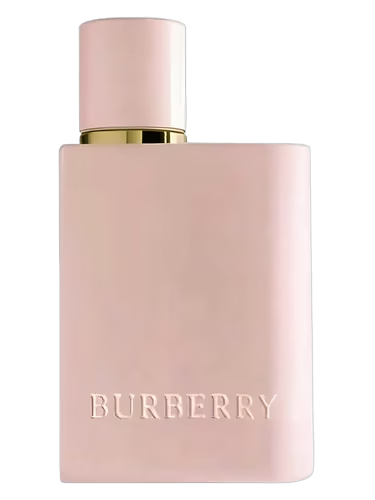
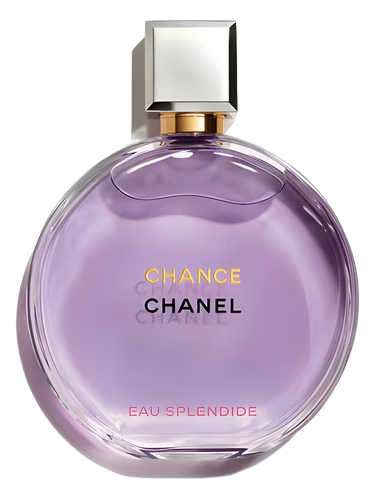
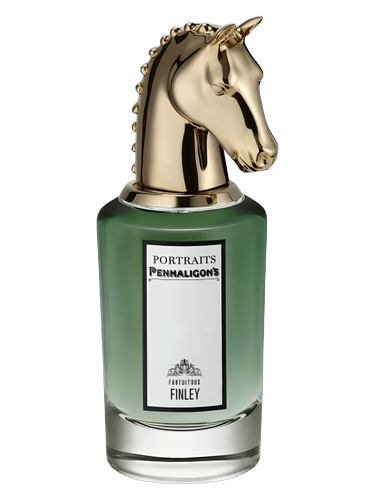
Most Popular Scents Using Green Anjou Pears
What is Green Anjou Pear?
Green Anjou Pear is a variety of pear originating from France, known in perfumery for its crisp, fresh, and subtly sweet aromatic profile.What does Green Anjou Pear smell like?
It offers a bright, watery sweetness combined with a delicate hint of citrus and green, earthy undertones from the skin, often providing a smooth and uplifting fruitiness.How is the Green Anjou Pear note extracted?
The scent is typically captured using advanced methods like headspace technology (Live Plant extraction) or supercritical CO2 extraction to preserve its realistic, sweet-floral aroma.What are some top perfumes featuring Green Anjou Pear?
Popular fragrances featuring this note include Jo Malone London English Pear & Freesia, Marc Jacobs Daisy Eau So Fresh, and DSH Perfumes d'Anjou.When is Green Anjou Pear in season?
While harvested in autumn, they reach peak ripeness in winter and are often available nearly year-round due to their excellent storage capabilities.