Fragrance Notes Are Layers Of Scent That Are Layered To Form The Final Fragrance. Fragrance Notes Are Categorised Into Three Main Elements Based On How Long They Take To Evaporate, And How Long They Typically Last Following Application: Top Notes, Heart Notes And Base Notes.
Grapes
Grapes offer a sweet, lush, and slightly winey aroma in perfumery, blending juicy fruitiness with subtle tart and earthy nuances. The scent can range from sparkling, fresh Concord grape to deep, jammy red grape notes, often used to add richness, body, and a distinctive fermented fruit complexity, particularly in gourmand or dark floral compositions.

Origin & Extraction Of Grapes
The use of a distinct "Grape" note in perfumery is a modern development, as natural grape extracts are often unstable or lack the intensity required for fine fragrance. Historically, the sweet, winey, or fermented aroma associated with grapes was primarily suggested indirectly through other notes like wine, brandy, or certain deep red berries. It wasn't until the 20th century, particularly with the advent of synthetic aroma chemistry, that perfumers could reliably introduce the specific smell of fresh, lush, or Concord grapes. This technological advance allowed for the creation of rich, slightly jammy, or sparkling grape accords that provided new opportunities in fruity and gourmand compositions, moving beyond the traditional floral and oriental structures.
In modern perfumery, the grape note is valued for its ability to add a sense of unusual richness, sweetness, and complexity, often bridging the gap between juicy fruit notes and deeper gourmand or dark floral themes. It is frequently employed to evoke feelings of indulgence, warmth, and opulence. While it is not a foundational classic like rose or jasmine, its presence in contemporary niche and high-end designer fragrances showcases a trend towards complex fruit notes that offer sophistication and a distinctive, wine-like body to a scent.
Extraction Methods of Grapes
Historically, the primary method for extracting juice from grapes was manual foot treading in large vats, a communal and social ritual practiced by ancient civilizations in Mesopotamia, Egypt, and Greece. By the 2nd century AD, the Romans introduced the first mechanical screw presses made of wood, which used a screw mechanism to apply more controlled pressure. During the Industrial Revolution, these evolved into hydraulic presses that used pumps for precision and pneumatic presses that utilized inflatable membranes to gently squeeze the fruit, reducing the extraction of bitter tannins from seeds and skins.
Modern extraction utilizes sophisticated horizontal pneumatic presses featuring programmable cycles and automated pressure regulation to optimize yield and hygiene. For specialized applications like grape seed oil, cold pressing is the latest preferred method, using mechanical expeller presses without external heat to preserve sensitive antioxidants and bioactive compounds. Additionally, contemporary winemaking often employs maceration enzymes such as pectinase to break down cell walls, facilitating the efficient release of color, tannins, and aromatic precursors into the must.
The Grape note, known for its sweet, lush, and slightly winey aroma, is often utilized in modern and gourmand perfumery to add complexity and a distinctive fermented fruit richness. A prominent recent example is Ameerat Al Arab Prive Rose (Asdaaf, 2023), which showcases the note's ability to blend deep fruitiness with a floral heart, lending a contemporary opulent feel to the composition.
- *
Beyond modern releases, the note appears in fragrances that prioritize sweet, comforting, and sometimes vintage-inspired complexity. Vanille Fruitee Eau de Parfum by Molinard (2015) is a good example, often featuring the grape accord alongside vanilla to create a rich, enveloping gourmand scent. Another notable inclusion is Noir Toscane / Vanille Raisin (La Maison de la Vanille, 2017), where the grape note is explicitly highlighted, bridging juicy fruit with balsamic or woody undertones to give the fragrance a sophisticated, wine-like body.
- *
In designer fragrances, the grape note often serves as a unique fruity twist within popular structures. For instance, both Givenchy L'Interdit and Giorgio Armani My Way are frequently cited by users as containing distinct grape-like nuances, though perhaps achieved through specific combinations of other notes like tuberose or deep berry accords, demonstrating how the characteristic sweet, jammy, or sparkling grape effect can be incorporated into mainstream releases to provide a youthful and vibrant character, such as in Mademoiselle L'Eau Très Charmante by Azzaro (2019).
Sustainability Of Grapes
Sustainability of Grapes
- Promoting a circular economy by upcycling grape pomace, seeds, and stems into high-value additives for the fragrance and cosmetic industries
- Utilizing grape alcohol as a sustainable, natural, and non-GMO alternative to conventional ethanol in perfume formulations
- Reducing environmental footprints through the adoption of mold-resistant grape varieties that require fewer pesticides and chemical treatments
- Implementing advanced extraction techniques like micellar and supercritical CO2 extraction to reduce solvent waste and energy consumption
- Supporting zero-waste initiatives by repurposing winemaking by-products into antioxidants, fertilizers, and bio-based packaging materials
Trivia
The synthetic molecule methyl anthranilate is used to create the scent of grapes in perfumery, but it is also the exact same ingredient used to give grape-flavored candies and sodas like Kool-Aid and Jolly Ranchers their iconic, nostalgic aroma.
Most Popular Scents Using Grapes
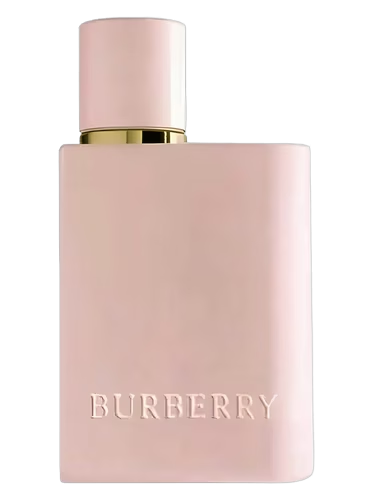
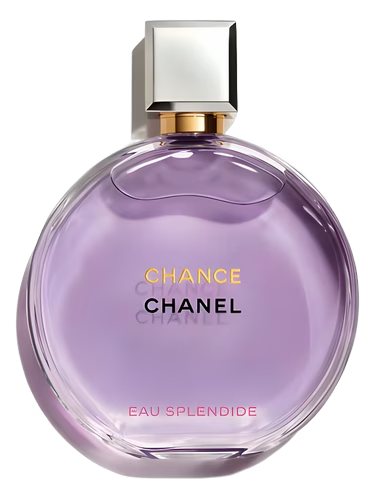
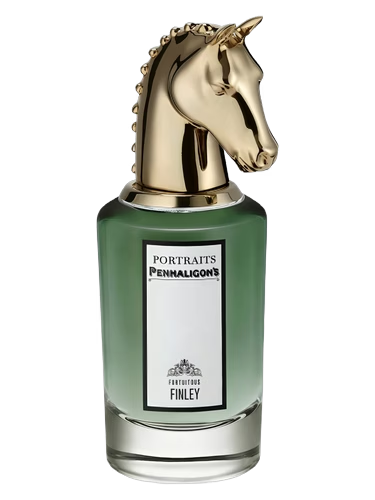
What are Grapes in perfumery?
Grapes are a modern fragrance note used to add a sweet, lush, and wine-like richness to gourmand or dark floral compositions.What do Grapes smell like?
They offer a sweet, lush, and slightly winey aroma that blends juicy fruitiness with subtle tart and earthy nuances.How is the grape scent created for perfumes?
Because natural extracts can be unstable, perfumers often use the synthetic molecule methyl anthranilate or specific accords to recreate the scent of fresh or fermented grapes.What are some top perfumes featuring the grape note?
Notable fragrances include Christian Dior Purple Oud, Tiziana Terenzi Rosso Pompei, Xerjoff Cruz Del Sur II, and Nishane Karagoz.When is the peak season for grapes?
In the Northern Hemisphere, the peak harvest occurs from late August through October, while in the Southern Hemisphere, it takes place between February and April.