Fragrance Notes Are Layers Of Scent That Are Layered To Form The Final Fragrance. Fragrance Notes Are Categorised Into Three Main Elements Based On How Long They Take To Evaporate, And How Long They Typically Last Following Application: Top Notes, Heart Notes And Base Notes.
Grapefruit Peel
The scent of Grapefruit Peel in perfumery is intensely bright, zesty, and tart, capturing the essential oil's bitter, slightly metallic edge. It offers a bracing, invigorating lift to compositions, often used in top notes for a crisp, luminous, and sparkling freshness that is more concentrated and complex than the fruit pulp alone.

Origin & Extraction Of Grapefruit Peel
While the focus on 'Grapefruit Peel' as a specific note is a modern development, the use of grapefruit in perfumery began to flourish in the 20th century as perfumers sought alternatives to traditional citruses like lemon and bergamot. The peel extract, prized for its concentrated essential oil, offers a sharper, more bitter, and intensely zesty character than the watery pulp. This quality made it instrumental in defining the initial invigorating lift of many iconic fresh and aquatic fragrances, particularly those marketed toward men.
The Grapefruit Peel note has played a key role in the contemporary reinterpretation of classic Eau de Cologne structures. Its superior concentration of zest provides better diffusion and longevity compared to more volatile citrus oils, allowing it to act as a powerful, clean top note. Its bracing, slightly metallic bitterness lends sophistication and energy, ensuring the fragrance opens with a vibrant sensation that transitions effectively into deeper woody or spicy heart and base notes.
The primary commercial method for extracting grapefruit essential oil is cold expression, or cold-pressing, of the fruit's outer rind (flavedo). This process involves mechanically rupturing the oil glands in the peel to release the volatile oils as an aqueous emulsion, which is then separated by centrifugation. This technique is preferred because it avoids the use of heat, preserving the delicate, zesty aroma and preventing the thermal degradation of sensitive compounds like limonene.
Historically, citrus oils were extracted through labor-intensive manual processes such as the sponge method, where peels were pressed against sponges by hand to soak up the oil, or the ecuelle a piquer, which used a bowl lined with needles to prick the rind. In modern industrial settings, high-capacity mechanical extractors, such as the John Bean FoodTech (JBT) system, allow for the simultaneous extraction of juice and essential oil, significantly increasing efficiency and scale.
Recent technological advancements have introduced more sophisticated extraction and refining techniques. Molecular distillation is now used to further refine cold-pressed oil under high vacuum and low temperatures, allowing for the isolation of specific fractions while maintaining purity. Other modern innovations include supercritical carbon dioxide (SC-CO2) extraction, which uses pressurized CO2 as a green solvent, and twin-screw extrusion, which utilizes high-pressure mechanical shearing to destroy cell tissues and release oil without added water or solvents. Additionally, microwave-assisted and ultrasound-assisted extractions are being explored to improve yields and reduce processing times.
Grapefruit Peel, with its intense, zesty, and slightly bitter aroma, is a pivotal component in modern fresh fragrances. It often provides a bracing, high-impact opening that is characteristic of energetic and luminous scents. A notable example is **Terre d'Hermès**, where the sharp citrus zest complements the earthy, flinty signature, offering a clean, sophisticated, and enduring opening that became instantly iconic. This usage highlights how the peel, rather than the pulp, adds structure and longevity to the top notes.
The exhilarating clarity of Grapefruit Peel is also central to many aquatic and summer-themed fragrances. In scents like **Acqua di Gioia** by Giorgio Armani, the peel contributes a sparkling, effervescent quality that enhances the overall feeling of fresh vitality, distinguishing it from sweeter citrus fruits. It helps maintain a bright and clean profile throughout the initial wear.
Furthermore, in niche and designer compositions, Grapefruit Peel is frequently employed to cut through heavier base notes, adding complexity and preventing the fragrance from becoming cloying. For instance, in **Light Blue Pour Homme** by Dolce&Gabbana, the intense zest is instrumental in creating the signature Mediterranean freshness, blending seamlessly with Sichuan pepper and juniper to deliver a crisp, irresistible, and widely beloved scent that balances freshness with subtle spice.
Sustainability Of Grapefruit Peel
Sustainability of Grapefruit Peel
- Promoting a circular economy by upcycling peel waste into high-value products such as bioplastics, organic fertilizers, pectin, and essential oils
- Adoption of precision agriculture in major growing regions like Florida, utilizing microjet irrigation and automated weather stations to reduce water consumption and fertilizer runoff
- Supporting zero-waste initiatives by repurposing industrial side-streams into nutrient-rich food ingredients, dairy fortifiers, and eco-friendly packaging films
- Implementing integrated pest management strategies, such as using protective tree bags and organic kaolin clay, to minimize reliance on synthetic pesticides
- Enhancing biodiversity and soil health through the use of cover crops and the conservation of natural habitats within citrus groves
- Developing greener extraction protocols, including microwave-assisted and supercritical fluid extraction, to reduce the environmental impact of processing
Trivia
Originally known as the "forbidden fruit," the grapefruit was first discovered in Barbados in the 18th century and is the only citrus fruit to originate in the New World.
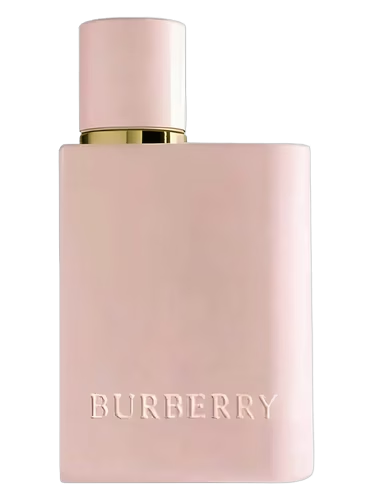
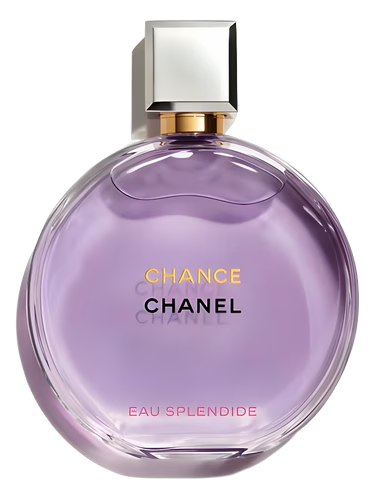
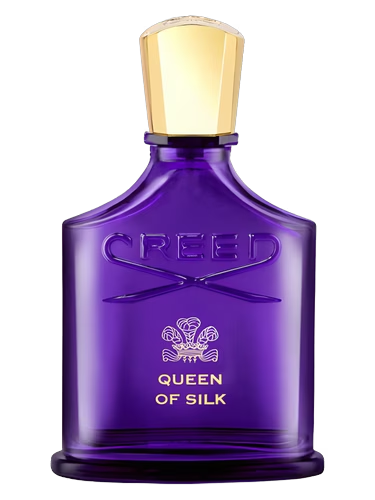
Most Popular Scents Using Grapefruit Peel
What is Grapefruit Peel?
Grapefruit Peel is a citrus fragrance note derived from the fruit's outer rind, known for its intensely bright, zesty, and slightly bitter aroma that provides an invigorating lift to perfumes.How is Grapefruit Peel essence extracted?
The primary method is cold expression (cold-pressing) of the fresh peel, which ruptures oil glands to release essential oils without using heat, thereby preserving its delicate, sharp scent.What does Grapefruit Peel smell like in perfumery?
It offers a bracing, tart, and luminous freshness with a characteristic bitter or slightly metallic edge that is more concentrated and complex than the fruit's pulp.What are some famous perfumes that feature Grapefruit Peel?
Iconic fragrances containing this note include Jo Malone London Grapefruit, Terre d'Hermès, Acqua di Giò, Parfums de Marly Perseus, and Dolce&Gabbana Light Blue Pour Homme.When is Grapefruit Peel in season for the best oil quality?
The peel reaches its aromatic peak during the winter and early spring months, typically from November through May, when essential oils are most concentrated and flavorful.