Fragrance Notes Are Layers Of Scent That Are Layered To Form The Final Fragrance. Fragrance Notes Are Categorised Into Three Main Elements Based On How Long They Take To Evaporate, And How Long They Typically Last Following Application: Top Notes, Heart Notes And Base Notes.
Grapefruit Leaf
Grapefruit leaf offers a green, slightly bitter, and herbaceous aroma, capturing the fresh, vegetal essence of the plant rather than the fruit's pulp. It often introduces a sharp, crisp opening to compositions, blending the typical bright citrus characteristics with a leafy, slightly savory undertone, providing complexity and an element of natural freshness.

Origin & Extraction Of Grapefruit Leaf
The use of Grapefruit Leaf in perfumery is a modern development, following the trend of utilizing more natural, green, and photorealistic elements of plants beyond just the fruit or flower. While grapefruit (the fruit) itself was introduced to perfumery in the 20th century, the leaf note specifically emerged as perfumers sought a way to capture a fresher, slightly more bitter, and herbaceous dimension of citrus. This note offers greater olfactory complexity and longevity compared to volatile citrus zests, providing a sophisticated bridge between sparkling top notes and deeper, woody or green heart notes.
Its primary relevance in modern perfumery lies in its ability to offer an authentic "petitgrain" effect that is distinctively bitter-green, yet still tied to the invigorating character of citrus. It is particularly valued in niche and high-end compositions, often appearing in clean, green, and masculine fragrances where a crisp, vegetal texture and a hint of leafy bitterness are desired to add depth and refinement, moving away from overly sweet or simple fresh accords.
The primary method for extracting essential oil from grapefruit leaves is steam distillation. In this process, the leaves are placed in a distillation chamber where pressurized steam is passed through the plant material. The heat and pressure of the steam cause the volatile aromatic compounds to evaporate. These vapors then travel through a cooling system where they condense back into a liquid form, allowing the pure essential oil to be easily separated from the water.
Historically, citrus leaf oils were sometimes produced through simpler hydrodistillation, where the plant material was boiled directly in water. Modern advancements have introduced more sophisticated techniques to improve efficiency and quality. These include molecular distillation, which operates under a high vacuum to preserve delicate molecules, and ultrasound-assisted extraction (UAE), which uses acoustic waves to rupture cell walls and increase yield. Additionally, supercritical CO2 extraction is utilized as a high-quality alternative, employing pressurized carbon dioxide as a non-toxic solvent to produce extracts that closely mirror the natural chemical profile of the living leaf.
While Grapefruit Leaf is a modern and often subtle note, it provides a distinctive green structure that is vital in contemporary perfumery, offering freshness without the volatility of the fruit itself. A key example of its use is in **Acqua di Parma Fico di Amalfi**, where the leaf note supports the fig and citrus opening, enhancing the composition's green, sun-drenched Italian feel. It is chosen for its herbaceous complexity over the fruit's sharp tang.
In masculine fragrances, Grapefruit Leaf is often employed to bridge the gap between crisp citrus top notes and deeper, earthier heart notes, creating a sophisticated transition. The note features prominently in **Hermès Terre d'Hermès Eau Très Fraîche**, where it complements the primary citrus and woody facets, adding a sharp, vegetal greenness that reinforces the overall sense of clean, elemental freshness and longevity.
The note also appears in niche and conceptual fragrances that seek hyper-realistic nature accords. In fragrances like **Jo Malone Grapefruit**, the leaf adds an essential dimension of bitterness and texture, allowing the scent to capture the essence of a whole grapefruit tree, not just the fruit. This use highlights its capability to lend a natural, slightly savory complexity to otherwise straightforward citrus compositions.
Sustainability Of Grapefruit Leaf
Sustainability of Grapefruit Leaf
- Promoting a circular economy by upcycling side streams from juice production into high-value aromatic materials
- Adoption of water-efficient irrigation systems, such as drip irrigation, to optimize nutrient delivery and conserve resources
- Establishing traceable and fair-trade supply chains through partnerships that ensure stable income and support for local farming communities
- Implementing organic farming practices and biodiversity initiatives, including the use of beekeepers for natural pollination to ensure optimum yields
- Utilizing energy-efficient extraction methods like steam distillation and exploring green chemistry alternatives like supercritical CO2 to reduce environmental impact
Trivia
Grapefruit leaf essential oil is often referred to as petitgrain grapefruit, following the traditional naming convention for oils distilled from the leaves and twigs of citrus trees.
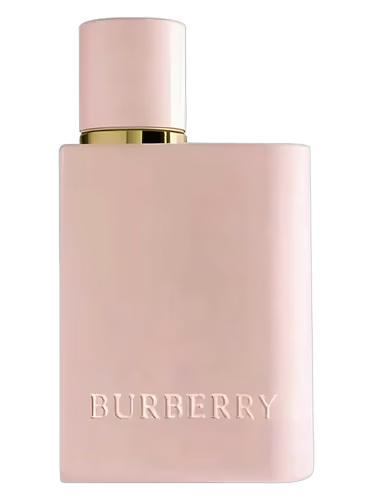
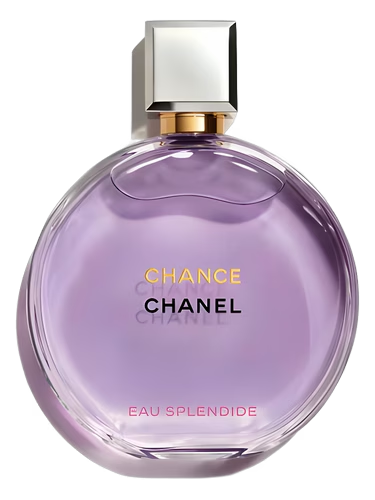
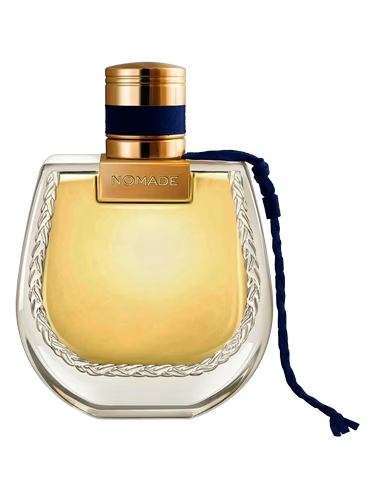
Most Popular Scents Using Grapefruit Leaf
What is grapefruit leaf?
Grapefruit leaf is a fragrance note derived from the foliage of the Citrus paradisi tree, offering a green, herbaceous, and slightly bitter aroma that differs from the juicy pulp of the fruit.What does grapefruit leaf smell like?
It features a fresh, crisp, and vegetal scent profile with a distinctive leafy bitterness and savory undertones, providing more complexity and longevity than traditional citrus zests.How is grapefruit leaf essence extracted?
The primary extraction method is steam distillation of the leaves, though modern techniques like molecular distillation and supercritical CO2 extraction are also used to preserve delicate aromatic molecules.What is the difference between grapefruit leaf and petitgrain?
In perfumery, grapefruit leaf essential oil is often called "petitgrain grapefruit," following the tradition of naming oils distilled from the leaves and twigs of citrus trees as petitgrain.What are some top perfumes featuring grapefruit leaf?
Notable fragrances include Acqua di Parma Fico di Amalfi, Hermès Terre d’Hermès Eau Très Fraîche, Jo Malone Grapefruit, and Imaginary Authors The Soft Lawn.When is grapefruit leaf in season?
The grapefruit tree is an evergreen that produces growth flushes between March and October; while the leaves remain on the tree for years, they are typically harvested to coincide with the tree's natural growth and flowering cycles.