Fragrance Notes Are Layers Of Scent That Are Layered To Form The Final Fragrance. Fragrance Notes Are Categorised Into Three Main Elements Based On How Long They Take To Evaporate, And How Long They Typically Last Following Application: Top Notes, Heart Notes And Base Notes.
Grapeflower
Grapeflower offers a complex, slightly narcotic floral profile with prominent fresh green grape and fruity nuances. It features a bright citrus lift and subtle undertones of Muguet, which lend a clean, white-floral freshness, and a soft, lingering musk finish. It is often utilized as a unique, sweet perfume modifier.

Origin & Extraction Of Grapeflower
The grapevine, from which Grapeflower (the grapevine flower) is derived, possesses a history deeply intertwined with ancient human civilizations, including those of Egypt, Greece, and Rome, where the fruit symbolized abundance and fertility. However, unlike traditional floral essences like rose or jasmine, Grapeflower does not have a long, foundational history as a standalone note in classical perfumery. The flower itself produces a subtle, gentle, and delicate aroma rather than a strong, extractable fragrance. Its scent profile, which includes fresh green grape and fruity nuances with a white-floral freshness, has only recently been actively explored in contemporary fragrance design.
In modern perfumery, the Grapeflower note is valued precisely for its subtlety and ability to introduce a unique, complex freshness and sophistication. It is not typically extracted as a potent essential oil but often replicated or synthesized to capture its gentle, sweet character and bright citrus lift, allowing it to function as a "sweet perfume modifier." Its use reflects a contemporary trend toward utilizing novel, delicate floral and fruity notes that offer natural freshness and elegance, often appearing in niche and artisanal compositions where its complexity can be appreciated.
Extraction Methods of Grapeflower
Historically, the delicate and short-lived scent of grapeflowers was captured through enfleurage, a process where fresh blossoms were hand-picked and placed on frames of purified fat to absorb their fragrant oils over several days. This traditional method was the primary way to extract essences from fragile flowers that could not withstand the high temperatures of steam distillation. Additionally, simple maceration in warm carrier oils was used to create floral infusions.
Modern extraction typically utilizes solvent extraction to produce a concentrated absolute, which effectively captures the complex, sweet, and green aromatic profile of the bloom. The latest and most advanced technique is supercritical CO2 extraction, which employs pressurized carbon dioxide at low temperatures to extract pure aromatic compounds. This method is highly prized for its ability to deliver a pristine, solvent-free essence that remains true to the natural scent of the grapevine flower while avoiding thermal degradation.
The Grapeflower note, prized for its complex blend of fresh green grape, subtle white florals, and a gentle musky finish, is primarily featured in contemporary and artisanal perfumery where its unique sophistication can be fully showcased. Because the natural flower scent is delicate, this note is often recreated to offer a nuanced, light, and slightly narcotic sweetness. Its use typically avoids the heavy, jammy quality of artificial grape scents, instead focusing on an elegant, vineyard-like freshness.
- A notable modern application of this note can be found in Muscat Blanc Fleurs de Cerisier by L'Occitane en Provence, where the Grapeflower helps build an airy, fruity-floral bouquet, often complementing light fruit and other delicate springtime notes.
Historically, the Grapeflower scent has been captured in niche and regional fragrances, particularly those focused on wine-making regions or themes of natural abundance. These fragrances often use the note to evoke the fresh, green aroma of the vineyard during bloom. It serves as a unique alternative to more common fruity notes, lending a transparent sweetness and a sophisticated green lift that anchors the composition's heart.
- Examples of this historical or regional use include Vinogas (Виноград) by Dzintars and Эллада (Hellas) Eau de Cologne, showing the note's earlier popularity in classic compositions, where it was utilized for its refreshing and uplifting properties.
In contemporary high-end perfumery, the Grapeflower note functions as a 'sweet perfume modifier,' adding depth and originality to compositions that aim for a sparkling, non-tropical freshness. Its clean, slightly narcotic floral facet blends well with green, citrus, and light musky bases, ensuring the fragrance feels luminous and refined, appealing to those seeking an unusual and natural scent profile.
Sustainability Of Grapeflower
Sustainability of Grapeflower
- Utilizing synthetic and natural proxies to create fantasy accords, which eliminates the need for intensive land and water resources required to grow real flowers
- Adopting biotechnology and synthetic biology to engineer scents from DNA sequences, reducing the environmental footprint associated with traditional floral farming
- Promoting the use of sustainable bases like 100% natural, organic, and non-GMO grape alcohol as an eco-friendly alternative to synthetic chemical solvents
- Supporting circular economy principles by upcycling agricultural by-products, such as sawdust or fruit seeds, into high-value fragrance ingredients
- Implementing eco-conscious packaging solutions, including the use of recyclable glass, biodegradable pulp cartons, and 100% recycled materials to reduce waste
Trivia
The scent of grape vine flowers originates not from its petals but from pollen grains inside the anthers, which emit their fragrance in a light-dependent cycle that peaks at dawn, causing a vineyard to smell noticeably different at 6 AM than at noon.
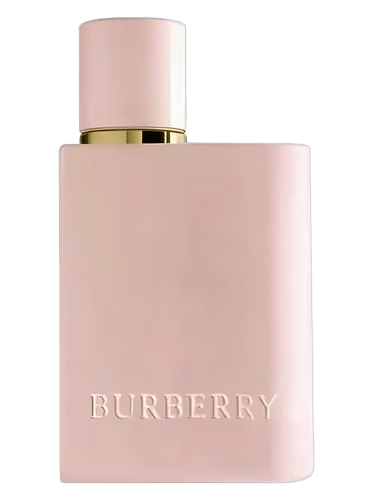
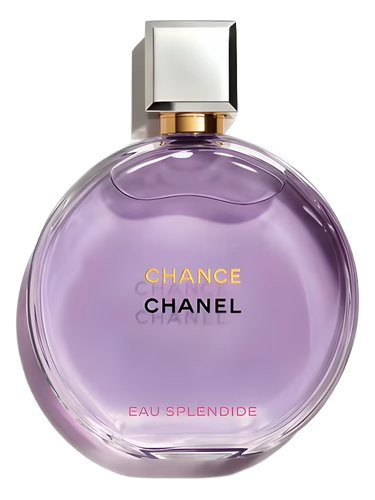
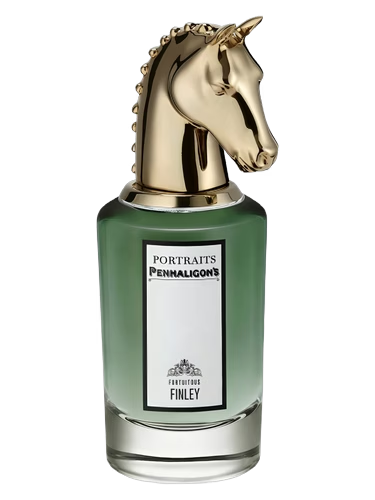
Most Popular Scents Using Grapeflower
What is Grapeflower?
Grapeflower is the delicate bloom of the grapevine, a contemporary perfumery note valued for its subtle, sophisticated freshness and its role as a unique sweet perfume modifier.What does Grapeflower smell like?
It features a complex, slightly narcotic floral profile with prominent green grape and fruity nuances, a bright citrus lift, and clean white-floral undertones of Muguet.How is Grapeflower essence extracted?
Modern methods include solvent extraction to produce a concentrated absolute and supercritical CO2 extraction, which captures the pure aromatic profile without thermal degradation.What are some top perfumes featuring Grapeflower?
Notable fragrances include L'Occitane en Provence Muscat Blanc Fleurs de Cerisier, Dzintars Vinogas, Cage Red Crested, and Flora Праздник урожая (Harvest Fest).When is Grapeflower in season?
The grapevine typically blooms for a brief period of eight to ten days in late spring, generally between May and June, depending on specific temperature and sunny conditions.