Fragrance Notes Are Layers Of Scent That Are Layered To Form The Final Fragrance. Fragrance Notes Are Categorised Into Three Main Elements Based On How Long They Take To Evaporate, And How Long They Typically Last Following Application: Top Notes, Heart Notes And Base Notes.
Grape Seed
Grape Seed oil, often used as a carrier in perfumery, provides a subtle aromatic profile that is primarily earthy, herbal, and slightly nutty. It is mostly valued for its nearly odorless nature when highly refined, adding a faint, dry texture and depth to compositions without overwhelming the main notes. It rarely stands out as a focal point.

Origin & Extraction Of Grape Seed
Grape Seed's history in perfumery is primarily connected to the ancient practice of using oils derived from the vine as a base or fixative. Historical records indicate that early perfume-making methods utilized substances like omphacium—an oil extracted from unripe grapes or green olives—as a frequent liquid base for mixing and stabilizing aromatic essences like fruits, flowers, and woods. These ancient techniques for extracting and using grape-related oils as an odorless foundation formed the basis for modern essence extraction.
In contemporary perfumery, Grape Seed oil is rarely used as a standalone aromatic note due to its subtle, almost odorless profile when highly refined. Instead, it is most often employed as a carrier or diluent oil, valued specifically for its neutral character. Its function is to add a faint, dry texture and depth to the overall composition without influencing the intended scent profile, making it a background element rather than a focal point in the modern fragrance industry.
Extraction Methods of Grape Seed
The extraction of grape seed oil is a complex process because the seeds are small, hard, and contain a relatively low oil content. Historically, the primary method involved mechanical oil pressing or expelling. This traditional approach involves drying, crushing, and then mechanically pressing the seeds to release the oil. While this method is simple and avoids chemical additives, it often results in a high amount of residual oil left in the seeds, making it less efficient for large-scale production.
In modern commercial production, the most common method is solvent extraction, typically using hexane. In this process, grape seeds are laminated and crushed into small pieces to maximize surface area before being treated with a chemical solvent that washes out the oil. The resulting mixture is then distilled to remove and recover the solvent, leaving behind crude oil that must undergo extensive refining, including neutralizing, bleaching, and deodorizing, to create a palatable final product.
Latest developments in extraction focus on preserving the oil's heat-sensitive antioxidants and nutrients while improving yield and safety. Cold pressing has gained popularity as a premium alternative; it uses specialized high-torque screw presses to extract oil at temperatures below 50-70 degrees Celsius without the use of chemical solvents. Additionally, advanced techniques such as supercritical CO2 extraction and subcritical extraction are being utilized. These methods use pressurized gases to isolate the oil at low temperatures, ensuring no solvent residue remains and that 100% of the bioactive compounds are preserved.
Due to its highly refined, subtle, and nearly odorless profile, Grape Seed oil (or Grape Seed extract) is seldom highlighted as a primary aromatic note in famous perfumery; rather, it often functions as an essential, non-aromatic carrier oil or diluent, particularly in natural or oil-based compositions. Therefore, it is rarely listed in the official note breakdown of popular designer fragrances. Its value lies in providing a faint, dry texture and depth without interfering with the complex scent of the main ingredients.
- While not a focal point, the use of Grape Seed in fragrance bases suggests a commitment to clean formulations and excellent solubility for expensive aromatic extracts. Fragrances that emphasize natural oils and light, earthy backdrops—even if they do not explicitly advertise Grape Seed—are where its functional role is most prevalent. One fragrance that subtly hints at this natural, dry texture is **Jo Malone London's Wood Sage & Sea Salt**, which relies on non-obtrusive carriers to highlight its elemental notes.
In niche perfumery, where the texture and subtle base notes are meticulously managed, Grape Seed oil may be used to deliver a non-greasy application. For example, some oil-based concentrations or body products related to scents like **Le Labo's Santal 33** or those from the **Aveda** line might incorporate Grape Seed as a carrier, appreciated for its lightness and rapid absorption. This allows the dominant woody or herbal components to shine, underscoring its utility as a silent, supportive ingredient in high-quality, modern compositions.
Sustainability Of Grape Seed
Sustainability of Grapeseed
- Utilizing a circular economy model by sourcing seeds as a natural by-product of the global wine industry, which reduces agricultural waste
- Implementing eco-conceived extraction methods, such as cold pressing, to obtain pure oil without the use of chemical solvents like hexane
- Supporting biodiversity and environmental responsibility by repurposing industrial-scale raw material streams rather than harvesting primary aromatic plants
- Promoting the use of bio-based and renewable ingredients that meet rising consumer demand for transparency and ethical sourcing in personal care
- Reducing the carbon footprint of production by utilizing abundant, locally available materials from major wine-growing regions
Trivia
Historically a byproduct of winemaking, grape seed oil was used in ancient Mediterranean cultures as a natural dye to produce fabrics in shades ranging from dark brown to black.
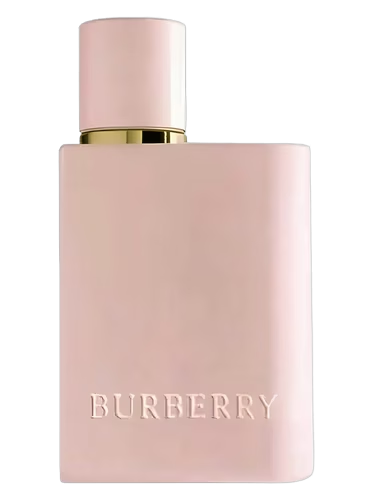
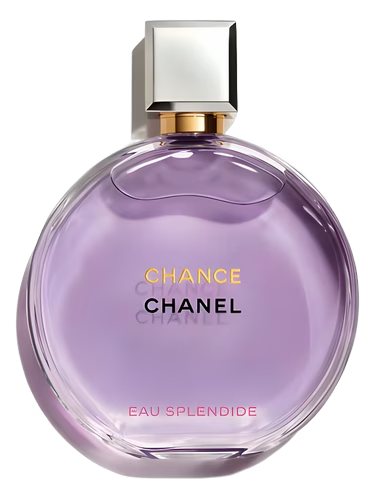
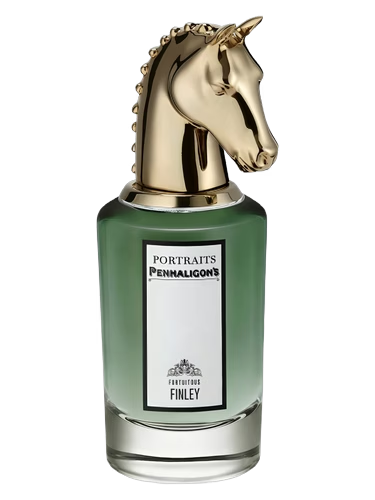
Most Popular Scents Using Grape Seed
What is Grape Seed oil?
Grape Seed oil is a vegetable oil derived from the seeds of grapes, historically a byproduct of winemaking, and is used in perfumery as an odorless carrier or base.What does Grape Seed smell like?
When highly refined, it is nearly odorless with a subtle, earthy, herbal, and slightly nutty profile that provides a faint, dry texture without overwhelming main notes.How is Grape Seed essence extracted?
It is primarily extracted through cold pressing or solvent extraction of the seeds, with modern techniques like supercritical CO2 extraction used to preserve bioactive compounds.What are some top perfumes featuring Grape Seed?
While usually a silent carrier, it is associated with fragrances like Jo Malone London Wood Sage & Sea Salt, Toskovat' My Past Selves' Flowers, and 19-69 Rainbow Bar.When is Grape Seed in season?
Its seasonality is tied to the grapevine cycle, with seeds maturing within the berries during the late summer and early autumn harvest window, typically between August and October.