Fragrance Notes Are Layers Of Scent That Are Layered To Form The Final Fragrance. Fragrance Notes Are Categorised Into Three Main Elements Based On How Long They Take To Evaporate, And How Long They Typically Last Following Application: Top Notes, Heart Notes And Base Notes.
Grains
Grains offer a dry, earthy, and subtly nutty profile in perfumery, evoking cereals like wheat, barley, or rice. They convey a warm, slightly starchy, and often rustic texture, lending an agricultural, grounding quality. Used to add depth to gourmand or oriental compositions, they provide a wholesome, comforting, and sometimes toasted nuance.

Origin & Extraction Of Grains
The history of using "Grains" notes in perfumery is primarily connected to the rise of gourmand and abstract natural fragrances in the late 20th and early 21st centuries. Unlike traditional perfumery components such as floral extracts or classical resins, which have been used for millennia, scents explicitly evoking cereals (like rice, wheat, or barley) were not common until perfumers sought to capture more complex, comforting, and photorealistic food-related or rustic textures. Grains serve less as aromatic materials themselves and more as accords built to represent a dry, earthy, or toasted quality, often drawing inspiration from culinary uses in various cultures.
In modern fine fragrance, the Grains note is valued for its versatility in lending an agricultural, grounding, and wholesome texture to a composition. It is particularly effective in bridging gourmand sweetness (like vanilla or caramel) with deep oriental or woody bases. While not a historical cornerstone like citrus or amber, its presence in contemporary niche perfumery—where it imparts a unique, starchy warmth—highlights a move toward innovative olfactive storytelling that emphasizes comfort and realism, setting it apart as a texturally rich, modern ingredient.
Extraction Methods of Grains
Historically, the extraction of products from grains primarily involved mechanical separation through manual labor and traditional tools. Grains were harvested using sickles or scythes and then subjected to threshing and winnowing to separate the kernels from the stalks and chaff. For flour extraction, millers used "bolting" or sifting processes, often utilizing circulating stones to grind the grain before passing it through fabric sifting devices to refine the flour and remove larger bran particles. Historically, extraction rates were adjusted to balance loaf volume with shelf life, as removing the oil-rich germ and bran reduced rancidity.
Modern extraction methods have evolved to include high-efficiency industrial processes such as roller milling and advanced solvent extraction. In roller milling, introduced in the late 19th century, steel rollers repetitively fracture the endosperm while separating the bran and germ, typically achieving a 72% extraction rate for white flour. For oil extraction from grains like rice bran or amaranth, percolation and immersion-type continuous extractors are used, employing solvents like hexane to efficiently recover oils. Recent technological developments include the use of supercritical CO2 and hybrid vapor/liquid extraction processes to improve yields and purity without the high heat associated with traditional methods.
The "Grains" note, often evoking the comforting, starchy warmth of cereals like rice, wheat, or barley, is a feature of many niche and avant-garde fragrances, especially those leaning into gourmand or abstract themes. One of the most famous and influential examples is **Kenzo Amour**, which uses a prominent rice steam accord to create a soft, enveloping, and creamy atmosphere, distinguishing it from traditional oriental florals. The grain note here lends a delicate, slightly toasted texture that pairs beautifully with vanilla and frangipani.
In modern perfumery, the grain accord provides a grounding, earthy texture, moving beyond mere sweetness to suggest natural raw materials. **Diptyque's Eau Lente** (although primarily spicy) and certain iterations from Serge Lutens utilize grain-like dryness to temper rich, dense notes. The note helps to inject realism and contrast, especially in compositions that aim to be photorealistic or evocative of rustic settings, such as **D.S. & Durga's Italian Citrus**, where a wheat note might add texture to the fields surrounding the fruit trees.
For those seeking a bolder application, the Grains note can translate into a distinctively savory or "toasted" effect. **Aedes de Venustas' Cierge de Lune** incorporates a subtle graininess, often perceived as a dry, powdery texture that supports the darker, smoky elements and vanilla base. Furthermore, various indie and artisan houses celebrate the note's versatility, using it to craft unique comfort scents, with examples like **L'Artisan Parfumeur's Bois Farine** showcasing a nutty, flour-like dustiness that relies heavily on this abstract, starchy character.
Sustainability Of Grains
Sustainability of Grains
- Promoting a circular economy by upcycling spent grains from the brewing and food industries into unique, robust fragrance notes
- Reducing environmental impact through the use of enzyme and yeast technologies to streamline processing and decrease carbon emissions
- Utilizing natural grain alcohol (ethanol) derived from organic farms to support sustainable agricultural practices and ensure ingredient purity
- Advancing toward net-zero ethanol production by improving energy efficiency in the fermentation and starch-processing cycles
- Sourcing renewable raw materials that provide a lower-carbon alternative to traditional petroleum-based synthetic bases
Trivia
Grains have been used in various cultures for centuries, often symbolizing abundance and fertility.
Most Popular Scents Using Grains
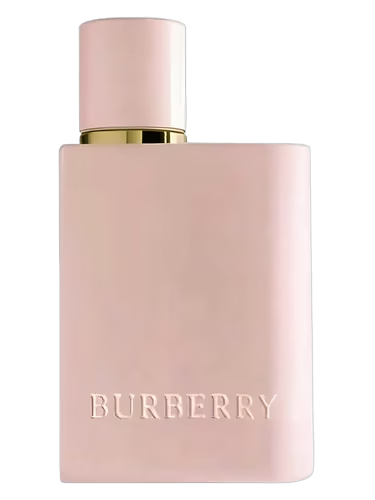
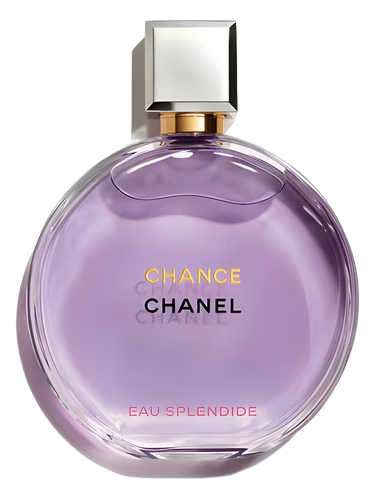

What is the Grains fragrance note?
Grains is a modern perfume note that evokes the dry, earthy, and subtly nutty aroma of cereals like wheat, barley, and rice, often used to add a wholesome, starchy texture to scents.What does the Grains note smell like?
It offers a warm, comforting profile with toasted and starchy nuances, providing a rustic, agricultural quality that grounds gourmand and oriental compositions.How is the Grains essence extracted?
In modern perfumery, these scents are often captured through industrial milling and solvent extraction, as well as advanced methods like supercritical CO2 extraction to preserve purity.What are some top perfumes featuring Grains?
Notable fragrances include Kenzo Amour, L'Artisan Parfumeur Bois Farine, Jo Malone London Poppy & Barley, and Memo Paris Sherwood.When is the Grains note typically worn?
Grains are quintessentially associated with autumn and winter, as their dry, nutty, and cozy character mirrors the harvest season and complements cooler weather.