Fragrance Notes Are Layers Of Scent That Are Layered To Form The Final Fragrance. Fragrance Notes Are Categorised Into Three Main Elements Based On How Long They Take To Evaporate, And How Long They Typically Last Following Application: Top Notes, Heart Notes And Base Notes.
Gorse
A bright, invigorating Citrus Gourmand profile that opens with a sparkling burst of sun-drenched citrus: zesty lime, tart lemon, and luminous bergamot, uplifted by spicy ginger and cardamom. This fresh opening settles quickly into a creamy, exotic heart of sweet coconut and florals, grounded by soft milk and warm amber.

Origin & Extraction Of Gorse
The Gorse note in perfumery is primarily a modern concept, often associated with a specific interpretation of the gorse plant's aroma rather than a long-standing historical ingredient like traditional citruses or florals. Gorse (Ulex europaeus) is an intensely yellow-flowered shrub whose bloom is famously described as having a unique, warm, and sweet scent reminiscent of coconut and sometimes vanilla or almond. Unlike notes derived from ancient distillation practices, the Gorse note has gained prominence in contemporary perfumery as houses seek photorealistic and evocative scents capturing specific natural environments.
The popularization of the Gorse scent as a distinct perfume note is largely credited to the fragrance *Gorse* by Laboratory Perfumes, launched in 2012. The creation was inspired by the coconut-infused air surrounding gorse bushes in Provence, aiming to capture the essence of summer in the countryside. This modern composition features a bright burst of citrus (lime, lemon, bergamot) combined with the central coconut hit of the gorse flower, supported by notes of cardamom and amber, establishing Gorse as a vibrant, contemporary Citrus Gourmand note in the fragrance world.
Extraction Methods of Gorse
Historically, the aromatic compounds of gorse (Ulex europaeus) have been captured through traditional techniques such as steam distillation, water distillation, and maceration. In these historical processes, the flowers and leafy portions were often boiled or subjected to steam to release their volatile oils, or steeped in solvents like alcohol for extended periods to create infusions. These methods were valued for their simplicity, although they often resulted in relatively low yields of essential oil.
Modern extraction methods have become more diverse and specialized to optimize the recovery of specific chemical constituents from different parts of the plant. Current practices include the use of advanced steam distillation systems that operate at controlled temperatures to prevent the degradation of heat-sensitive compounds. Furthermore, modern solvent extraction using hexane or petroleum ether is common for producing concretes and absolutes, while supercritical CO2 extraction is increasingly employed to capture a more complete and delicate aromatic profile without the use of synthetic solvents. Research also focuses on simultaneous saccharification and fermentation (SSF) and specialized hydrolysis processes to extract high-value biochemicals such as flavones and fatty acids from the bark, leaves, and flowers.
The Gorse note, prized for its unique scent profile blending bright citrus and sweet coconut/almond nuances, was notably popularized by the niche fragrance **Gorse** by Laboratory Perfumes (2012). This scent, which aims to evoke the aroma of the gorse bushes in Provence, established the note as a contemporary Citrus Gourmand. It uses a sparkling top of lime, lemon, and bergamot to accentuate the floral heart's natural creamy, exotic sweetness, often likened to coconut, supported by cardamom and warm amber.
- The Gorse note's successful transition into modern perfumery is also evident in its usage by major design houses seeking to add unique, natural-smelling accords to their lines. While specific Gorse-focused releases from powerhouses like Lattafa Perfumes, Dior, Guerlain, and Tom Ford are not always explicitly named "Gorse," the specific, sweet, and bright floral-coconut facets of the Gorse plant are integrated into fresh, sunny compositions to enhance luminosity and texture.
- Contemporary perfumery utilizes Gorse as a sophisticated bridge ingredient, offering the effervescence of traditional top notes (like citruses) but with added warmth and longevity via its sweet, creamy heart characteristics (coconut, almond, vanilla-like tones). This complexity makes it an ideal fit for modern unisex and niche scents that focus on realistic, evocative olfactory experiences of the natural world.
Beyond Laboratory Perfumes' signature launch, the Gorse note is frequently incorporated into fragrances across various houses looking to capture the essence of spring or summer landscapes. Its presence indicates a refined fresh composition that avoids overly sharp citrus, instead settling into a soft, inviting heart, securing its place as a distinctive and cherished element in the modern fragrance palette.
Sustainability Of Gorse
Sustainability of Gorse
- Utilizing gorse for biological nitrogen fixation to enhance soil fertility and support crop performance in degraded or nutrient-poor acidic soils
- Promoting the use of gorse as an agroecological resource for soil stabilization, erosion control, and enhancing biodiversity by providing habitats for various species
- Researching the conversion of gorse biomass into high-value sustainable products such as marine-derived dyes, protein for human consumption, and biochar for soil health
- Implementing integrated management strategies, including targeted grazing by goats and biological control with insects, to reduce chemical dependency in invasive species management
- Developing advanced machine learning and remote sensing tools to accurately map infestations and prioritize treatments for wildfire risk reduction and landscape resilience
Trivia
Gorse blossom has an aroma reminiscent of coconut, but due to its unique chemical structure, no two people will smell the fragrance in exactly the same way.
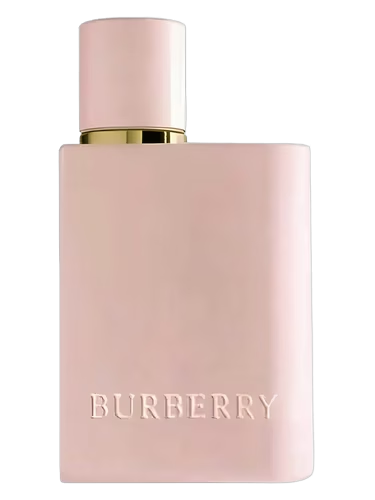
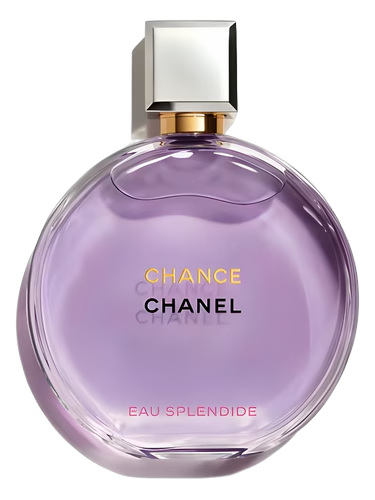
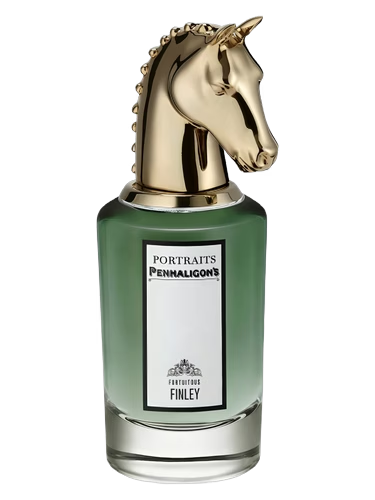
Most Popular Scents Using Gorse
What is Gorse?
Gorse is a yellow-flowered evergreen shrub native to Western Europe, known in perfumery for its modern Citrus Gourmand profile and unique coconut-like aroma.What does Gorse smell like?
It features a bright opening of lime, lemon, and bergamot that settles into a creamy, exotic heart reminiscent of coconut, vanilla, and almond, grounded by warm amber.How is Gorse essence extracted?
In modern perfumery, its scent is often recreated synthetically or captured using advanced methods like supercritical CO2 extraction and solvent extraction to produce concretes and absolutes.What are some top perfumes featuring Gorse?
Notable fragrances include Laboratory Perfumes Gorse, Jorum Studio Gorseland, Alkemia Furze & Fern, and Crow and Pebble Friend of Deers.When is Gorse in season?
While it can flower year-round, its peak blooming season typically occurs from January to June, reaching its fullest display in April and May.