Fragrance Notes Are Layers Of Scent That Are Layered To Form The Final Fragrance. Fragrance Notes Are Categorised Into Three Main Elements Based On How Long They Take To Evaporate, And How Long They Typically Last Following Application: Top Notes, Heart Notes And Base Notes.
Gooseberry
Gooseberry offers a uniquely complex, tart, and refreshing aroma. It is a light fruity-green note with a tangy, sour-yet-sweet profile, often described as sharp or acidic. This vibrant note is prized in modern perfumery for its juicy quality and ability to blend with florals like lilac.

Origin & Extraction Of Gooseberry
The use of Gooseberry (Ribes uva-crispa) in perfumery is a relatively modern phenomenon, distinct from classical perfume notes. While traditional fruits like citrus and some berries have long histories, Gooseberry's tart, green, slightly sweet, and sulfurous aroma profile was challenging to capture naturally and rarely featured in historical compositions. Its true relevance emerged with advances in synthetic chemistry in the late 20th century, which allowed perfumers to accurately recreate its complex and elusive scent, moving beyond simple fruit extracts. Gooseberry is closely associated with the blackcurrant bud absolute (Cassis), as they share some similar "catty" or green-tart facets, which influenced its eventual adoption.
Today, Gooseberry is often employed in modern fruity-green and chypre compositions to provide a vibrant, acidic lift that cuts through richer heart notes, offering a specific, sophisticated tartness that distinguishes it from sweeter berry notes. Its rise in popularity is intertwined with the trend toward hyper-realistic and novel fruit accords in niche and mainstream perfumery. While it lacks the centuries-old heritage of notes like Bergamot or Neroli, Gooseberry is valued for its unique ability to evoke a sharp, verdant, and slightly unripe feeling, making it a powerful tool for contemporary fragrance creation.
Extraction Methods of Gooseberry (Amla)
The extraction of gooseberry (Amla) essence and oil is primarily achieved through infusion and maceration. Historically, traditional Ayurvedic methods involved "fortification," where dried amla fruits were repeatedly soaked in fresh amla juice and allowed to evaporate at room temperature and atmospheric pressure to create a concentrated, nutrient-rich extract. Another traditional approach involves boiling crushed amla fruit to release natural oils, which are then reduced under vacuum pressure or infused into carrier oils like sesame or coconut through slow simmering.
Modern and industrial extraction techniques have evolved to improve efficiency and potency. For commercial oil production, amla seeds are often separated and expeller-pressed to collect pure seed oil, which is then blended with fruit extracts. Advanced industrial methods utilize solvent extraction—using ethanol, hexane, or methanol—followed by vacuum evaporation to isolate bioactive compounds. The latest high-tech approaches include supercritical CO2 extraction and spray drying, which allow for the capture of delicate antioxidants and vitamin C without the high heat that can degrade the fruit's complex nutritional profile.
The use of Gooseberry in fine perfumery, celebrated for its unique tart, green, and slightly sulfurous profile, is most prominent in modern compositions that aim for sophisticated, photo-realistic fruit accords. One of the earliest and most influential fragrances to feature this note is Wish by Chopard (1997). While often classified as an Oriental Vanilla, the inclusion of Gooseberry in its top notes provides a sharp, green acidity that acts as a vital counterbalance to its dominant sweet and gourmand facets, giving the fragrance a sparkling lift and complexity that was groundbreaking for its time.
In niche and independent perfumery, the Gooseberry note is often showcased to create distinctly verdant and acidic openings. For instance, scents like Salted Green Mango by Strangers Parfumerie (2019) utilize Gooseberry to enhance its sharp, tangy fruit signature, providing a sophisticated, slightly unripe quality. Furthermore, the note's association with tartness and green freshness is highlighted in fragrances such as Lilacs & Gooseberries by Shay & Blue London (2021), where it perfectly complements the floral heart, leaning into a naturalistic, garden-fresh scent profile.
Recent designer and mainstream fragrances continue to adopt Gooseberry for its ability to introduce a vibrant, acidic burst. Its inclusion reflects a contemporary trend toward unconventional, uplifting top notes that differentiate modern fresh compositions. For example, fragrances like Authentic Self Woman by Abercrombie & Fitch (2023) and seasonal releases such as DKNY Be Delicious Ice Pop Citrus Splash by Donna Karan (2025) integrate Gooseberry to provide a crisp, exhilarating top-note energy, ensuring the opening is bright, clean, and distinct from traditional, sweeter citrus fruits.
Sustainability Of Gooseberry
- Utilizing clean, non-toxic formulations that are free from parabens and phthalates to ensure environmental and consumer safety
- Prioritizing vegan and cruelty-free production standards to align with ethical beauty practices and animal welfare
- Adopting a minimalist approach to ingredients, often using fewer than 15 components to reduce chemical complexity and environmental impact
- Supporting regenerative agriculture and responsible sourcing of natural extracts to preserve biodiversity and soil health
- Implementing eco-friendly packaging solutions, such as recyclable materials and reduced-waste designs, to minimize the ecological footprint
Trivia
The fragrance note of gooseberry gained iconic cult status as the signature scent of the sorceress Yennefer of Vengerberg from "The Witcher" series, where it is famously paired with lilac to represent her complex, "tart yet sweet" personality.
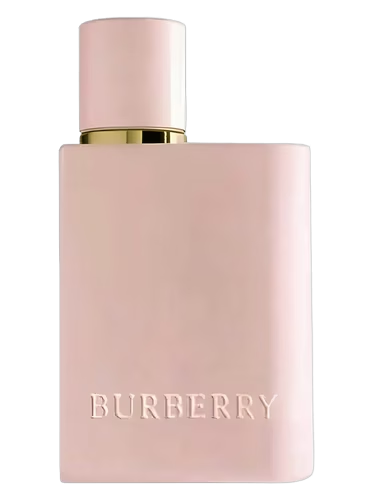
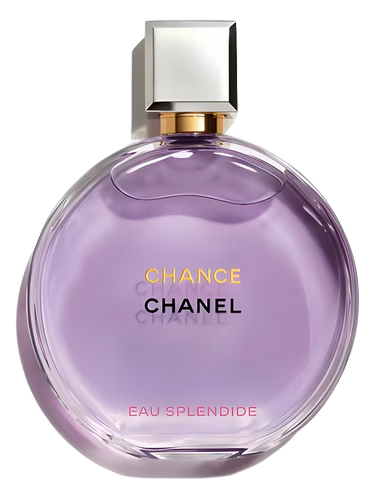
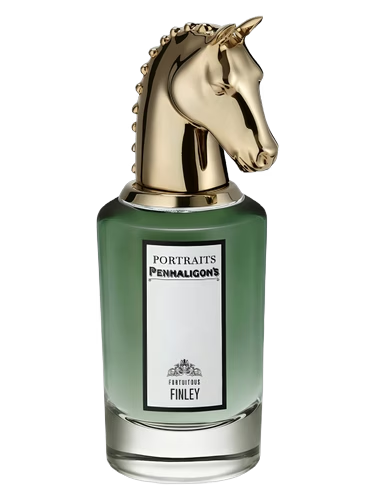
Most Popular Scents Using Gooseberry
What is Gooseberry?
Gooseberry is a modern fragrance note derived from the Ribes uva-crispa fruit, known for its unique tart and green aromatic profile in contemporary perfumery.What does Gooseberry smell like?
It offers a uniquely complex, tart, and refreshing aroma with light fruity-green facets and a tangy, sour-yet-sweet profile often described as sharp or acidic.How is Gooseberry essence extracted?
The essence is primarily obtained through infusion and maceration, with modern techniques utilizing solvent extraction or supercritical CO2 extraction to capture its delicate profile.What are some top perfumes featuring Gooseberry?
Popular fragrances featuring this note include Shay & Blue Lilacs & Gooseberries, Jo Malone London Elderflower & Gooseberry, and Chopard Wish.When is Gooseberry in season?
Gooseberries are quintessential early summer fruits, typically beginning their season in late June and continuing through early August.