Fragrance Notes Are Layers Of Scent That Are Layered To Form The Final Fragrance. Fragrance Notes Are Categorised Into Three Main Elements Based On How Long They Take To Evaporate, And How Long They Typically Last Following Application: Top Notes, Heart Notes And Base Notes.
Gladiolus
Gladiolus offers a very subtle floral scent characterized by freshness and a light sweetness, blended with clean, green notes. This refined aroma is light, delicate, and often utilized to impart an elegant, airy freshness in floral compositions.

Origin & Extraction Of Gladiolus
Gladiolus, often referred to as the "sword lily," is primarily celebrated for its visual grandeur rather than its scent. In perfumery, the note presents a challenge because the actual flowers yield a very subtle and inconsistent aroma, making extraction for essential oil difficult or impossible. Therefore, the Gladiolus note in modern fragrances is almost entirely a reconstructed accord, built using headspace technology and synthetic molecules to capture the desired clean, green, and subtly sweet floral profile.
Due to the difficulty in extracting a natural oil, Gladiolus does not possess the long, traditional history in classic perfumery enjoyed by notes like Rose or Jasmine. Its relevance is modern, emerging as perfumers sought lighter, more abstract floral scents in the late 20th and 21st centuries. The note is used to add a refined, airy freshness and subtle green elegance to compositions, rather than acting as a dominant floral centerpiece, aligning with contemporary trends toward delicate and photorealistic botanical accords.
Extraction Methods of Gladiolus
Historically, the extraction of aromatic or pigment compounds from the Gladiolus was primarily focused on traditional medicinal use and basic maceration. For centuries, practitioners of herbal medicine used infusion or simple crushing of the plant's corms and flowers to release active properties for therapeutic poultices or tinctures. In textile history, manual crushing and soaking of fresh floral parts in distilled water for up to two weeks served as a standard folk method for obtaining natural dyes in shades of red, yellow, and orange.
Modern extraction techniques have evolved to include more precise scientific processes such as solvent extraction and direct bioautography. Current research involves crushing fresh petals into a thick paste and utilizing distilled water as a solvent over a controlled aging period of 10 to 15 days to maximize pigment yield. Additionally, advanced phytochemical screening uses silica gel Thin Layer Chromatography (TLC) alongside specific spraying reagents like aqueous basic lead acetate or antimony chloride to identify and isolate active components such as flavonoids, alkaloids, and terpenoids from the extract.
The Gladiolus note, prized for its subtle, clean, and green-sweet floral profile, features prominently in contemporary fragrances that aim for an airy elegance rather than overwhelming floral intensity. One notable example is **Eau De Lacoste Sensuelle** by Lacoste Fragrances, which incorporates Gladiolus to enhance its fresh, feminine composition. This fragrance demonstrates how the note supports modern floral accords, contributing a sophisticated freshness without dominating the scent.
- **Ambre D'Oro** by Tova Beverly Hills uses the Gladiolus note, suggesting its versatility beyond strictly light, airy compositions. In this context, the subtle floral and green facets of Gladiolus likely provide a gentle counterpoint or lift to the richer, more enveloping amber notes, showcasing its ability to refine heavier oriental structures.
- The niche perfume world also embraces this unique note. **Invitation to the Moon** by Alkemia Perfumes, for instance, utilizes Gladiolus to contribute to its nuanced, imaginative blend. This demonstrates the note's value in creating abstract or atmospheric scents where a delicate, reconstructed floral essence is needed.
While not associated with traditional, major houses like Dior or Guerlain in its most famous uses, the Gladiolus note is a favorite for specialized brands focusing on evocative and conceptual perfumery. The note is notably found in highly conceptual fragrances such as **Funeral Home** by Demeter Fragrance, where its green, clean, and melancholic subtlety perfectly matches the fragrance's atmospheric theme. Additionally, notes like **Bright Gladiolus** by Parfums Guy Alari showcase the flower in a more centered role, highlighting its bright and clean characteristics for a simple, yet elegant, wear.
Finally, the creative use of Gladiolus is often seen within artisanal perfumery, such as the works by Black Phoenix Alchemy Lab, including **The Ghost** and **Sheol**. In these fragrances, the Gladiolus note moves away from mainstream appeal, instead being employed to build complex, narrative-driven accords. This demonstrates the note's true strength: its capacity to provide a fresh, sophisticated, and slightly green floral texture, making it an essential element for unique and modern fragrance explorations.
- Blooming typically occurs from midsummer through early fall, with flower spikes opening sequentially from the bottom to the top of the stem
- The primary growth phase and flowering window are influenced by planting dates, usually occurring 60 to 100 days after corms are set in the ground
- Staggered planting at two-week intervals from spring through early July allows for a continuous succession of blooms across the entire summer season
- Foliage begins to yellow and wither in late autumn following the first frost, signaling the start of the plant's dormant period
- In colder climates, corms are lifted and stored indoors during the winter months, while in warmer USDA zones 7-10, they can remain in the ground year-round
Sustainability Of Gladiolus
Sustainability of Gladiolus
- Utilizing plant-based and clean fragrance formulations that prioritize ethical sourcing and the use of organic sugarcane alcohol as a sustainable carrier
- Supporting wildlife conservation through fragrance sales, with initiatives dedicating a percentage of proceeds to protect endangered species and their natural habitats
- Adopting eco-friendly production standards by using phthalate-free scents and natural essential oils to reduce the environmental footprint of perfume manufacturing
- Promoting biodiversity by sourcing from diverse geographical regions across Mediterranean Europe, Africa, and Asia, encouraging responsible land management
- Advancing research into natural fragrance traits to revive inherent floral scents, reducing the long-term reliance on energy-intensive synthetic reconstructions
Trivia
The name gladiolus is derived from the Latin word gladius, meaning sword, and in Ancient Rome, victorious gladiators were jubilantly showered with these flowers, which were also worn around their necks as protective amulets during battle.
Most Popular Scents Using Gladiolus
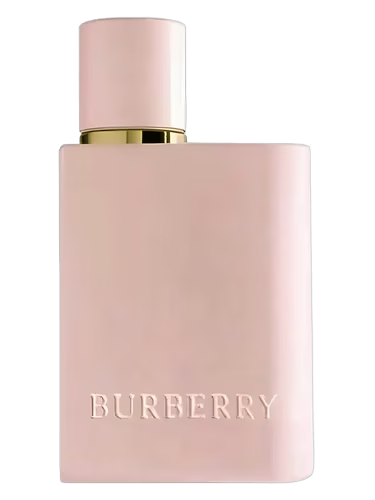
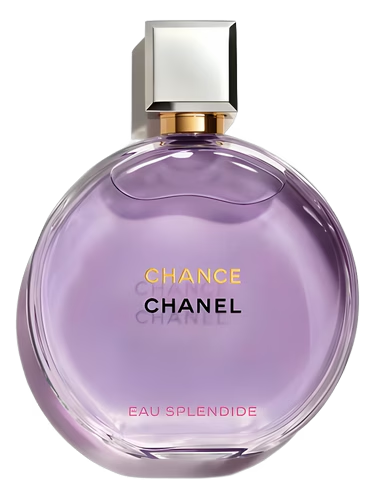
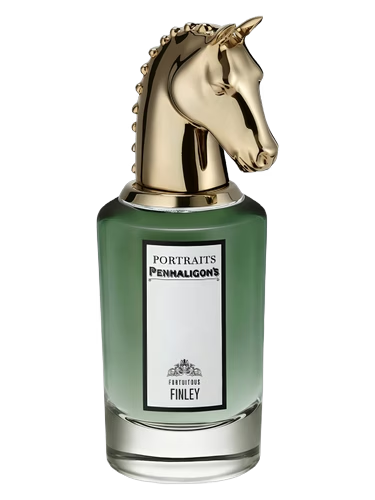
What is Gladiolus?
Gladiolus, often called the "sword lily," is a floral note in perfumery primarily used to impart a refined, airy freshness and subtle green elegance to modern compositions.What does Gladiolus smell like?
It offers a very subtle, delicate floral scent characterized by light sweetness and clean, green notes, providing a sophisticated and airy aromatic profile.How is Gladiolus essence extracted?
Because the natural flowers yield an inconsistent aroma, the note is typically a reconstructed accord created using headspace technology and synthetic molecules to mimic its fresh profile.What are some top perfumes featuring Gladiolus?
Notable fragrances include Lacoste Eau De Lacoste Sensuelle, Demeter Fragrance Funeral Home, Tova Beverly Hills Ambre D'Oro, and Alkemia Perfumes Invitation to the Moon.When is Gladiolus in season?
Blooming typically occurs from midsummer through early fall, with flower spikes opening sequentially from the bottom to the top of the stem.