Fragrance Notes Are Layers Of Scent That Are Layered To Form The Final Fragrance. Fragrance Notes Are Categorised Into Three Main Elements Based On How Long They Take To Evaporate, And How Long They Typically Last Following Application: Top Notes, Heart Notes And Base Notes.
Geranium
Geranium offers a distinct profile that is intensely floral, often likened to a more aromatic rose or carnation. It presents a notable freshness with bright, green, and herbaceous facets, coupled with a sharp, uplifting citrus-lemon/citronella aspect and subtle minty undertones. It can also possess a clean, soapy quality.

Origin & Extraction Of Geranium
The history of Geranium in perfumery began in 1678 when a Dutch botanist introduced the South African plant to Europe. It quickly garnered attention, adapting well to European climates and becoming a subject of curiosity. Beyond its ornamental value, geranium was utilized in traditional medicine and valued for its intoxicating fragrance. Its essential oils, derived from the leaves and stems, were incorporated into scents, bringing sweet, floral, and slightly citrusy notes that offered elegance and freshness.
Geranium oil gained significant traction in perfumery as a key ingredient, particularly appreciated for its distinctive profile that is often likened to a more aromatic, green, and slightly sharper rose. Today, Geranium, also known by its scientific name Pelargonium, is cultivated globally, notably in Egypt, China, and Reunion Island (Bourbon variety). It is an integral component of the fougère olfactory family and continues to be valued in modern perfumery for adding a vibrant, green, and sharp floral tang to both masculine and feminine fragrances, often pairing well with woody and chypre accords.
Extraction Methods of Geranium
The primary and most time-honored method for extracting geranium essential oil is steam distillation of the plant's aerial parts, specifically the leaves and stems. Historically, this process involved loading fresh or slightly wilted Pelargonium graveolens material into large copper or stainless steel stills. Pressurized steam is passed through the botanical charge, rupturing the tiny oil-containing sacs to vaporize the volatile compounds. The resulting mixture of steam and oil vapor is then cooled in a condenser, returning to a liquid state where the lighter essential oil naturally separates from the water (hydrosol) in a Florentine flask. Traditional "folk methods" also included simple hydro-distillation, where the plant material was boiled directly in water.
Modern extraction has introduced several advancements to improve yield and purity. While steam distillation remains the industry gold standard, latest methods include the use of microwave-assisted extraction (MAE), which utilizes microwave radiation to rapidly release aromatic compounds with significantly reduced processing times. Additionally, subcritical fluid extraction using n-butane and aqueous enzymatic extraction—which uses specific enzymes to break down cell walls without harsh chemicals—have emerged as eco-friendly alternatives. In high-end perfumery, solvent extraction is occasionally employed to produce geranium concrete or absolute, offering a denser, highly soluble aromatic profile, though steam distillation is still preferred for therapeutic-grade oils.
Geranium is a foundational component in classic perfumery, particularly within the fougère olfactory family, where its aromatic, green, and slightly rosy facets are essential for structure. One of the most iconic fragrances to incorporate Geranium is Fougère Royale by Houbigant, a fragrance that established the entire fougère category. In this composition, geranium provides a timeless, green, and herbaceous core, showcasing its importance in traditional masculine and unisex scents.
- Geranium is appreciated for its versatility, bridging the gap between floral heart notes and sharper citrus or woody top/base notes.
In modern and niche perfumery, Geranium's bright, fresh, and slightly minty profile is often highlighted in innovative ways. Geranium Pour Monsieur Eau de Parfum by Frédéric Malle is a notable unisex fragrance that puts Geranium center stage, pairing it with notes like mint, rhubarb, and sandalwood to emphasize its vibrant coolness and sophistication. Another brilliant interpretation is Diptyque's Geranium Odorata, which explores the complex, mature floral scent of the note.
- The note also appears in classic Eaux de Cologne and refreshing summer scents due to its invigorating citrus-lemon aspect.
Geranium lends an elegant, refreshing quality to a variety of compositions. For instance, Sisley Eau de Campagne Eau de Toilette utilizes Geranium in a crisp, green fragrance alongside basil, lemon, and vetiver for an intensely refreshing effect. Additionally, the note can add a subtle, elegant seduction in masculine compositions when combined with patchouli and fern moss, proving its enduring appeal in diverse fragrance genres, including those that pair it with rose, as seen in certain modern Eaux de parfums like 302 and 803.
Sustainability Of Geranium
Sustainability of Geranium
- Supporting socio-economic resilience by providing alternative income streams for rice farmers in regions like Madagascar through essential oil production cooperatives
- Adopting Integrated Pest Management (IPM) and biological control agents to reduce chemical pesticide and fungicide use by up to 40%
- Implementing circular economy practices by recycling and composting waste biomass to improve soil health and reduce environmental impact
- Reducing fossil fuel consumption by optimizing greenhouse heating efficiency and transition to more sustainable energy sources
- Promoting biodiversity through the cultivation of native varieties that serve as vital food sources for specialist pollinators and native bees
Trivia
Known as the "poor man's rose," geranium is so olfactorily similar to rose that it was historically used as a cost-effective substitute, yet it is actually derived from the leaves and stems of the plant rather than its flowers.
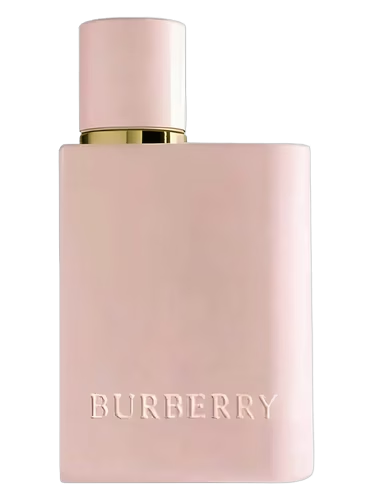
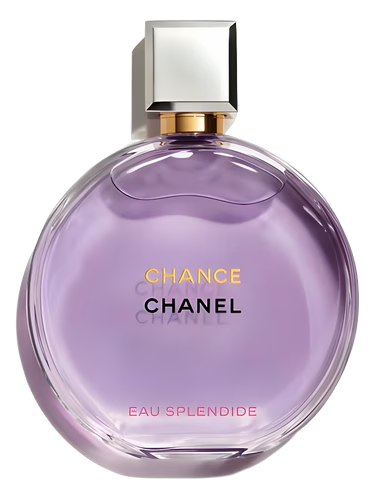
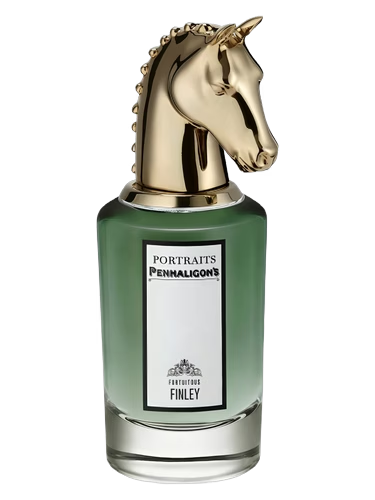
Most Popular Scents Using Geranium
What does Geranium smell like?
Geranium offers an intense floral, rose-like aroma characterized by bright green, herbaceous facets and a sharp, uplifting citrus-lemon aspect with subtle minty undertones.Is Geranium used in masculine or feminine perfumes?
It is a versatile, gender-neutral note used in both; it is a foundational component of the masculine fougère family but also adds elegant, fresh floral layers to feminine and unisex compositions.How is Geranium essence extracted?
The essential oil is primarily obtained through steam distillation of the plant's leaves and stems, though absolute can also be produced via solvent extraction for a denser profile.Why is Geranium called the poor man's rose?
It earned this nickname because it shares many aromatic molecules with the rose, such as geraniol and citronellol, making it a historically cost-effective substitute with a similar but greener scent.What are some top perfumes featuring Geranium?
Iconic fragrances include Houbigant Fougère Royale, Frédéric Malle Geranium Pour Monsieur, Diptyque Geranium Odorata, and Yves Saint Laurent Y Eau de Parfum.